February News

I have poems forthcoming in ABZ, The Meadowland Review, Interrobang?! Magazine’s, Roar, and Silver Blade. Womanhouse v4, a local woman centered exhibition, includes two of my poems in their current catalog. I have three poems in Miller’s Pond. My poem “The Purse,” that was performed in the Lit Undressed event last October in Omaha, and an excerpt from the interview “Women of LFF: Laura Madeline Wiseman” in Les Femmes Folles has been collected in Sally Deskins’ anthology of women artists and writers Les Femmes Folles: The Women, 2011.
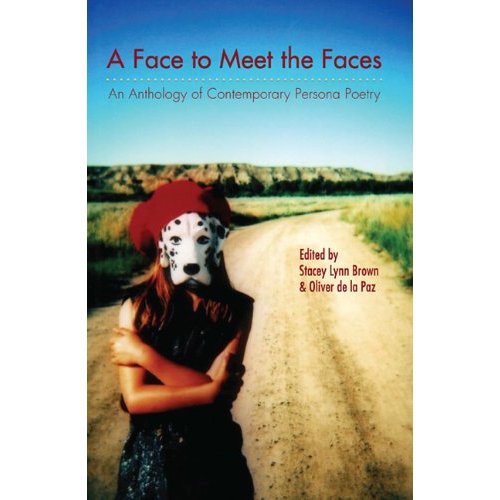
I just received my contributor’s copy of A Face to Meet the Faces: An Anthology of Contemporary Persona Poetry edited by Stacey Lynn Brown and Oliver de la Paz. It looks wonderful! And so many great poets! I’m in such good company.
Finally, in slight silly news I’m sorta in Goodnuz, a little ‘zine produced at UNL. It includes the story “Summer Study Trip Explored Mobile, New Media in Russia” on the Russia trip that I went on last summer. I’m in the top photo in Red Square and not named (which is good because it’s not a very good picture of me), but cool to be in the article.

In reading news, I’m reading in early March from my collaborative broadsides with Kate Renee. Here’s the info about the reading and the show:

Reading (poetry) in the Belles Lettres Opening
7:00-10:00 p.m., Friday, March 2, 2012
Altered Esthetics
, 1224 Quincy Street NE, Minneapolis, MN 55413

Show (poetry) Broadside Collaboration with artwork by Kate Renee
March 1– 29, 2012
Belles Lettres, Altered Esthetic, Minneapolis, MN

I hope to see you there!

Part II: How to create a chapbook: publish or perish?

Following up my post on PART I How to create a chapbook: the genre, Jennifer Bosveld, of Pudding House Publication in her piece on chapbook marketing, writes about the ways in which poets pay for their chapbooks,

“You pay. One way or another. You either pay with your checkbook if you haven’t gotten good yet and go the non-respected vanity/subsidy route, or you pay with your checkbook the right way by taking classes, buying books on writing, taking workshops in order to improve your craft so that a decent publisher will want to risk her company resources on you. One way or another, you pay.”

This is a bit of what I was talking about in PART I, by studying the genre, buying chapbooks, and entering contests. Another way poets pay is by playing the publish or perish game. This then is PART II, the next step (or perhaps a concurrent step) is to publish your poems individually . A little reminder, readers, this is my own idiosyncratic process.

  1. Submit. Submit. Submit. How do you know if your poems are good? A bit further down the line in my revising and revision process, one way I go about deciding if my poems are good is by submitting. If that poem gets accepted, maybe it is a good poem, maybe you’re doing something right. And even better, now that poem has a home.
    1. Amendment to “submit. submit. submit.” Submitting can be expensive (paper, ink, printer, postage, or submission fees), time consuming, potentially time wasting, and rife with rejection letters. If you don’t like to be rejected, maybe consider another career or hobby? Or write and never show anyone your stuff but your mom or your partner in crime, who loves you no matter what. And too, it’s probably not a good idea to submit blindly. Read, for example, the Poets & Writers‘ interview of editors in “Survival of the Fittest.” It includes an interesting take on writers who do not have subscriptions.
    2. Second Amendment: you have the right to read yarns. Read journals. Read lots of them. Buy subscriptions. Enter contests. Visit your library, book store, or ask a friend to borrow their magazines. Know your journal before you submit.
  2. Retire poems. Let them perish. Sometimes you discover you’ve written poems that suck. Maybe your partner in crime says so. Maybe your 10th or 25th rejection says so. Maybe you’re going through your folder of new poems that have now sat inside a drawer for six months and you’re getting ready to revise them, but realize upon reading them, there’s a whole bunch that cannot be revised or saved. They too, alas, have major suckage. So what do you do? Retire them. Say goodbye. Let them perish. Consider them as stepping stones for the poem or poems you are going to write (or have already written) that will be amazing.
    1. Amendment to “retired poems.” To be honest, I am not entirely sure I am the best judge of my own poems. I’m pretty sure 99.78% of the poems I retire are indeed bad, bad poems. Naughty poem. Sit. Stay. However, every once in a while, after I’ve retired a poem, and though I may have sent it out to a couple of places, the poem is dead to me, but then…some literary journal…after six months or a year of holding onto that dead poem…contacts me to tell me “X” dead poem has been accepted. Can we say zombie poem? Of course I say “Yes, that poem is still available! I’m thrilled. Thank you for the acceptance.” Then, I scratch my head a few times, and add the zombie poem to the accepted folder.
  3. Create a folder of accepted poems. Once a poem is accepted, I place a hard copy of that poem in the accepted folder. Why the individual poem and not the chapbook, you ask? When I’m writing poems, I’m more concerned with the individual poems rather than seeing them as belonging together in a chapbook. Individually, I can polish a poem. Once I start thinking about writing a chapbook, I can’t hold that many pieces in my mind because I can’t think (yet) about the bigger picture. I need to focus on the poem. When you use a folder system, you can write and publish as many poems as you want. This can go on for years and years. Decades. True, you might be thinking of the individual poems as a series or ones that could be a series, but this way you’re really working on crafting each poem. When your folder is very, very thick, open the folder. See what’s inside.

Do you want to know what’s inside and what to do with all of it? Stayed tuned for Part III: of my How to Create a Chapbook blogs.

a little teaching love

From late December 2011 through last week, I’ve been teaching a class locally in the community. It was a small group, 2-5 people per class, though one day I did have eight. Wow! I had my students fill out an evaluation after the class. Here are some of their comments:

Classes with Madeline have been so wonderful. Such a blessing.

What a treat it was!

Yeah!

It was my first time. It was a wonderful.

Very good. I’m new and she was good at explaining and demonstrating.

Challenging, but also relaxing. Thanks!

Nicely organized. Good pace. Very well done.

Wonderfully relaxing!

Yay! Thanks students! I was just doing this fun. And fun it was! Happy Valentine’s Day to all of you!

Part I: how to create a chapbook: studying the genre

Fellow poet over at Dear Outer Space has had her first chapbook accepted by Finishing Line Press and so has been blogging about promoting the chapbook. When I started graduate school, one of my first questions was, How do you put a chapbook together? It seemed mysterious. I began reading chapbooks, a lot of them, maybe 100+. Here then, is, PART ONE of my own, idiosyncratic process of putting a chapbook together: studying the genre.

  1. Read chapbooks. Borrowing chapbooks from friends or colleagues who’ve collected their own personal libraries of the things is a great way to start. However, one of the things I loved about entering chapbook contests was receiving the winner. Often to me, I cared less that I might win (though I certainly hoped I might get lucky), but rather I liked that my $10 or $15 or $20 contest fee included a copy of the winner. The chapbook would arrive in my mailbox, often in my SASE, and I would get to read a small collection from an often emerging poet, study the the press’s design, layout, and aesthetic, and consider the choices made by the poet (bio, photo, blurbs, title, cover art, etc.). When I first started reading chapbooks, that was what I thought about: What constitutes the genre that is called the chapbook? What is the overall package ? What should be “on” or “in” a chapbook?
  2. Buy chapbooks. After I’d done my fair share of reading contest winners, I started buying the chapbooks of friends and colleagues, poets I admired, or recent releases from small, indie, established, or new chapbook presses. I started thinking about story, about narrative arc, about ordering poems. I began to think beyond individual poem (though powerful and stand alone they might well be), but rather to focus on the bigger picture that was in a given chapbook. And because a chapbook is small, usually between 20-26 pages, I felt it was easy to hold each poem in my mind and consider how they were working together, how each poem was tied to the next and the next, until there was a final poem that ended the story, the narrative, the overall situation that was there in the given poems.
  3. Spend $$ on chapbooks. Though this is clearly already implied, I don’t think I have to be the one to say that small presses don’t make buckets of $$$ on producing chapbooks. Nor do I have to be the one to say that it is unlikely that chapbooks sales will be the cushion a poet lives on for a year. I believe it is important to invest in a press to learn about the poets and the types of poems that press publishes by ordering their collections and to invest in the poets you admire by ordering their collections. I’ve discovered wonderful poets this way, ones I may never have read in literary journals or heard giving a reading in Nebraska.
  4. Sit back and reflect. Okay, so once you do all that (reading winners, reading poets from a given press, buying chapbooks at local readings, and borrowing chapbooks from friends), now you can lean back in your office chair or stretch out on your couch and ponder all this knowledge you’ve gathered about what a chapbook is. Now the question is, do you want your stuff to be in a chapbook? And do you have anything that might work together as a chapbook?

If the answer is yes and yes, stay tuned for the next installment….Part II.