The Chapbook Interview: Liz Ahl on DIY

When you teach the senior level advanced poetry workshop, you require students to write a chapbook. How do you structure the class to make such a project possible for undergrads?

Students in this class have already taken a sophomore-level Creative Writing class and the junior-level Poetry Workshop, and so come to the class having had lots of experience writing individual poems in response to prompts and assignments; some are already starting to develop a voice, maybe even something you’d call a “project.” If they elect to take this class, I let them know right off that I won’t be giving assignments or prompts (okay, sometimes I’ll give a prompt on request, or in response to a poem draft) — students must hand in new work every week, under their own steam. Additionally, they know, right from the get-go, that they will have to produce and “publish” (in an edition large enough so that every class member gets a copy) a chapbook-length collection, and that they should compose, workshop, respond and revise with that in mind. Students are paired with “response partners,” who give written feedback to each week’s poem and, when their partner is up for workshop, the partner starts the conversation about the poem. In the beginning of the semester, there are three chapbook reviews due — I bring in piles of chapbooks, students rummage through and take a few, then pick one about which to write a one-page, single-spaced review, focusing on both the poems themselves (content, theme, style, form, etc.) and on the design of the chapbook (typeface, images, binding, layout, etc.). They print off two copies of the review — one gets folded in half and tucked inside the chapbook; the other comes to me for a grade. Then everybody swaps chapbooks, and repeats the process — and now they can read reviews written by classmates. Additionally, I build in two “making chapbook” class sessions, where I teach them to sew a basic saddle stitch, and (sometimes) a Japanese stab binding technique. We look at lots of samples, both from “professionals” and from former students. I also use this time to show them how to use MS Word to format a booklet. Finally, I schedule two manuscript-in-process workshop days, where students bring drafts of “the whole thing” to swap with partners in order to get feedback on bigger picture stuff like arrangement, theme(s), and so on. Otherwise, it’s workshop every day. The semester culminates with the presentation and distribution of the published chapbooks and a celebratory reading. I also collect a short essay in which students reflect on their work.


Are there particular chapbooks or readings you like to teach to demonstrate and spark discussion on the “genre” of the chapbooks?

There are three “recommended” readings I’m currently using — “Weaving a Chapbook of Poems” by Robert Miltner (AWP Chronicle, May/Summer 1998), American Book Review’s chapbook feature (handful of articles) from the March-April 2005 issue, and “A Pulitzer Prize for a Chapbook?” by Elaine Sexton (AWP Chronicle, May/Summer 2006).


What is your definition of a chapbook?

A chapbook is a small serving-size of poetry, or microfiction, or maybe a short story. I tend to think of chapbooks as saddle-stitched or stapled, as opposed to perfect-bound, but of course, that’s not a rule. I tend to think of chapbooks as affordable, too — thinking of the tradition of the ‘zine, the pamphlet, the broadside — although of course there are some truly lovely letterpress chapbooks that will set you back some serious bucks. I’m interested in the chapbook’s ability to be very low-cost, occasional, and/or ephemeral OR high-end, artistic piece.


Have your students been successful in finding homes for the chapbooks they wrote in your workshops? Or do they keep them DIY?

Although a couple of my students have gone on to create new chapbooks after my class ended, none of them (that I’m aware of) published, exactly, the chapbooks they created in my class. I actually don’t place a lot of emphasis on publication beyond our course.


You also published chapbooks with your DIY press Ultima Obscura in conjunction with the No Name Reading Series, a graduate student creative writing reading series. What was your inspiration? What was that process like?

I made my first chapbook in 1994 (unless you want to count the yarn-bound booklet from Mrs. Spurling’s third grade class, with my brilliant musings on Thanksgiving).

It was called “The Power of Barbie,” and I made it because I was giving a reading and wanted to have something — let’s say a souvenir? — available for purchase and signing.

I had all sorts of Issues about self-publishing (it’s not “real” publishing, was what I was thinking), but swallowed them by making fun of myself. I made fun of myself by creating a “publisher” for the chapbook — “Ultima Obscura Press.” The faux Latin’s wink at “the ultimate in obscurity” was my way of saying (to myself, to others) that I was in on the joke — ha ha ha. It was not a beautiful chapbook, but it was more or less functional.

It went well enough that, for another reading, I created “Beginning Ballroom Dance,” and put a little more time and effort into it, feeling more comfortable about the DIY nature of the thing. I kept the “Ultima Obscura” label. Then I moved to Nebraska, where the vibrant “No-Name” Reading Series (connected with the UNL graduate programs in creative writing) afforded a regular occasion and a lot of writers, and so I started creating chapbooks connected with those readings.

So, for instance, fiction writer Sherrie Flick and I gave a reading together — and at that reading, we sold copies of “Nobody’s Anything Yet,” a chapbook of the poems and short-shorts we were reading that night. I loved the occasional nature of those chapbooks in particular — there was a bit of the “souvenir program” to them that I’ve always liked as a collector of ephemera, a saver of ticket-stubs and concert programs. I like to think that the No-Name chapbooks, along with others I published while living in Lincoln from 1995-2001, contributed to a vibrant sense of community among those writers. I should clarify that writers made a financial contribution to cover production costs, but those contributions were always easily recovered through sales, with any profits going to authors, not to me.


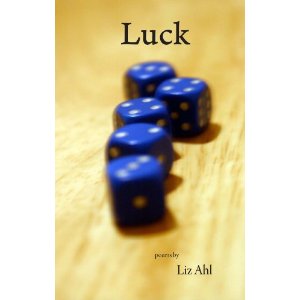
You took an advanced poetry workshop for your PhD with Grace Bauer that required you to create a chapbook—a chapbook that was later published—and you’ve published a chapbook that won a chapbook prize (A Thirst That’s Partly Mine) and a chapbook (Luck), that’s perfect-bound and the length of what many might call a book (48 pages). Can you talk about the differences between DIY and the other presses with which you’ve worked?
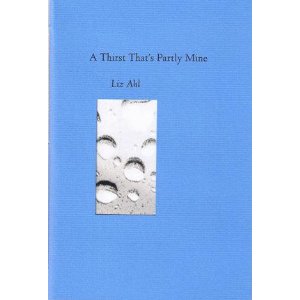
The folks at Slapering Hol Press took so much time with me both fine-tuning the manuscript and coming up with an amazing design through-and-through — my poems were lovingly shepherded by people who truly cared about the work — mine, specifically, and poetry generally. At Slapering Hol, they do a hand-stitched, numbered edition of 500, with a letterpress cover. Mine also had a die cut window and a really nifty semi-transparent inner cover page with water droplets on it — just gorgeous! Working with them, as well as with Palmer Hall at Pecan Grove Press, who published Luck, helped me get a glimpse of what some writers who I’d published had told me before: that the gift of having an editor and a designer create a thoughtful and beautiful vehicle to get your work out into the world is incomparable. I’m not sure how to characterize the differences between my work on Ultima Obscura projects and my work with those two fine presses. It felt nice to have my work chosen by someone else — not having to make the thing myself, though I found pleasure in making my own chapbooks. It was narcissistically gratifying to see how they decided to design the chapbooks, I suppose!
I must acknowledge that the way I distribute chapbooks and have students write reviews, copies of which are kept folded up with the chapbook, is completely ripped off from Grace’s class!


How do you negotiate and maneuver within the hierarchy of the publishing industry that value certain types of presses (e.g. mega-conglomerates, university, literary presses, etc.) over others (e.g. DIY, chapbook presses, small press, epresses, etc.). Do you have advice for other poets considering where to submit their first chapbooks?

Well, up here in rural Northern New England, I feel very far away from “the hierarchy of the publishing industry,” and certainly when I think of the “industry,” I think mostly of novels and nonfiction books, less so of poetry, which tends to be published, by and large, by smaller presses, university presses, etc. I do know that as I’ve grown older (and more confident?) my feelings about that hierarchy have softened, at least in part because I am tenured, and so many of those hierarchical distinctions (real or imagined, for better or worse) are linked to the academic job market and to promotion within academia. I don’t think most poetry lovers care too much about whether the poems are packaged as a chapbook or a perfect-bound, longer collection; I don’t think they care about whether the publisher is Big or Small. In fact, I’d argue that, for some years now, there has been growing cache around the small/indie/fine press. There’s a hip factor, I think, connected to some of the DIY and letterpress and zine efforts at play out there.


Do you have advice for poets who what to start their own press and/or DIY their chapbook?

Regarding advice about where to submit a first chapbook - I highly recommend Slapering Hol, which ONLY considers FIRST chapbooks. They produce such beautiful work, and are so supportive of emerging voices. Really, though, there are so many great little presses out there creating quality chapbooks.

My knee-jerk response about starting new presses: do we really need more presses? How can there possibly not be enough? What about finding a press you love and working in support of it by buying books, reviewing books, submitting work there, etc? My second, more measured response: if you want to make books, you should make books! Why not? With respect to making your own chapbook, I’d also say go for it — but be realistic about distribution. Maybe create your first chapbook in conjunction with a reading or other occasion, so there’s a built-in way to distribute at least initially. Consider collaborating with another author on a chapbook — that can also help get it out there to folks who might not otherwise have read your work.

Tell me about your forthcoming chapbook, Talking About the Weather, from Seven Kitchens Press.

Talking About The Weather will be produced in the “Summer Kitchen” series, in an edition of 49 copies. I love a limited edition. Perhaps this is connected to the notion of publishing hierarchy — conventional wisdom privileges the large print run, and going “out of print” is seen as a bad thing. I get that, of course. But I really treasure (partly due to my great privilege of being a tenured academic!) the idea that only so many copies will be available — and then — that’s IT! No more! A treasure, a rarity. Not everybody can get one. I think I first got turned on to that notion in Nebraska, when I was studying book arts and learning how to set type and do letterpress printing with Joe Ruffo. I remember, after having spent AGES assembling type and image, and pulling proofs, and correcting, and re-setting bits, and all that — printing my first broadside, and then, finally, taking apart the type and putting it away. I remember thinking, wow, this is really it — even if I re-set everything, it won’t — it can’t — be the same. Once I ran out of those broadsides….well….I’d have to do something new.


Current projects

I want to do something new but I’m still figuring out what it is. I’m writing some poems, but they don’t feel like a project. Today, in class, I came up with the title, “Knowing What I Know About Rocks,” sort of jokingly. But it’s beginning to grow on me. Some students may be showing up next week with “Knowing What I Know About ___________” poems. We’ll see.

Number of chapbooks I own

eyeballing, I’m going to estimate between 250-350.

Number of chapbooks I’ve read

oh boy, I have to confess I haven’t read all the chapbooks I own — not completely — but I’ve easily read a couple hundred chapbooks.


Number of chapbooks I published

18-20 (and a small number — 5-7) broadsides


Ways I promote other poets

When I read something really spectacular, I try to mention it on my blog, rate it on Goodreads, mention it on Facebook. It’s an easy thing to do, really. I get book recommendations from my friends on Goodreads all the time. I buy poetry books and chapbooks — I am so lucky that Grolier’s Poetry Bookshop is less than 2 hours away, in Cambridge, MA; and once a year I get to visit Open Books, also a poetry-only bookstore, in Seattle.


Where I spend my chapbook earnings

buying other chapbooks


Inspirations and influences

There are so many, though certain inspirations/influences occupy my consciousness at certain times — other times, they fade to the background to make room for a new crew. Today, here’s what comes to mind: Elizabeth Bishop, William Matthews, Cornelius Eady, other artists generally — like, hanging out with them, watching them work (painters, actors, dancers, composers), Dylan Thomas, Gwendolyn Brooks, Adrienne Rich, food/cooking/eating, Walt Whitman, Muriel Rukeyser, quantum physics, D.B. Cooper, the Apollo space program, and bourbon.


Residence

Holderness, NH


Job and education

Associate Professor of English, Plymouth State University; BFA - Emerson College; MFA - University of Pittsburgh; PhD - University of Nebraska-Lincoln


Bio

Liz Ahl is a poet and teacher who lives in New Hampshire. Her poems, some of which have received Pushcart Prize nominations, have appeared or are forthcoming in Four Corners, White Pelican Review, 5AM, Court Green, Margie, The Women’s Review of Books, Prairie Schooner, Alimentum, and North American Review. Her work has also been included in several anthologies, including Red, White and Blues: Poets on the Promise of America (University of Iowa Press, 2004), Mischief, Caprice, and Other Poetic Strategies (Red Hen Press, 2004), and Like Thunder: Poets Respond to Violence (University of Iowa Press, 2002). Her first chapbook, A Thirst That’s Partly Mine, won the 2008 Slapering Hol chapbook contest; a second chapbook, Luck, was published in 2010 by Pecan Grove Press. In 2012, Talking About the Weather will be published by Seven Kitchens Press. In 2002, a limited edition (30) collection of poetry, On The Avenue of Eternal Peace, was designed and printed by book artist Joe Ruffo (Lyra Press) and beautifully bound by Denise Brady. She has been awarded residencies at Jentel, The Kimmel Harding Nelson Center for the Arts, and The Vermont Studio Center.
 

The Chapbook Interview: Meg Tuite on the Flash Fiction Chapbook

Tell me about your flash fiction chapbook, Disparate Pathos from Monkey Puzzle Press (2011).

First of all, I want to thank you, Madeline, for inviting me to be interviewed. I so appreciate it. It is a theme of ‘desire’, a grouping of flash stories on people either connecting or completely missing the mark.


How much time did you spend to find a home for it?

I sent out a chapbook with fifteen stories, or so, and Monkey Puzzle Press got back to me and asked to publish twelve of them. I believe that Monkey Puzzle Press got back to me within three months. I sent it to seven different presses and forgot about it until I got the contract in the mail from Nate Jordon, Founder and Publisher of Monkey Puzzle Press out of Boulder, CO.

What about the publication of the individual short stories prior to the acceptance from Monkey Puzzle Press? Many of your stories in Disparate Pathos first appeared online in Prime Number Magazine, Boston Literary Magazine, and Journal of Truth & Consequence.

Before I even think of a collection, I publish as many stories as I can. Then when I have a group that seem to have a similar theme I think about a collection and that is how Disparate Pathos came to be. I send the stories out first and waited for individual publication, before I sent to any publishers to consider as a chapbook.


What was the time between acceptance of your chapbook and publication date?

It took about six months from the acceptance letter to actual publication. We had to agree on a cover for the chapbook first and then we agreed on the stories for the collection. Nate Jordon was a joy to work with and I LOVE Monkey Puzzle Press. I think he put together an exceptional chapbook and I only get compliments from all who have seen it, read it. It was a great experience.

I love the cover art of Disparate Pathos and the interior design and logos for Monkey Puzzle Press! How involved were you with that process?

I actually got the cover art from an amazing writer and friend, Michelle Reale, who is a librarian at the Arcadia Library in Pennsylvania. She found an old French illustration and then Nate Jordon worked with it to make the vision pop. I thank them both for an exquisite cover.


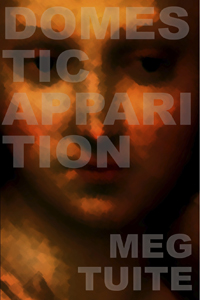
Tell me about your novel-in-stories Domestic Apparition (San Francisco Bay Press) that also was published in 2011. You’ve been very successful in getting fantastic book reviews of Domestic Apparition in The Nervous Breakdown, Pank Magazine, Used Furniture Review, and elsewhere.

When Domestic Apparition first came out in June, 2011 I had a launch party in Santa Fe, NM, where I live and had a blast of a launch. We had music and I signed books and did readings and it was a damn good time. That was the beginning. I also sold many books online and did readings across the country from Portland to New York. I think an author of a book published by an Indie press needs to be ready to promote on whatever level they can. I had so much support from local writers and friends as well as all the writers I was in contact with on Facebook and as an editor of two magazines. And then there were the exceptional book reviews that came from many people who’d read my collection. It was quite humbling and a writer’s dream to have so much positive feedback. I still have reviews coming out on Domestic Apparition. I have one that is scheduled for June 2012 that will be up on Psychology Today Magazine’s blog.

What advice would you offer someone about to have their first flash fiction chapbook published?

My first bit of advice for any writer of flash, longer fiction or poetry is to read, read and read. Check out all the magazines online and in print that you might be interested in sending to before you send anything. Make sure that your work might be a good fit for the magazine and then send it when you feel it’s ready to put out there. I always read my work out loud as well as get feedback from a few other writers that I respect before I send a story out.

Once I have accumulated some stories that seem to fit together or have a general theme and at least half of them have been published then I might try and assemble a collection. That’s just my recipe. It may be completely different for other writers.


Has being the fiction editor for The Santa Fe Literary Review and Connotation Press shaped your writing and sense of the publishing industry in some ways?

I have really enjoyed being an editor as well as a writer. And getting the experience of editing a print magazine and a bi-monthly online magazine has been priceless. I have read so many different writers and have had the exceptional opportunity to publish work that I admire. Yes, I believe that my experience as an editor has only enhanced my writing. My truth is that the more you read, the better it is all the way around. And as an editor, you read quite a lot.

What current projects are you working on?

I’ve just sent out a collection of stories to various publishers to read. I’m working on a chapbook for a publisher right now that will be published sometime in the summer, which is poetry. I’m very excited about that! And I have a novel sitting waiting for an ending. I’m almost 200 pages into it and it’s close to the end of the first draft. Just need to get the focus back in that arena again.

Ways you promote other writers

I promote other writers that I love whenever I can. I put their poetry up on my Facebook page. Or excerpts from their novels and collections. I also put the word out when a writer I admire has a new collection coming out. I write book reviews when I read something that moves me. And I publish them and interview them up at Connotation Press whenever I find work that excites me.


Inspirations and influences

I am influenced by SO many writers. I’ll be teaching a flash fiction class this summer in Santa Fe at the college. The students will be reading many current writers as well as some from the past. It’s very difficult to give a list of my favorites. I adore so many writers past and present. A short list would include: Flannery O’Connor, Djuna Barnes, Flann O’Brien, Bruno Schulz, David Sedaris, Michelle Reale, Len Kuntz, Paula Bomer, Melissa Pritchard, Sara Lippmann, Jen Michalski, Robert Vaughan, Mary Stone Dockery, Susan Tepper, Alex Pruteanu, Julie Innis, Pat Pujolas, James Valvis, Kristine Ong Muslim, James Claffey, Sheldon Lee Compton, David Tomaloff and so many more. I have to stop at some point or this interview will never end.


Residence

I live in Santa Fe, NM.


Bio

Meg Tuite’s writing has appeared in numerous journals including Berkeley Fiction Review, 34th Parallel, Epiphany, JMWW, One, the Journal, Monkeybicycle and Boston Literary Magazine. She has been nominated several times for the Pushcart Prize. She is the fiction editor of The Santa Fe Literary Review and Connotation Press. Her novel Domestic Apparition (2011) is available through San Francisco Bay Press and her chapbook, Disparate Pathos, is available (2012) through Monkey Puzzle Press. She has a monthly column, Exquisite Quartet, published up at Used Furniture Review. The Exquisite Quartet Anthology-2011 is available. Her blog: http://megtuite.wordpress.com.


The Chapbook Interview: Marianne Kunkel on MFA thesis to PHD workshop to publication

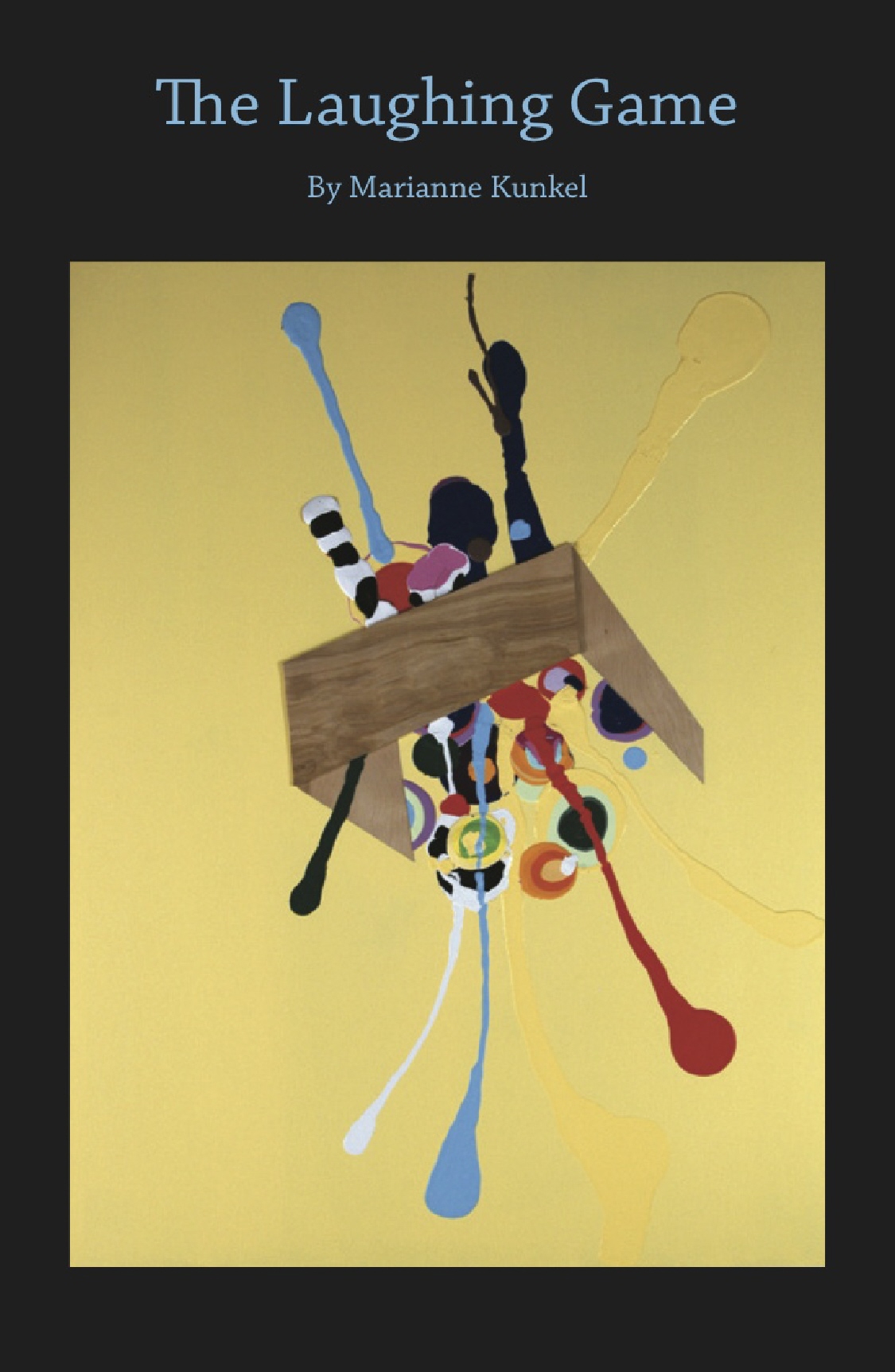
How did your forthcoming chapbook, The Laughing Game, begin?

During my second semester as a PhD student at the University of Nebraska-Lincoln, I took a poetry workshop from Professor Grace Bauer and in it we discussed poetry chapbooks a great deal. Our final project in the class was to compile a chapbook of poetry, which really helped me start thinking about how to best organize my poems in book form. Of course, it wasn’t until more than a year after that class ended that my chapbook was accepted for publication by Finishing Line Press.


How long did you spend writing it? How many versions did it go through before you reached the final?

About half of the poems in the book I wrote as an MFA student at the University of Florida from 2005 to 2007. It’s exciting that these poems made it into a chapbook; many of them don’t fit the theme of the full-length book manuscript I’m currently working on and wouldn’t have found a home there. The Laughing Game went through at least three versions—different poems, different order—before reaching its final version. I revised it after receiving Professor Bauer’s feedback, and then again after receiving the feedback of my dissertation chair Professor Stephen Behrendt, and once more after I showed it to my buddy (and chapbook extraordinaire with three of his own) UNL PhD student Trey Moody.


I remember workshopping an earlier version of “Tub Home” in the Alicia Ostriker master poetry workshop in 2011 at the University of Nebraska-Lincoln. It’s a powerful poem. Tell me more about the “resilience” theme that you address in such poems as “Tub Home.” How did you decide upon the order of the poems, the narrative arc, and the necessity for laughter?

It’s increasingly important to me that my poetry have an affirmative, or redemptive, quality to it. “Tub Home” is a fun little poem about a child making camp in a bathtub, but its ending turns sad when the child learns the impermanence of her new home. I tried to carefully balance feelings of joy and sadness—oftentimes these emotions intermingle in my poems—in The Laughing Game and open and close the book with images of laughter. For me, laughter can be a “game” in that it’s a learned response or an emotional Band-Aid, but I also promote its extremely instinctive and healing nature. We can find our way out of sadness by discovering opportunities to laugh.


How much time did you spend to find a home for it?

About a year exactly. I didn’t submit it to presses (I sent it to about 20) until six months after I conceived it. Before Finishing Line Press accepted it for publication, The Laughing Game was a finalist of The Sow’s Ear Poetry Chapbook Competition, which I took as a sign that it was in good shape. I remember I couldn’t believe when Finishing Line Press emailed me with an acceptance. I called Trey and read him the email to make sure it wasn’t a joke. Ha!


What about the publication of the individual poems prior to the acceptance from Finishing Line Press? Many of the poems in The Laughing Game were previously published in print. Did you seek to publish in print, online or a mix? Is there a balance you prefer of published and unpublished poems in a collection?

When I began submitting poems for publication at the University of Florida, I was definitely enamored of the long-running print journals—I affectionately call them dinosaurs. More and more, I’m seeing authors that I admire publish exclusively online and so these days I submit poems to both print and online journals. It might seem ideal that all the poems in a chapbook be published elsewhere first, but I learned from The Laughing Game that some poems speak louder within a book, pushing the narrative from point A to B, than outside of it without this context. That’s an important lesson, I think.

Tell me about that cover art, design, and layout. How involved were you with the selection of cover art and the overall chapbook cover, layout, and design?

Oh, one of my favorite parts of the book! The cover image, called “Toasted Wheat,” is a painting by my friend Daniel McFarlane, an exceptionally talented artist from Houston. He and I met while were both MFA students at the University of Florida. I love his work; he paints on slabs of wood and plays a lot with bold color and dimensions. I was thrilled when I found a painting that echoed qualities of my chapbook—in the painting is a box that to me looks like the box of a board game, with bright and dark colors bursting from it. Very cool. As for the layout and design, that’s the terrific work of graphic designer Jenny Alessandrelli, the sister of my friend Jeff, a UNL PhD student in poetry.

Has being the managing editor of Prairie Schooner shaped your writing and sense of the publishing industry in some ways?

I hope so! So much good writing finds its way to Prairie Schooner and I feel lucky that I get to read a lot of it. Reading improves writing, you hear, and I notice when I sit down to write now I sometimes try out lyrical approaches—turns of phrase, surprising images, startling voltas—that I’ve read in others’ poems. I have about five years of experience (internships and jobs) in the publishing industry, so I’m less surprised by this part of my Prairie Schooner work. One of the most difficult and rewarding tasks of Prairie Schooner Editor-in-Chief Kwame Dawes is finding the exceptional in a stack of very good work, so I’m tickled that Finishing Line Press found my chapbook worthy of publication.


What strategies have you been trying to promote The Laughing Game?

Self-promotion is new to me, and I admit I’m a little awkward about it, but the staff of Finishing Line Press does a fine job offering promotion tips to their authors. Like many people, I’m connected to a large community on Facebook so I announced my chapbook this way and have posted about it several times. Thanks to your and Sally Deskins’s invitation, I participated in a poetry reading a few weeks ago and brought to it flyers advertising The Laughing Game. And, of course, interviews help! So I’ll say it here: please buy my book!


What advice would you offer someone about to begin promoting their first chapbook during its pre-sale period?

Figure out an approach that works for you. Think about what promotion methods generally pique your interest, and start there. I appreciate candidness and humor, so I’ve been trying to be direct with my friends and acquaintances that sales of my book during the pre-sale period influence its print run and the Press’s confidence in me as a dynamic author. I think I’ve even said, “Help me convince the Press that they didn’t make a mistake by publishing my chapbook!”


Where can we order The Laughing Game?

www.finishinglinepress.com. You want to go to there!


What current projects are you working on?

My new project is a full-length book manuscript that considers the lives and experiences of today’s young girls. I’ve always written about my own childhood and I’m interested in representing the stories of other girls. More generally, I’m interested in how female poets choose to remember and make sense of their childhood. I’ve noticed that, compared to male poets, not enough female poets write about this time in their lives, perhaps because it can seem like a time of ignorance and vulnerability, but it’s also a time of discovery and empowerment. Lately, I’m having fun writing poems that imagine controversial women—Serena Williams, Courtney Love—as young girls.


Inspirations and influences: Elizabeth Bishop, Pablo Neruda, Lucille Clifton, Tony Hoagland

Residence: Lincoln, NE

Job and education: Managing Editor of Prairie Schooner, BA from Auburn University, MFA from University of Florida, PhD (forthcoming) from University of Nebraska-Lincoln

Student Evals

It’s that time again. Here’s what my writing students think of my classes:

“I think in class writings and conferences really helped me learn more.”

“Professor Wiseman was able to teach so much without it being boring. She really made learning fun and interesting.”

“She enjoys what she does. There’s a lot of coherence between everything we do in class.”

“This teacher makes everything so easy to understand and she’s always in a good mood. She has a great attitude and personality. Everything we did helped me learn.”

“Always there to help and replied quickly to emails when I had questions. One of my favorite teachers this semester.”

“She has a lot of great ideas and she knows how to work well with the class.”

“She is very smart and talented. She knew exactly how to challenge us.”

“She tells us exactly what she wants and answers all of our questions. I think she was a really awesome teacher. My favorite by far.”

“Professor Wiseman understands how many students feel about this class, and really worked with us as students. She also has a love for English, this being a good area for her to teach.”

“The teacher was organized and followed her syllabus very well.”

“She is very approachable and helpful one on one. Very engaging.”

“She is good with interacting with us, and she taught me how to write a good essay.”

“I became a much better writer. My writing skills improved immensely. She was very helpful and a wonderful teacher. She explained everything clearly and grading papers fairly. She was readily available and returned work pretty fast.”

“Very nice and easy to understand her teaching method. Very effective at teaching the material.”

“She was always on time and organized. All assignments/instructions were clear and understandable. All questions were answered and work was returned in a reasonable time.”

The Chapbook Interview: Grace Bauer on the Chapbook Workshop

When I took your graduate workshop in poetry, you framed the class as an invitation to create a chapbook for the final portfolio, though when you teach the advanced poetry workshop it is required. How do you structure the class to make such a project possible?

Creating a chapbook as part of the final project is more than an “invitation” in my advanced poetry workshop; it’s a requirement. The class is also a workshop/seminar on poetic form, so I do frame the chapbook as a kind of book/form or genre, and ask the writers in the class to think about the composition of the manuscript, about how the poems can speak to each other, and a potential reader, in different ways, depending on arrangement. About how the whole can become more than the sum of its parts.

I added the chapbook requirement to this course – which I generally teach every other year – maybe ten years ago, and have continued to include it because it has proved very successful. I originally added the requirement to give the class some kind of focus beyond the poetic forms that students are also required to work/play with in the class. This includes both “traditional/fixed” and “experimental” forms. (I put those labels in quotes, because my mantra for the class is: all poems are, on some level, formal and all poems are, on some level, experimental). I thought that having a larger “project” to work on might ease the anxiety some students – though certainly not all – felt about “working in forms.” Another reason for adding the chapbook requirement was practical. It is often easier – and quicker – to get a chapbook published than a full length book, and I thought it would be beneficial for students to leave the class with a potentially publishable manuscript well under way.

The class meets once a week for two and a half hours, and we divide our time between discussion of formal “exercises” and traditional workshopping of poems – which may originate in the formal exercises or not. I have a sizable collection of chapbooks I share with the students, who are also invited to share any chapbooks they may have. Everyone’s required to review a half-dozen or more of them and share their reviews with each other so we can get a conversation going. The discussion is focused on what they think makes a successful chapbook and what doesn’t.

The general consensus tends to be that a successful chapbook has some kind of unifying principal that holds it together. Because the shorter form of a chapbook (as opposed to a full-length collection) invites the reader to – at least potentially — go through it from cover to cover in one sitting, the reader looks for a sense of cohesiveness, which is why I think chapbooks lend themselves to a poetic series. On the other hand, there tends to be a consensus among the students that there’ something like too much cohesion – or a focus that ends up feeling too singular, a kind of one trick pony. A balance between cohesion and complexity is what seems to work best.

Every few weeks the students bring in their own developing manuscripts and they pair up, or trio up, depending on the size of the group. We end up with pages spread out all over the many tables in the room, sometimes on the floors – whatever it takes. The students have to have a manuscript of about 24 pages by the end of the 16 week semester, which is a bit of a tall order – though I do allow them to include some poems they may have written in previous classes. It’s a struggle for some, but many end up with manuscripts they can begin submitting to publishers, which segues nicely into your next question.


Have your students been successful in finding homes for the chapbooks they created for your workshop?

The short answer is yes. Many students have published the chapbooks they created for the class – or versions of them. Liz Ahl, Karen Head, Benjamin Vogt, Amber Harris Leightner, Mathias Svalina, Megan Gannon, Jeff Alessendrelli, Trey Moody, Lisa Verigin, Christine Stewart Nunez – I’m probably forgetting some and will owe them apologies. Others eventually developed full length books that began with this class project – Zachary Schomburg and Joshua Ware come to mind. So the track record is pretty good. If nothing else, I think doing the work of this course better prepares students to put together their thesis or dissertation manuscripts when it comes time to do that.


When you teach the week-long chapbook workshop at the Nebraska Summer Writers Conference, how does your pedagogy differ?

I only taught that workshop one time, and it was a challenge but – based on my own observations and comments from participants – ultimately successful. The challenges were several: having only five days for the group to work together, beginning with a group of total strangers, having students ranging from 19 to 70-something years old in the group. Of course the group was also self-selecting; they wanted to be working on a short collection and they came prepared to spend their five days doing that. I had everyone send me five or six poems ahead of time – things they thought would be part of the manuscript – and we divided our time between critiquing individual poems and working on arrangement. As with my graduate course, people in the workshop served as each others’ readers. We spread out possible manuscripts on the tables and floors and shuffled and reshuffled. For one day, Zach Schomburg, one of the editors of Octopus Press, came in and talked about chapbooks from an editor’s perspective, and also about DIY possibilities. I know at least one person from that workshop self-published a limited edition of the chapbook he worked on. He is, I believe, quite happy with it.


You’ve had three chapbooks published – Where You’ve Seen Her (Pennywhistle Press), The House Where I’ve Never Lived (Anabiosis Press), and Field Guide to the Ineffable: Poems on Marcel Duchamp (Snail’s Pace Press). How did your chapbooks begin?

It’s been a while, so my memory may not be 100% reliable on this. Memory is also complicated by the fact that some of these chapbooks were in-progress simultaneously and at the same time as the full-length books. The House Where I Never Lived and Where You’ve Seen Her even came out around the same time – both in 1993 – so many things overlap.

House is different than the other two chapbooks in that it is not a series of poems, though one will certainly find recurring themes and motifs in the book – much of it about family and the idea of home. The poems in that collection were mostly part of my MFA thesis and part of a first book manuscript I sent around for a very long time. It was a finalist and/or semi finalist in more than a dozen contests – I stopped counting after a while because it became so depressing. So, at some point – out of sheer frustration — I put together a shorter version of that book as a chapbook and it pretty quickly won the Anabiosis competition.

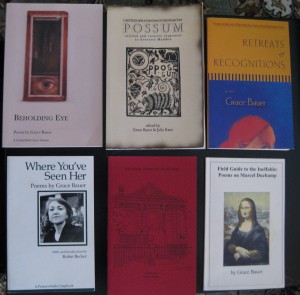
Where You’ve Seen Her is obviously a series – based on Cindy Sherman’s early photographs, her “untitled movie stills” series. The poems aren’t a response to specific images so much as me trying to do a version of what I thought Sherman was doing in those photos – a kind of everywoman series of evocative scenes and scenarios. I sent that manuscript to Pennywhistle after seeing and admiring some of their previous chapbooks, and it was accepted, though they had page limitations and I had to cut several poems from the series when the chapbook came out. These were re-instated years later when I republished that series as a section of my full-length book, Beholding Eye.

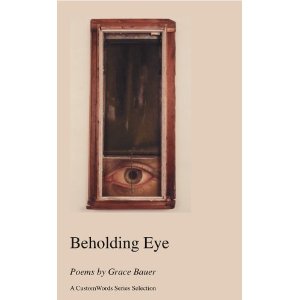
Beholding Eye also includes the entire chapbook Field Guide to the Ineffable: Poems on Marcel Duchamp – another poetic series, though this one I never really intended to write. At the time, I was working on what became the first section of Beholding Eye – a series of ekphrastic and persona poems based on women artists and/or famous images of women in art. I decided I had to include a poem on Duchamp’s Nude Descending a Staircase, a painting I had seen as a child in the Philadelphia Art Museum and had an almost hallucinatory response to. I went back to the museum one summer to look at the Duchamp collection and ended up spending hours in those galleries. I became sort of obsessed. I came back to Lincoln and read every book on Duchamp I could find and started taking notes and writing all these poems that I knew would be as obscure as all hell to most readers, but I couldn’t not do it. I knew most of the poems would be difficult or impossible to place in journals, but as it turned out, I never had much time to try. Maybe three poems from the manuscript were accepted before the chapbook won the Snail’s Pace contest. So that one came out pretty quickly.


Tell me about the impetus to fold poems from chapbooks into books. Were your poems always part of “the book,” but the chapbook happened to be accepted first? Or did you envision the chapbooks as separate, but the idea of the book arrived later?

Where You’ve Seen Her definitely began as a series from the get-go, and I realized fairly quickly that the Duchamp poems “wanted” to be a series – but I had no idea how long either of those series would eventually be. My experience with working in series is that you just have to see where things go, let the creative impetus run its course. The first full-length book I published (though not the first I wrote) was The Women at the Well, a series of persona poems all based on women from the Bible. That series became a book – pretty much on its own volition. The poems just kept on happening. Until they – or I—ran out of steam. The other two series ran out of steam more quickly and ended up being shorter – mini series, if you will. Conveniently chapbook length.

Working in persona and working with ekphrasis are two things that have always interested me, and still do. I’m not sure why. Maybe I’m part frustrated actor and part frustrated painter, but, for whatever reason, I keep coming back to those two ways of making poems. At some point it occurred to me that the two chapbook series, combined with the new series of persona/art poems I was working on, might make an interesting collection – a kind of triptych. And that’s how Beholding Eye came about.

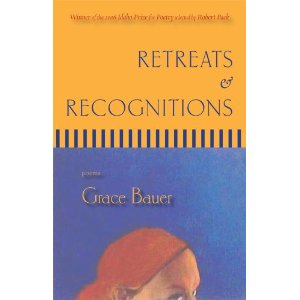
Meanwhile, I was also working on other poems – more based in personal experience – which became Retreats & Recognitions. That was a manuscript I almost gave up on. It includes some poems that were written in the mid-1980s combined with work written in the same year it was accepted (2006). The manuscript had seen numerous incarnations, worn several titles, been a finalist or semi-finalist many times. I could barely look at the damn thing anymore. And I couldn’t really see the poems when I did look at them. Sometimes I’d think, “yes, this is definitely a manuscript; it holds together; it’s some good work.” Other times I’d think it was too all-over-the place in both subject matter and style, or that maybe the whole thing was just total crap – though most of the poems in it had been published in journals. I was about ready to put it in a drawer and move on. Then I happened to be looking at Annie Finch’s book, Calendars - at the end of which she lists a calendar of when the poems in the collection were finished. The dates ranged from 1970 – 2000 — a much longer time period than the poems in my manuscript – so that gave me courage (and I’ve thanked Annie for this). Hilda Raz was also working on a book at the time, so we agreed to exchange manuscripts and provide each other feedback, as we’d done before. Hilda recommended I pull a few poems, rearranged a few others, and helped me choose between a couple of titles I was considering. I took pretty much every piece of advice she gave me and sent it out for what I swore was the last round of contests ever, and voila!, it won the Idaho Poetry Prize and was published by Lost Horse Press. This is a story I often tell to my students – a lesson in persistence. When I give them the old “life is short and art is long” lecture, I’ve got some street cred.


What about publication of the individual poems prior to the acceptance of chapbooks or books? Many of your poems appear in journals -The American Literary Review, Georgia Review, Poetry, Rattle, Southern Poetry Review, and many othersoften in print journals. Do you seek to publish poems in print, on-line, or a mix? Is there a balance you prefer of published and unpublished poems in a collection? What advice do you offer your students?

In my case – and I suspect this is true for many writers – much of this is out of our control. I generally work on individual poems for a long time; I revise a lot. When I finally consider it time to call a poem “finished,” I begin to send it out to journals. Some poems are taken quickly; others take a long time to find a home in a journal. There are so many factors involved in a poem getting published.

I tell my students another story — an experience I had early on in my publishing career: I sent a group of poems out to a certain journal and they were rejected. About six months later, I inadvertently sent the same poems back to that same journal. Not one word, not so much as a comma had been changed, but this time a poem was accepted. Why? I have no idea. I was not about to examine the teeth on that particular gift horse. I don’t mean to dismiss the importance of talent, the hard work of revision, the quality of the poems, etc. – but there’s also the serendipitous factor of the poems finding their way into the right editor’s hands at the right time. I guess that’s where persistence comes in. And what I can only think of as luck.

I don’t have any particular balance in mind regarding published and unpublished poems in a collection. A book can be fully realized, or not, either way – though I suspect having an impressive acknowledgements page may have some influence on the judges and/or editors reading a manuscript. As I’m sending chapbook or book manuscripts around, I continue to send poems to journals, and hope for the best on all fronts. Like most poets, I just want my poems out there in the world of readers, hopefully speaking to them in some way that matters – the way so many poems have spoken to me.

As for on-line and print journals – when I started publishing, there was no such thing as an on-line journal, so initially I was a bit skeptical of the on-line only versions. I’m also somewhat technically challenged, so for a while I even avoided journals with on-line submissions. But, I’m over all of that. I submit both ways and have been published in both kinds of venues – Blood Lotus, PIF Magazine, Switched-On Gutenberg, to name some on-line journals I’ve been in. I have a poem coming out in terrain, for which I also was invited to submit a recording of me reading the poem, which will be a nice addition to seeing it on screen. I certainly respect both kinds of journals. I advise my students to try both as well. It’s simply part of the times we live in – and who knows what on-line publishing will morph into in the future?

I will admit that I’m one of those people who still prefers the physicality of a book. I find it easier to curl up on the couch with a book than a screen of whatever kind, but that may also change as technology develops.


What advice would you offer other poets considering chapbook or book publication?

Do your best work. Revise and polish – both the individual poems and the manuscript as a whole. If you can, find a few readers you trust to be supportive but demanding critics/readers of your work, people who may see things with a fresh eye and offer you useful feedback. The beauty – and a great deal of the usefulness – of creative writing programs is that, for a certain period of time, they provide writers with that willing group of readers. It’s a good place to practice the old “do unto others” rule, a place to foster a community you may take with you when you go out into the so-called “real” world.

Once you think you’re ready to send a manuscript out, do your homework. Don’t waste time and reading fees sending to presses where the kind of work you do doesn’t have a prayer of being accepted. See what kinds of books the press has published, how they’ve promoted them, etc. Consider who the final judge is, if that information is available.

Of course, many – perhaps most – university and literary presses have limited advertising budgets, so a certain amount of responsibility for promoting a book always falls to the author. That used to mean mostly readings, but now there’s all the social media that can be utilized. I must admit to not being very good at this part of po-biz. I love to give readings; I love hanging out and talking to other writers, but I’m not very good at out-and-out schmoozing. It’s like behind my big mouth there’s a little bit of Emily Dickinson wanting to select my own society and shut the damn door on the rest of it, but I try to resist that urge.

Humor plays a big part in your poetry – and even in your author’s bio, your notes to the poems, your epigraphs. Why humor?

I’m not sure any writer can decide to try to be – or not to be – funny. It’s more a matter of temperament. Or perspective. I think humor – often of the dark variety – is just part of my world view I don’t know how to look at some of the things one witnesses every day and not see them as funny. Human beings are odd and quirky in such an infinite variety of ways – our interactions with each other, and even the “natural world,” are destined to a certain quota of absurdity, I think.

A few years back, for instance, I spent part of the fall living and writing at the Jersey Shore. This was nothing like the Jersey Shore of T.V. infamy, but a lovely little town – very quiet, fairly isolated out of season. I was looking for peace. I was looking for transcendence. I was reading A.R. Ammons and writing a response to his poem “Corsons Inlet,” an inlet which happens to be in the area I was staying. I’d take long walks on the beach several times a day, do a lot bird watching. I’d read a lot, talk to very few people, except on the weekends when I had visitors. One morning I was taking my morning walk after an overnight storm and the beach was covered with jelly fish – thousands of them — all small and clear and perfectly round (and totally gross to step on) — and all I could think of was how much they looked like silicone breast implants! I half expected to run into a gang of Pamela Anderson types, clutching their now under-filled double- D bikini tops as they side-stepped all the fake boobs littering the sand. This was not exactly a Mary Oliver kind of epiphany or a Wallace Stevens’ pondering of singer, song and sea! This was more absurdity than transcendence.

I did manage to write my Ammons’ tribute (that’s the poem coming out in terrain), which is suitably meditative in tone, and I have written a lot of poems that are perfectly serious, even somber, in tone and would not evoke so much as a smile from most readers, but now and then, absurdity continues to present itself – something to amuse my muse.

Or maybe it’s like the old bluesmen used to say – sometimes you gotta laugh to keep from crying.

Finally, can you talk about current projects you are working on.

I don’t like to talk about too many specifics early on, because sometimes the talk seems to dissipate the energy from the writing, but I do have both a full-length collection and a chapbook manuscript I’m sending around at the moment, and a longish abecedarian poem I think might make an interesting chapbook. I have other poetry projects in the works, and I’m also working on some prose – both creative nonfiction and fiction. The challenge is always finding the time for my own work amidst the tons of grading, advising, recommendation writing, etc. I have to do. That’s why god made summer vacation.


March news

I’m up on the department’s newsletter for March 1. I have poems in The Meadowland Review and in UNL Womanhouse: The House That Feminism Built. My essay “Bicycle Face” appears in Ginger Piglet.

I have five poems forthcoming in the spring issue of Feminist Studies. My poem “Aubade” is forthcoming in Paddlefish and my poem “Our Move, My Climb” is forthcoming in The Delinquent. Later this week to promote my forthcoming chapbook, SHE WHO LOVES HER FATHER, I have three poems from that collection, “Guilt Dream: Doing This to Myself,” “A Contemplation of Murder (or Desert Blood),” and “Mummy Treatment,” in Extract(s).

I read in the wonderful Les Femmes Folles: The Women, 2011 reading at Parallax Space in Lincoln last weekend. My collaborative broadside project has been in the show “Belles Lettres” during the month of March at the Altered Esthetic Art Gallery in Minneapolis.

Finally, SHE WHO LOVES HER FATHER is set to release in June from Dancing Girl Press. There will be a chapbook launch in Chicago. So if you’re in the area, stop by for the launch. I keep giggling about the word “launch” in relation to chapbooks and books. Where exactly is the book going to be launched to? Who is doing the launching? Is it a cannon? A slingshot? A rocket? Is it, it can’t be, I think it is….Pigs in Space…..Chapbooks in Space (cue the muppet’s voice over).