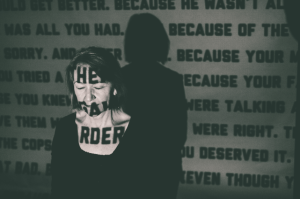
In the July/August 2013 Issue of Poets & Writers, Kevin Samsell coordinator of events at Powell’s books asked several of his favorite readers how they’ve gotten good at readings. You’ve organized and hosted countless readings, some of which you published in the “In Place” feature of Extract(s): Daily Dose of it. First, I’m wondering if you can talk about some of readers you’ve had that have given excellent readings and what was it about their readings that made the audience respond so positively.
This is such a great question because often I book writers whose work is fantastic on the page, read in my own head or voice, but I have no idea whether or not they are good readers. And I know this is risky because there are many well-respected and loved writers who are notoriously “bad” readers. But when I fall for someone’s work I forget all about that, and hope it will all turn out well.
What the best of the readers in my series have in common—and I’m thinking right now of you, Ruth Foley, Carol Berg, and Paul Hostovsky—is their very obvious pleasure at being able to read their work to people who are interested in listening. There is this authenticity about them—a real expression of gratitude that I think is hard to fake. They are sincerely grateful to have the opportunity to share their work. An audience can sense when they are being manipulated, I think, and the best readers are those who are honest in their work as well as talking about the work. Even though poetry began in the oral mode, to tell stories, it has become so private. If you consider it honestly, it is weird to stand up in front a room filled with strangers and read it to them. Like some sort of intervention. But that is the beauty of readings, and poetry especially—we rediscover our commonalities as humans. And if the poems are truly honest, and delivered honestly, everyone in the audience will find a connection. We will all be in that poem, in that emotional space together. That’s powerful.
Second, in the Samsell piece, Michael Herald talks about introduction: “Writers aren’t comedians, and it’s important to remember that distinction, but if you’re reading something brutal and depression it’s not a bad idea to say something funny while introducing yourself. It’ll help you relax and keep people on your side while you wade into this brutal, depressing stuff” (76). Can you describe some of the ways you’ve heard good readers introduce themselves and/or some of the ways you’ve introduced yourself on stage and the effect such introductions have had on the audience?
I think I disagree to some extent with Herald, although I understand his sentiment. As poets reading we are performers—actors and entertainers to some extent—and for me this means we are whatever the poem demands. Each poem has its own persona, and to share that with an audience requires the reader to take on that voice.
That said, I think everyone says something light before they read, especially if they give some sort of “road map” of what will be coming. Often it’s inclusive, such as “we’ll get through this together” or reassuring “but I’m here to share them with you.”
For me, I don’t do much on the front end of the heavy work. I will explain the nature of the situation from which the poem(s) arose, but I don’t try to dilute the emotional weight of the work for me or for the audience. If the room seems need to breathe, I’ll save the “laugh” for the transition and say something like “Okay, now for something much less dark,” or “so you don’t all go home feeling terrible about the world,” and then read a funny poem. Pacing the entire set is more effective, I think, than trying to set a mood at the beginning. I want the audience to take the ride, and that is tough to do if they have certain expectations at the outset. I think that is more useful in keeping people “on your side.”
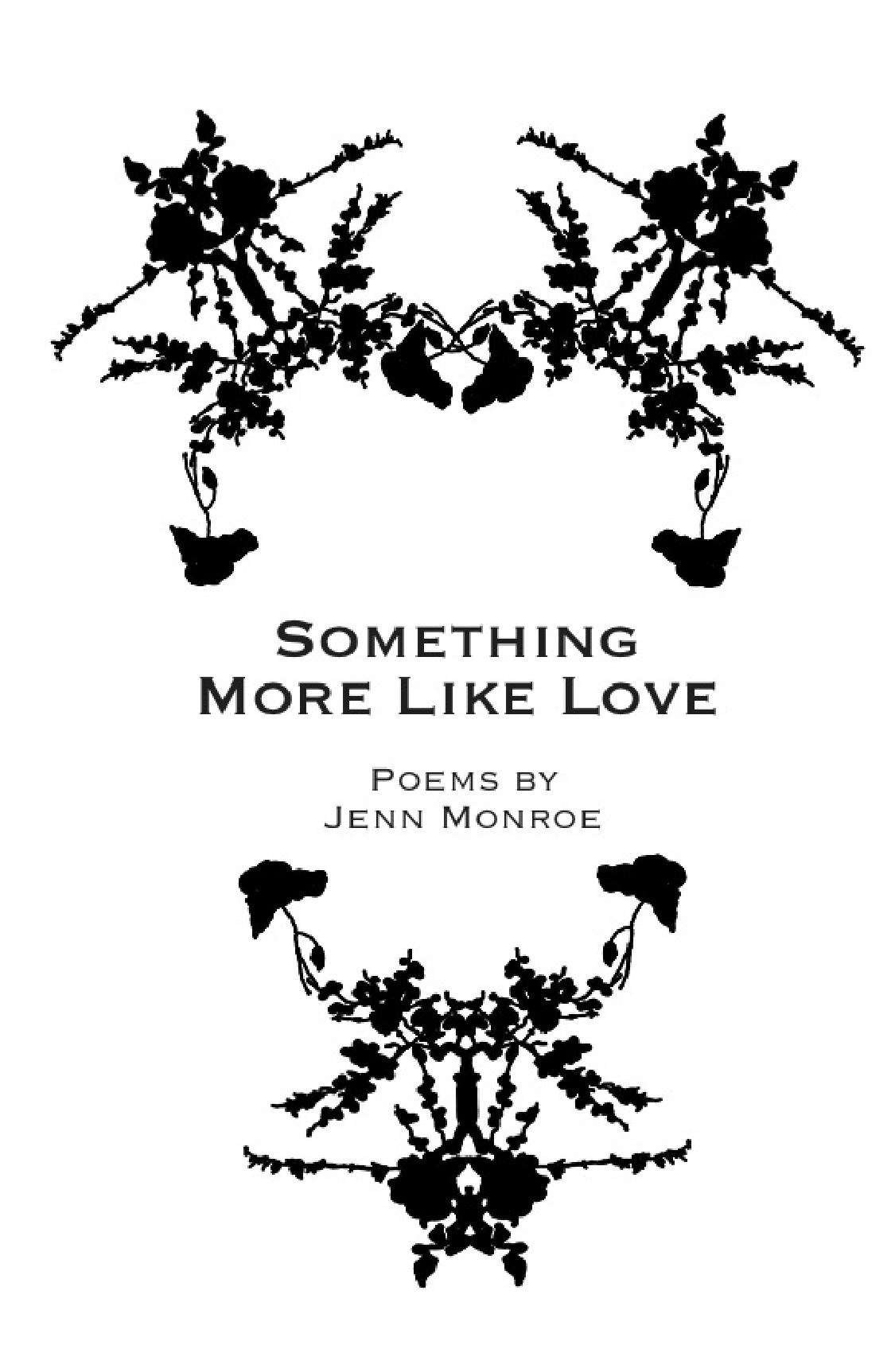
It’s a pleasure to read your poems in Something More Like Love (Finishing Line Press, 2012), in the prose poem form and otherwise. In Michel Deville’s essay “Stranger Tales and Bitter Emergencies: A Few Notes on the Prose Poem in An Exaltation of Forms (2009) edited by Annie Finch and Katherine Varnes, he traces the origin of the form to Gertrude Stein’s Tender Buttons (1914) and notes how the form uses “virtually all the devises of poetry” (262) as it “tends to include or exclude, subscribe to or subvert” (263) the genre. He writes that “the prose poem has transformed the concerns of contemporary poetics by focusing attention on consideration of form, mode, genre, and representational strategies” (266). Though he notes the difficulty of such delineation, he divides the form into two camps, the “narrative” and the “language-oriented” trend (262). Can you talk about what camp your prose poems lean towards and why?
I get the “prose poem” question all the time, even though just about every line in every poem in my chapbook is deliberately and, more often than not, painstakingly broken. I never intended to be someone who pushed the boundaries of the line and I find most of my energy in revision goes into making my line breaks as successful as possible.
So I’ve been forced to think about this, what to do so as not to be too possessive of these poems and my “intentions” and this is where I’ve landed: I write prose poems with deliberate line breaks. In essence, I’ve added another poetic device to the prose poem.
I usually find myself working in this mode when the poem does not have a specific story to tell, but begins already in scene. They lean much toward the “language-oriented” trend, although I don’t experiment much with language. At least I don’t think so, but perhaps the long phrasing is an experiment of a sort. I guess the question would be, if I don’t want these to be considered prose poems, why not break the line sooner? I find I slip into longer lines when my poems get more surreal, more dreamlike, and rely on images more than narrative. These poems capture certain moments and evoke a mood while avoiding sentimentality. I like to use the prose mode to explore-I have an obsession with Love and a desire to look at it from every angle-and I find it is such a fine vehicle for exploration because it invites (requires?) progression, whether narrative or lyrical, without necessarily having to worry about line breaks (unless you are me). My guides in this mode range wildly and include Charles Baudelaire, Fanny Howe, Lyn Hejinian, David Shumate, and Rosemarie Waldrop among others. I’m constantly inspired by their work.
Beyond this interview and the last time we spoke in person, one of the things that really struck me about our conversation was the ways you talked about the publishing industry today. Rather than lament as so many do about ebooks, Amazon, the digital revolution, etc., etc., you talked about how you saw today’s publishing world as exciting, more akin to the world F. Scott Fitzgerald, Gertrude Stein, and Earnest Hemmingway would have experienced. Can you talk about your sense of publishing today for poets and why it is an exciting time to be a writer today?
My enthusiasm for the publishing world today comes from the vast number of publishing opportunities. This has come from the tremendous growth in the number of literary journals-both online and in print-and the growth of small independent presses. One of the reasons why my colleague Christopher Anderson and I started Extract(s) and wanted to have an “Excerpts” feature is to help people become familiar with some of (what we consider) the best of these smaller presses. And we’ve even taken it a step farther and established our own press, just to make sure the writers we love can get their work read.
It is so heartening to me that you no longer need an agent, to get published in a “top tier” lit mag, or picked up by a major publishing house to get your work out there. Writers still need to do their research, but with the growth of social media it has become even easier to find your “niche:” those editors and magazines and readers. And while it would be great to have an agent, get a poem in Paris Review or have Harper Collins want one of my books, I don’t think these are necessarily the measures of “success.” At least they seem to be less and less important. What seems to matter most, and this is where my comment about how today is more like the mid-20th century, is that what we called “networking” is exactly what those writers were doing: building connections that start with close friends and ripple out wider and wider. And that was for everything-publications, teaching positions, places to stay.
I think the growth in the number of MFA programs is probably partially responsible for this “community boom,” and then social media has allowed it to explode. I joined Facebook reluctantly and used it only occasionally until I noticed a number of literary magazines joining. Then I realized just how to use it. And then came the groups. I don’t belong to too many that are literary/writing based, and only two in which I am a stranger to most of the members. But one of these groups is for calls for submissions, and the other puts together submission “bombings” of a wide range of literary magazines, some upper tier, some not. In the early days everyone was so wary of online magazines because of quality and rights. Not so today. The internet has made hybrid forms possible (I’m thinking of MotionPoems, as one example but there are so many others). And who knows what other creative ideas will come in the next 10 years. All of this should energize writers. I know it certainly energizes me.

Let’s talk about the work of the poet. In the September/October 2013 issue of Poets & Writers and in the special section on the MFA, Michael Bourne notes in his essay “Degrees of Value: What Happens After the MFA Program” that “roughly four thousand MFA students graduate every year” and job wise AWP “reported 282 full-time tenure-track positions, 130 of which were for teaching creative writing” (111). You have an MFA, a chapbook, and have taught creative writing. You also run a press and a journal. Can you talk about what has happened since your MFA and the work you do as a poet?
I am probably the only MFA-holding poet who has voluntarily walked away from a full-time teaching gig—something I did at the end of this past May despite knowing, inherently, that I am a teacher. I am driven to share my passion for reading and writing and to help uncover the poet in everyone. What is becoming clear to me, however, is that I don’t necessarily have to be in a college classroom to accomplish this. My work as a poet includes bringing poetry to my community by hosting readings and open mic nights. The press I’ve launched with my colleague Chris gives me the opportunity to put great chapbooks—poetry and prose—into circulation. Our literary blog offers daily “doses” of poetry, prose, music, art, and more. Our “lit house” business provides workshops and editorial support for writers of all levels. And of course there is my own writing. I am finding myself now more immersed in poetry and writing than I was when teaching full-time. And it feels authentic. More like what a poet should be doing. Or at least what I as a poet should be doing.
In “Consociational Poetics: An Interview with Anne Waldman” the March/April 2013 issue of The Writer’s Chronicle, Waldman explains, “No one asks you to write: You need to be lit from within somehow” (64). How do you keep your fire lit? What to you feed it to keep it burning, especially for someone who writes love poems?
I’m so glad you mentioned Anne Waldman. She was an important part of my MFA experience. I only had the opportunity to have one workshop with her, but her presence and her performances have left valuable impressions.
I’ll admit keeping that fire lit has taken some effort since I became a mom. But because so much of my work examines the different aspects of love much of it now comes from my observations of my three-year-old daughter. Watching the person you love more than anyone discover the world is unlike anything else and I’m constantly inspired by the events of our days-both large and small-and write about them when I get the chance to sit down and put them on paper. Most days this is during nap time or late at night, but it gets done. I have an amazing husband who has shared all parenting responsibilities since day one. To be honest, he has been the reason I’ve been able to continue my creative work. And now that I am no longer teaching full-time, and my daughter will be in pre-school twice a week, I think the writing time will become much more regular again. It feels as though I’m about to embark on a trip. I have no idea where I’m going, or what I’ll discover, but it feels exhilarating.
With a young child, is it difficult to balance family life with writing life?
Becoming a mom has been the most challenging thing I’ve ever undertaken and yes, balancing time with my daughter and my husband with the time I need to dedicate to my writing (and until recently to a full-time teaching job) has been exhausting. I had a great deal of confidence in my ability to be able to “do it all” and to do it all well, but I the end, that wasn’t possible for me. So I took an honest look at my priorities, and made some tough choices. But even through these transitions, the ideas and images keep coming, so I try to make sure I have a pen and pad of paper close by to catch them.
What is inspiring you these days?
In addition to my daughter, I continue to be inspired by the mystery of nature and the metaphors I find there. I’m an amateur birder—I have a number of feeders in my back yard—and am fascinated by their behavior, how they communicate and seem to “relate” to one another. Music, too, serves as a continual source of inspiration for me. I’m also quite moved by all the youthful energy in the writing world today. I took my first poetry workshop when I was 27 as part of my first graduate program (I have an MA in English as well as the MFA). I’m so inspired by kids who go all in from the start.
How are you trying to get better as a poet?
I read as much poetry as I can, and I read at least one poem every day. I read essays about writing poetry. And I continue to write, daily when possible.
But what I think makes me better as a poet is being an active part of the world. My daughter helps with this. It is like I am re-learning how to experience everything around me. For example we shared her first rainbow the other day and drove around chasing it, trying to get the best view, until it disappeared. I haven’t done that in years. She asked all the questions you’d expect someone who had never seen a “real” rainbow before to ask and I couldn’t answer them all. That moment will be a poem and it probably won’t end up “about” her at all. Trying to be open to finding poems everywhere—that’s how I’m trying to get better as a poet.
Number of chapbooks you own: 13
Number of chapbooks you’ve read: 40+
Ways you promote other poets: Lit blog, press, reading series, & social media.
Where you spend your poetry earnings: I’d like to say I spend it on more poetry, but the truth is I use it to support my vintage dress addiction.
Inspirations and influences: There are so many and it depends on what I need at any given moment, but always Sharon Olds and my mentors Barbara Louise Ungar and Judith Vollmer. Fanny Howe inspires me to forget about genre and boundaries in general. I want to be that free, that brave. I’m also completely inspired by my friend Karen Dietrich. She has two chapbooks, makes great music with her husband as Essential Machine, and her memoir, The Girl Factory, comes out this fall. She’s a mom and a teacher too, and one of the most generous, kind, and truly happy people I’ve ever had the pleasure to know.
Residence: Manchester, NH
Job and education: More than 15 years teaching writing at the college level at a number of institutions including Oneonta State College, Keene State College, Chester College of New England, and the New Hampshire Institute of Art. Currently: executive producer, Extract(s): Daily Dose of Lit; executive editor, Eastern Point Press; co-founder, Eastern Point Lit House; BA St. Bonaventure University; MA, The College of Saint Rose; MFA, New England College
Bio: Jenn Monroe is the author of the chapbook Something More Like Love (2012, Finishing Line Press). A Pushcart Prize nominee, her work has been published in a number of journals, both online and in print, and is forthcoming in Tower Journal and Dressing Room Poetry Journal.