Women Write Resistance reading at the Indiana Writers’ Consortium’s 2014 Creative Writing Conference and Book Fair

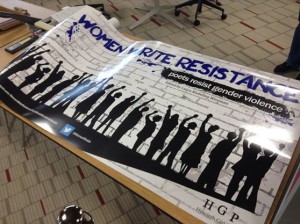
WWR_poster_indiana

Women Write Resistance Poets read at IWC

Reading of Women Write Resistance
with Shevaun Brannigan, Sara Henning, Laura Madeline Wiseman, Larissa Shmailo, Jill Khoury, Meg Day, & Mary Stone Dockery
Indiana Writers’ Consortium’s 2014 Creative Writing Conference and Book Fair
4:00-5:10 PM, Saturday, October 11, 2014
Salon A, Hilton Garden Inn, 7775 Mississippi Street
Merrillville, Indiana

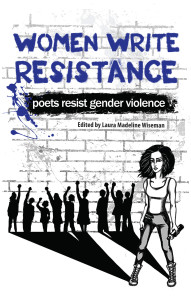
Women Write Resistance: Poets Resist Violence (Hyacinth Girl Press, 2013), edited by Laura Madeline Wiseman, views poetry as a transformative art. By deploying techniques to challenge narratives about violence against women and making alternatives to that violence visible. Poetry of resistance distinguishes itself by a persuasive rhetoric that asks readers to act. The anthology’s stance believes poetry can compel action using both rhetoric and poetic techniques to motivate readers. In their deployment of these techniques, poets of resistance claim the power to name and talk about gender violence in and on their own terms. Indeed, these poets resist for change by revising justice and framing poetry as action. This IWC Conference reading will include an introduction by the editor and feature Women Write Resistance poets who will read their poems and others from Women Write Resistance.

WWR going to STR 2

The featured Women Write Resistance poets

“When you sit down to write a poem, I think you’re making a really brave and bold statement that is at once insistent upon your own existence and also wildly generous in the sacrificing of that existence to the possibility of a reader. To be a person—to insist on personhood—is a right we see refused to the majority of the people in this country (and other countries, with our country’s help) on a daily basis, even when we aren’t hearing about it on the news or social media.” - Meg Day, Blotterature

Meg Day, selected for Best New Poets of 2013, is a 2013 recipient of an NEA Fellowship in Poetry and the author of Last Psalm at Sea Level, winner of the Barrow Street Press Poetry Prize (forthcoming 2014), When All You Have Is a Hammer (winner of the 2012 Gertrude Press Chapbook Contest) and We Can’t Read This (winner of the 2013 Gazing Grain Chapbook Contest). A 2012 AWP Intro Journals Award Winner, she has also received awards and fellowships from the Lambda Literary Foundation, Hedgebrook, Squaw Valley Writers, the Taft-Nicholson Center for Environmental Humanities, and the International Queer Arts Festival. Meg is currently a PhD candidate, Steffensen-Cannon Fellow, & Point Foundation Scholar in Poetry & Disability Poetics at the University of Utah. www.megday.com
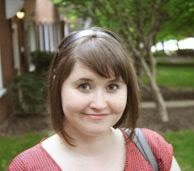
“I also do not think of poems or poets as static—just because someone writes poetry, does not mean they cannot be an activist. In fact, poetry, which is a vital form of connecting with others, may predispose someone to be more in tune with the world’s injustices.” - Shevaun Brannigan, Blotterature

Shevaun Brannigan is a graduate of the Bennington Writing Seminars, as well as The Jimenez-Porter Writers’ House at The University of Maryland. She has had poems appear in such journals as Best New Poets 2012, Lumina, Rhino, Court Green, and Free State Review. She has been an Arts & Letters Poetry Prize finalist, received an honorable mention in So to Speak’s 2012 Poetry Contest, as well as a Pushcart nomination by Rattle.
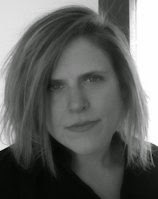
“Sometimes, the attempt at truth is all that one can muster, and that is its own truth.” - Sara Henning, The Conversant

Sara Henning is the author of A Sweeter Water (Lavender Ink, 2013), as well as a chapbook, To Speak of Dahlias (Finishing Line Press, 2012). Her poetry, fiction, interviews and book reviews have appeared or are forthcoming in such journals as Willow Springs, Bombay Gin and the Crab Orchard Review. Currently a doctoral student in English and Creative Writing at the University of South Dakota, she serves as Managing Editor for The South Dakota Review.
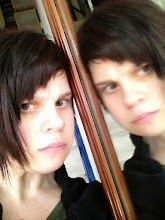
“Poetry has been revolutionary and transformative for me since I became interested in poetry.” - Jill Khoury, Blotterature

Jill Khoury earned her Masters of Fine Arts from The Ohio State University. She teaches writing and literature in high school, university, and enrichment environments. Her poems have appeared or are forthcoming in numerous journals, including Bone Bouquet, RHINO, Inter|rupture, and Stone Highway Review. She has been nominated for two Pushcart Prizes and a Best of the Net award. Her chapbook Borrowed Bodies was released from Pudding House Press. You can find her at jillkhoury.com.
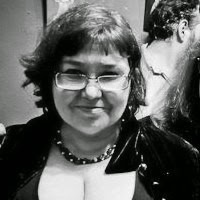
“Poetry transformed me… into a powerful woman…Poetry continues to mold and shape my life by offering new possibilities each day.” - Larissa Shmailo, Blotterature

Larissa Shmailo is the editor of the anthology Twenty-first Century Russian Poetry, poetry editor for MadHat Annual, and founder of The Feminist Poets in Low-Cut Blouses. She translated Victory over the Sun for the Los Angeles County Museum of Art’s landmark restaging of the multimedia opera and has been a translator on the Bible in Russia for the American Bible Society. Her books of poetry are #specialcharacters (Unlikely Books), In Paran (BlazeVOX [books]), A Cure for Suicide (Červená Barva Press), and Fib Sequence (Argotist Ebooks); her poetry CDs are The No-Net World and Exorcism (SongCrew).
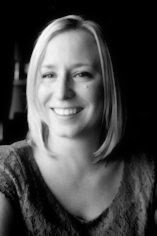
“There have been times in my life where poetry gave me all the answers about myself and about the world and about what it means to be a woman.” - Mary Stone Dockery, Blotterature

Mary Stone Dockery is the author of One Last Cigarette and Mythology of Touch, and two chapbooks, Blink Finch and Aching Buttons. Her poetry and prose have appeared in many fine journals, including Mid-American Review, Gargoyle, South Dakota Review, Arts & Letters.

omaha2014

“As I wrote in the critical introduction to Women Write Resistance: Poets Resist Gender Violence, I believe poetry is power. Poetry is action.” - Laura Madeline Wiseman, Blotterature

Laura Madeline Wiseman is the author of more than a dozen books and chapbooks and the editor of Women Write Resistance: Poets Resist Gender Violence (Hyacinth Girl Press, 2013). Her recent books are American Galactic (Martian Lit Books, 2014), Some Fatal Effects of Curiosity and Disobedience (Lavender Ink, 2014), Queen of the Platform (Anaphora Literary Press, 2013), Sprung (San Francisco Bay Press, 2012), and the collaborative book Intimates and Fools (Les Femmes Folles Books, 2014) with artist Sally Deskins. Her work has appeared in Prairie Schooner, Margie, Mid-American Review, and Feminist Studies. www.lauramadelinewiseman.com
More recent interviews with poets from Women Write Resistance:

An Interview with Poets from Women Write Resistance: Poets Resist Gender Violence,” Blotterature, October 2014

“‘To make a new whole of the fragments’: A Roundtable Discussion with poets in Women Write Resistance,The Conversant, October 2014

“‘We invent the forms of resistance we wish to see‘: A Roundtable Discussion with Poets in Women Write Resistance,” Les Femmes Folles, September 2014

“Blot Lit Reviews: An Interview with Writers from Women Write Resistance: Poets Resist Gender Violence,Blotterature Literary Magazine, by Julie Demoff-Larson with Sarah Chavez, Tyler Mills, Jennifer Perrine, Carly Sachs, Monica Wendel, and Margo Taft Stever, May 2014, Part I & Part II

“‘their words make this possible‘: A Roundtable Discussion of Poetics of Emplacement with Poets from Women Write Resistance,” Spoon River Poetry Review, April 2014
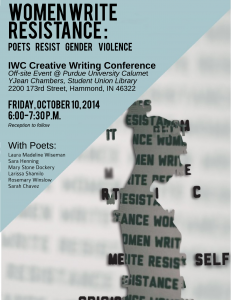
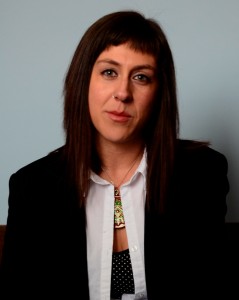
Women Write Resistance: Poets to read at Purdue University Calumet

WWR Flyer purdue

Women Write Resistance: Poets to read at Purdue University Calumet Press Release

Women Write Resistance Poets Reading Event at Purdue University Calumet
with Sara Henning, Mary Stone Dockery, Laura Madeline Wiseman, Larissa Shamilo, Sarah Chavez, & Rosemary Winslow
2200 173rd Street, Hammond, IN 46322
October 10, 2014 at 6:00 p.m.
Contact: Indiana Writers’ Consortium at 219-750-1200 ext. 203
[email protected]

Hammond, INSeptember 19, 2014— Indiana Writers’ Consortium, in conjunction with Purdue University Calumet’s Department of English and Philosophy and student organization First Friday Wordsmiths, are hosting six nationally known poets featured in the anthology Women Write Resistance: Poets Against Gender Violence. The six featured readers are: Laura Madeline Wiseman, Sara Henning, Mary Stone Dockery, Larissa Shamilo, Rosemary Winslow, and Sarah Chavez. The event, which is free of charge and open to the public, will take place in YJean Chambers Theater in the Student Union Library Building directly north of the 173rd Street parking lot. The reading will begin at 6:00 p.m. and there will be a book signing in the Founders’ Study after the reading. Free refreshments will also be available during the signing.

Indiana Writers’ Consortium inspires and builds a community of creative writers. We are the premier group in Northwest Indiana dedicated to educating writers from the ground up through speakers, seminars, and children’s programs. IWC provides educational and networking opportunities for writers in all stages of their careers. We also sponsor an annual children’s project, where we partner with local schools to bring poetry into the classroom. For more information please visit our website indianawritersconsortium.org or contact the IWC at 219-750-1200 ext. 203. The Indiana Writers’ Consortium is located at 5209 Hohman Ave., Hammond, IN 46320.

Featured poets from Women Write Resistance: Poets Resist Gender Violence

Sarah Chavez

“As much as possible, I try to allow my poetry to embrace and inhabit conflict and conflicting truths…” - Sarah Chavez, The Conversant

Sarah A. Chavez is a mestíza born and raised in the California Central Valley completing her PhD in poetry and Ethnic Studies from the University of Nebraska – Lincoln. Her work can be found in various publications such as Not Somewhere Else But Here: A Contemporary Anthology of Women and Place, the journals North American Review, The Fourth River, and others. Her chapbook All Day, Talking has just been released from dancing girl press.

“The knowledge expressed in poetry has infinite organizing power on a subconscious as well as conscious level.” - Larissa Shamilo, Blotterature

Larissa Shmailo is the editor of the anthology Twenty-first Century Russian Poetry, poetry editor for MadHat Annual, and founder of The Feminist Poets in Low-Cut Blouses. She translated Victory over the Sun for the Los Angeles County Museum of Art’s landmark restaging of the multimedia opera and has been a translator on the Bible in Russia for the American Bible Society. Her books of poetry are #specialcharacters (Unlikely Books), In Paran (BlazeVOX [books]), A Cure for Suicide (Červená Barva Press), and Fib Sequence (Argotist Ebooks); her poetry CDs are The No-Net World and Exorcism (SongCrew).

“Poetry taught me how to search for understanding, how to empathize, and how to define myself at different stages throughout my life.” - Mary Stone Dockery, Blotterature

Mary Stone Dockery is the author of One Last Cigarette and Mythology of Touch, and two chapbooks, Blink Finch and Aching Buttons. Her poetry and prose have appeared in many fine journals, including Mid-American Review, Gargoyle, South Dakota Review, Arts & Letters.

“Poetry is suffering, lovemaking, the body at its limits demanding to be heard. Poetry is also a place to exorcise cultural paradoxes.” - Sara Henning, Blotterature

Sara Henning is the author of A Sweeter Water (Lavender Ink, 2013), as well as a chapbook, To Speak of Dahlias (Finishing Line Press, 2012). Her poetry, fiction, interviews and book reviews have appeared or are forthcoming in such journals as Willow Springs, Bombay Gin and the Crab Orchard Review. Currently a doctoral student in English and Creative Writing at the University of South Dakota, she serves as Managing Editor for The South Dakota Review.

“Teaching a junior level course to majors from every discipline at the university last spring, I noted a sea change in greater understanding of the experiences of gendered cultural forces. The evidence was most marked in responses to Adrienne Rich’s essay, “When We Dead Awaken.” To my great surprise, and counter to my experiences of previous decades, students understood, with palpable compassion, the violence to the self as Rich considers having no place or voice for a female self.” - Rosemary Winslow, Spoon River Poetry Review

Rosemary Winslow lives in Washington, D.C., and teaches at The Catholic University of America. Her book Green Bodies expressed and grappled with the complexities of love in troubled families, and sought understanding, forgiveness, and compassion for the wide circle of humankind. She has taught in shelters for women, and now enjoys yoga, hiking, swimming, kayaking, and singing in a choir.

omaha2014

“Early in college I was introduced to writers such as Adrienne Rich, Audre Lorde, and Sandra Cisneros. These writers and others allowed me to explore the rich world that poetry offered, to see how poetry was a work worth doing, and that art could be made from life, that such a writing life was possible.” - Laura Madeline Wiseman, Blotterature

Laura Madeline Wiseman is the author of more than a dozen books and chapbooks and the editor of Women Write Resistance: Poets Resist Gender Violence (Hyacinth Girl Press, 2013). Her recent books are American Galactic (Martian Lit Books, 2014), Some Fatal Effects of Curiosity and Disobedience (Lavender Ink, 2014), Queen of the Platform (Anaphora Literary Press, 2013), Sprung (San Francisco Bay Press, 2012), and the collaborative book Intimates and Fools (Les Femmes Folles Books, 2014) with artist Sally Deskins. Her work has appeared in Prairie Schooner, Margie, Mid-American Review, and Feminist Studies. www.lauramadelinewiseman.com

Women write resistance banner

More recent interviews with poets from Women Write Resistance:

An Interview with Poets from Women Write Resistance: Poets Resist Gender Violence,” Blotterature, October 2014

“‘To make a new whole of the fragments’: A Roundtable Discussion with poets in Women Write Resistance,The Conversant, October 2014

“‘We invent the forms of resistance we wish to see‘: A Roundtable Discussion with Poets in Women Write Resistance,” Les Femmes Folles, September 2014

“Blot Lit Reviews: An Interview with Writers from Women Write Resistance: Poets Resist Gender Violence,Blotterature Literary Magazine, by Julie Demoff-Larson with Sarah Chavez, Tyler Mills, Jennifer Perrine, Carly Sachs, Monica Wendel, and Margo Taft Stever, May 2014, Part I & Part II

“‘their words make this possible‘: A Roundtable Discussion of Poetics of Emplacement with Poets from Women Write Resistance,” Spoon River Poetry Review, April 2014
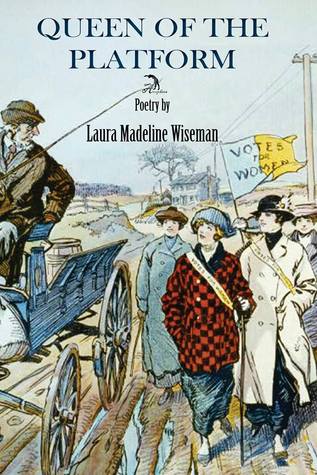
wwr_CoverImage

Matilda Fletcher Wiseman as Queen of the Platform

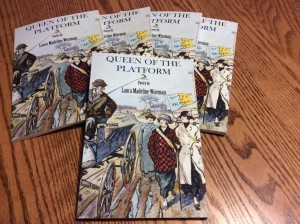
QUEEN OF THE PLATFORM first copies

My dissertation that became the book Queen of the Platform has been out just over six months. Hooray! I thought it’s time to write an update about my second full-length collection of poetry published in December 2013 by Anaphora Literary Press. The poems in Queen of the Platform are based on the life of my great-great-great-grandmother, the nineteenth century lecturer, suffragist, and poet, Matilda Fletcher Wiseman (1842-1909). I first learned of Matilda when my father and grandparents suggested I look up my great-great-great-grandmother “who spoke at Chautauquas while her stepchildren sang and danced.” They didn’t know much about Matilda, but they did know a bit about her second husband, William Albert Wiseman, who started the Grace Methodist Church in Des Moines, Iowa.

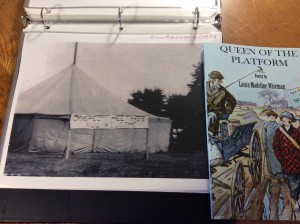
The tent church were William Albert Wiseman spoke.

(The tent church where William Albert Wiseman spoke.)

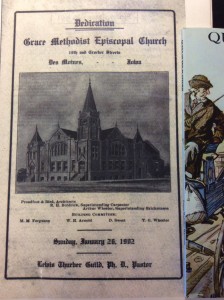
GM Church, Des Moines, IA 1902.

(GM Church, Des Moines, IA 1902.)

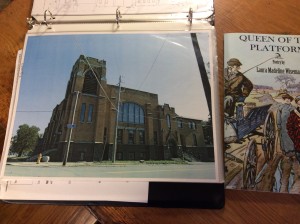
It started as a tent, became a wooden building, and then was rebuilt a few years later in brick. It still stands today on the corner of Crocker Street in Des Moines.

GM Church, Des Moines, IA 2009

(GM Church, Des Moines, IA 2009.)

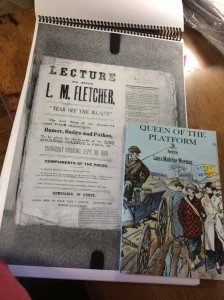
So knowing these two small bits about Matilda - she was a lecturer and her second husband was a minister in Des Moines - I began talking to relatives who had interests in genealogical work, examining family artifacts and letters, and researching historical documents to find out who Matilda was, where she spoke, why she gave a lecture to over seven thousand in Indiana accompanied by what the newspapers called a “heart chart,” and why one of her popular talks and one of her published poems was entitled “The Heart of a Man.” One Wiseman cousin allowed me to look at a scrapbook Matilda kept during the first years of her lecture career.

One of the first pages in Matilda Fletcher Wiseman's scrapbook, 1869-1874.

(One of the first pages in Matilda Fletcher Wiseman’s scrapbook, 1869-1874.)

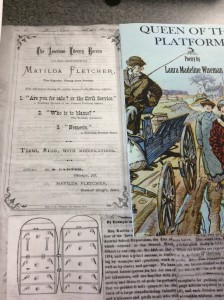
Some of what Matilda wrote has survived-some of her letters to the editors, poems in full or excerpted—however much of Matilda’s work remains in fragments as quoted in historic newspapers, and even more remains in announcements only, such as the lecture “Are You for Sale?”

The American Literary Bureau's renouncement for Matilda Fletcher, "The Popular Young Iowa Poetess" early 1880s

(The American Literary Bureau’s announcement for Matilda Fletcher, “The Popular Young Iowa Poetess” early 1870s)

A photograph of Matilda has yet to be found.

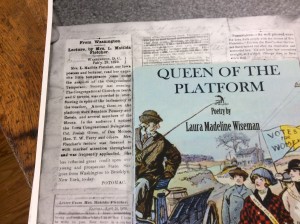
A newspaper clipping from Matilda Fletcher's talk, February 28, 1870

(A newspaper clipping from Matilda Fletcher’s talk, February 28, 1870)

My research allowed me to find out where Matilda was born and some information about her early life. Matilda (Felts) Fletcher Wiseman was the fifth of fourteen children from abolitionist parents, who had fled the South. She was born in Winnebago County, Illinois, and raised on a farm in Durand. All seven of her brothers served in the Civil War. In the late 1960s, Matilda married her school teacher, John A. Fletcher (1837-1875). John served in the Civil War where he contracted tuberculosis, a disease that made him increasing ill. They moved to Council Bluffs where he was a school teacher and a lawyer. They had one child together, Alice “Allie” Fletcher, a child that didn’t live beyond the age of two. The disease continued to ravage John’s health. After the death of their child, Matilda joined the lecture circuit to support herself and her frail husband. She wrote about her daughter. Two published hymns about Allie appear in Song Echo.

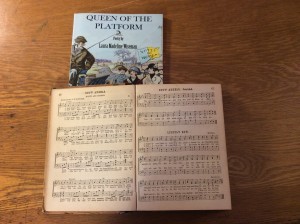
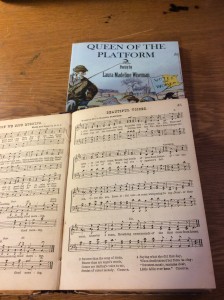
Matilda Fletcher's hymn "Beautiful Voices" in The Song Echo

(Matilda Fletcher’s hymn “Snow Angel” in Song Echo, by H.S. Perkins)

Matilda Fletcher's hymn "Beautiful Voices" in The Song Echo

(Matilda Fletcher’s hymn “Beautiful Voices” in Song Echo, by H.S. Perkins)

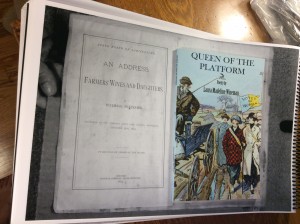
Matilda was a popular lecturer and she quickly began speaking with other lecturers of her time like Susan B. Anthony, Elizabeth Cady Stanton, and Francis Willard. She spoke on suffragist, education, and reform. She also stumped for a presidential candidate, even though she didn’t live long enough to have the right to vote. She wrote and had three books published. The first book, Farmers’ Wives and Daughters, was both published in 1873 by the Lincoln Journal Company, State Printers in Nebraska after she gave the address at the Nebraska State Fair.

Farmers Wives and Daughters, by Matlida Fletcher

(Farmers’ Wives and Daughters, by Matilda Fletcher)

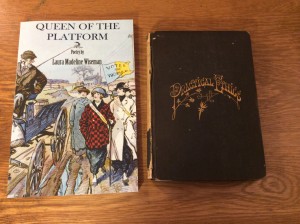
Two years later, her first husband died of tuberculosis in the summer of 1875. That same year, her second book was released, Practical Ethics and published by A.S. Barnes & Company in New York, Chicago, and New Orleans.

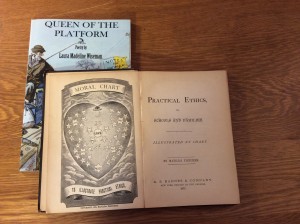
Practical Ethics by Matilda Fletcher

(Practical Ethics by Matilda Fletcher)

I’ve always admired that the illustrated heart chart inside the book.

Interior illustration in Practical Ethics by Matilda Fletcher.

(Interior illustration in Practical Ethics by Matilda Fletcher.)

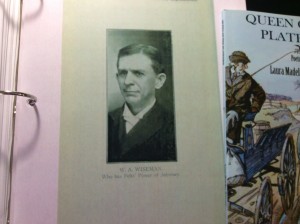
Despite the loss of her child and her husband, Matilda continued to write and speak to earn a living and make a career. She patented a design for traveling trunks for women and wrote bills on educational reform that were passed into law. Eleven years later, she remarried a Methodist minister, my great-great-great-grandfather, William Albert Wiseman (1850-1911), and became stepmother to his three small children, all under the age of ten.

William Albert Wiseman

(William Albert Wiseman, Matilda Fletcher’s second husband.)

Albert became her agent and according to family legend, the family toured the country and the children sang and danced to Civil War Songs whenever Matilda took the stage. (Full disclosure: I’ve yet to find evidence about the children’s onstage presence, but family legend also says that the reason why Albert’s namesake ate dessert first at meals was due to his childhood rearing on the road. Whenever the family arrived via train in another town where Matilda would speak, they headed first to the hotel restaurant and while they waited for their dinner to be prepared, they had dessert.) What followed was many productive years of lecturing and life. For a brief time, the family even moved from Iowa to Texas where Matilda served as assistant minister in a church where Albert was the minister.

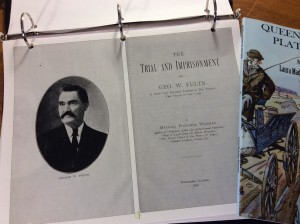
Geo Felts, Matilda Fletcher's younger brother who was charged with murder.

(Geo Felts, Matilda Fletcher’s younger brother who was charged with murder.)

After moving back to Des Moines and to their home in Sherman Hills, Matilda’s brother needed her assistance. In 1905, her brother, George W. Felts (1843-1921), a civil war solider, was charged with murder and sentenced to life in the state prison in Joliet. Matilda writes that Geo was jumped at a saloon. Somehow one of the men involved and a friend of Geo’s, was stabbed. The injury hit the man’s femoral artery. He bled to death. Between 1905 and 1909, with the help of her husband, Albert, Matilda challenged the Illinois court’s ruling, a task that culminated in the publication of her third book, The Trial and Imprisonment of Geo E. Felts: A Deaf Old Solider Robbed of his Rights (1905) and her early death in a hospital in Rockford, IL. Beyond her insistence of his innocence, her contention with his sentencing concerned the court’s failure to accommodate her brother’s disability. Geo was deaf due to his service in the Civil War, a combined result of cannon fire and measles. Throughout the trial, no one provided Geo with a written account of the proceedings, nor did anyone speak directly into his ear-tube, a device through which he could hear imperfectly. In short, Matilda argued that his trial wasn’t legal because Geo neither heard nor understood the charges. All attempts failed. She died at the age of sixty-six and is buried in Des Moines in Woodland Cemetery beside her daughter and two husbands. What became of Geo is unknown. He is buried in Durand Cemetery. This series of poems in Queen of the Platform, partly fact and partly imagination, is where all this research took me.

I’ve had the opportunity to talk about this research in WomenArts Quarterly Journal and the Country Dog Review.

She started lecturing in 1869, shortly after Allie died. John died in 1875. During those brief six years, Matilda lectured hundreds of times, all over the country, and even in Canada. She wrote and published three books. She was an editor and writer for the Iowa State Register (which was renamed as The Des Moines Register in 1903) where she describes her travels, her lectures, and her experiences on the train.

I was able to talk about research and fact and the use of found poetry in Compose Journal.

I wanted poems in Queen of the Platform to offer up a taste of the linguistic phrasings of nineteenth-century newspapers, especially how they recapitulated and paraphrased her two hour lectures. To savor that language, I employed the ghazal, the sestina, and the acrostic.

Reviews of Queen of the Platform are in Weave, Broad Blogs, and The Volta.

With her graceful rhythmic flare, and real and imagined homey narrative, she presents upended views of the meaning of equality via the men around her suffragist ancestor in the time before women could vote…With Queen of the Platform, Wiseman suggests that there is a great man behind–and moreover, beside–each great woman…Wiseman challenges perceptions of feminism and justice, with her poignant and heartfelt writing via the perspective of the inspiring Matilda and the men around her…. -Weave Magazine


Imagine having a great-great-great-grandmother who fought for ‘votes for women’ alongside Susan B Anthony and Elizabeth Cady Stanton. Poet, Laura Madeline Wiseman’s great-great-great-grandmother, Matilda Fletcher Wiseman did just that. Collected letters and newspaper clippings inspired a book of poetry that Ms. Wiseman calls, Queen of the Platform. -Broad Blogs


What makes Queen of the Platform, Laura Madeline Wiseman’s eleventh collection of poetry so different from these other books is that the protagonist of this historical research already had a voice. A loud and influential voice. This book is less the powerful contemporary writer reaching into history to unearth something lost, and more the writer allowing herself to be lost in the rich and varied experiences of a powerful woman who has much to teach a contemporary readership about the nuances of power, gender, and the importance of language. – The Volta

Finally, there’s a YouTube Playlist of readings of poems from Queen of the Platform.

What’s next for my work on Matilda Fletcher and for Queen of the Platform? There’s a Goodreads giveaway for two signed copies going on through the first of August.

Goodreads Book Giveaway

Queen of the Platform by Laura Madeline Wiseman

Queen of the Platform

by Laura Madeline Wiseman

Giveaway ends August 01, 2014.

See the giveaway details
at Goodreads.

Enter to win

There are also copies of the book in my hometown public library, Des Moines Public Library, and my local library, Lincoln City Libraries. Later this year, I’m presenting a paper about my research at MMLA in Detroit.

Traveling the Urban Landscape Panel
MMLA
, 56th Annual Convention
November 13-16, 2014
Detroit, MI

And, it’s being taught this coming term in a university classroom. Hooray! (*Dear unknown poetry student, I hope you enjoy my dissertation that was turned into the book Queen of the Platform. I know I certainly was delighted to write about a super cool suffragist ancestor that I didn’t know I had until I began this research. Enjoy!*)

May News

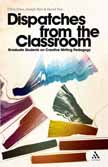
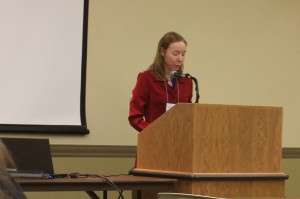
Earlier this month I headed up North to Toronto, Canada for the CCWWP, the two-year-old Canadian version of AWP. The panel was organized by Janelle Adsit, fellow contributor to Dispatches from the Classroom.

I read from my pedagogy essay in that anthology. It was a great to have the opportunity to read from the final incarnation of my essay, after all the revisions I did of it for my comprehensive exams and then, once accepted by the editors, all the additional revisions. Reading it aloud reminded me how much I love teaching and what a gift students are, how they teach me what I don’t know.

After the conference, I walked the streets of Toronto and hit the major tourists spots. By far, the best afternoon was the one I spent lakeside watching the birds, the people, and the sun glinting on that expanse of blue. CCWWP is set for Montreal in 2014. If anyone has a panel they’d like help organize, I’m up for another trip North.

Once I made it back stateside, I headed directly to my residency at the Prairie Center of the Arts. I was a resident here in 2011 and just loved it! It is very safe to say, I’m loving it again. Of the residencies I’ve had, it’s my absolute favorite. New this year, too, is a van to run residents into town, a Friday night dinner, and an increase in residents (I think the director told me PCA is at full capacity. Wow! I would say, maybe even beyond full capacity. I’m not even in the main residence building this year, but in the one next door. It is just absolutely lovely here. I went for a leisurely bike ride this morning through the woodland lined streets, pausing only to watch a blue heron in a lake surrounded by enormous houses.) As for what I’m working on, a little of this and a little of that, but really it’s too soon to tell, though I will say one of the projects is a digital collaboration.

In publishing news, I have poems forthcoming Vermillion Literary Project, Sugar Mule, The New Poet, Naugatuck River Review, Rose Red Review, and in the anthologies Poetry in the Cathedral and Squares and Rebels (Handtype Press). My essay “My Sister’s Ghost” is forthcoming in the anthology After Dark (Diversion Press) due out in September 2012.

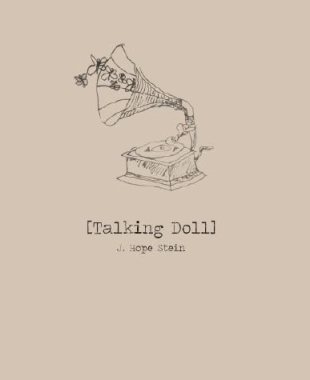
And in my series on the chapbook, up next are interviews with J. Hope Stein

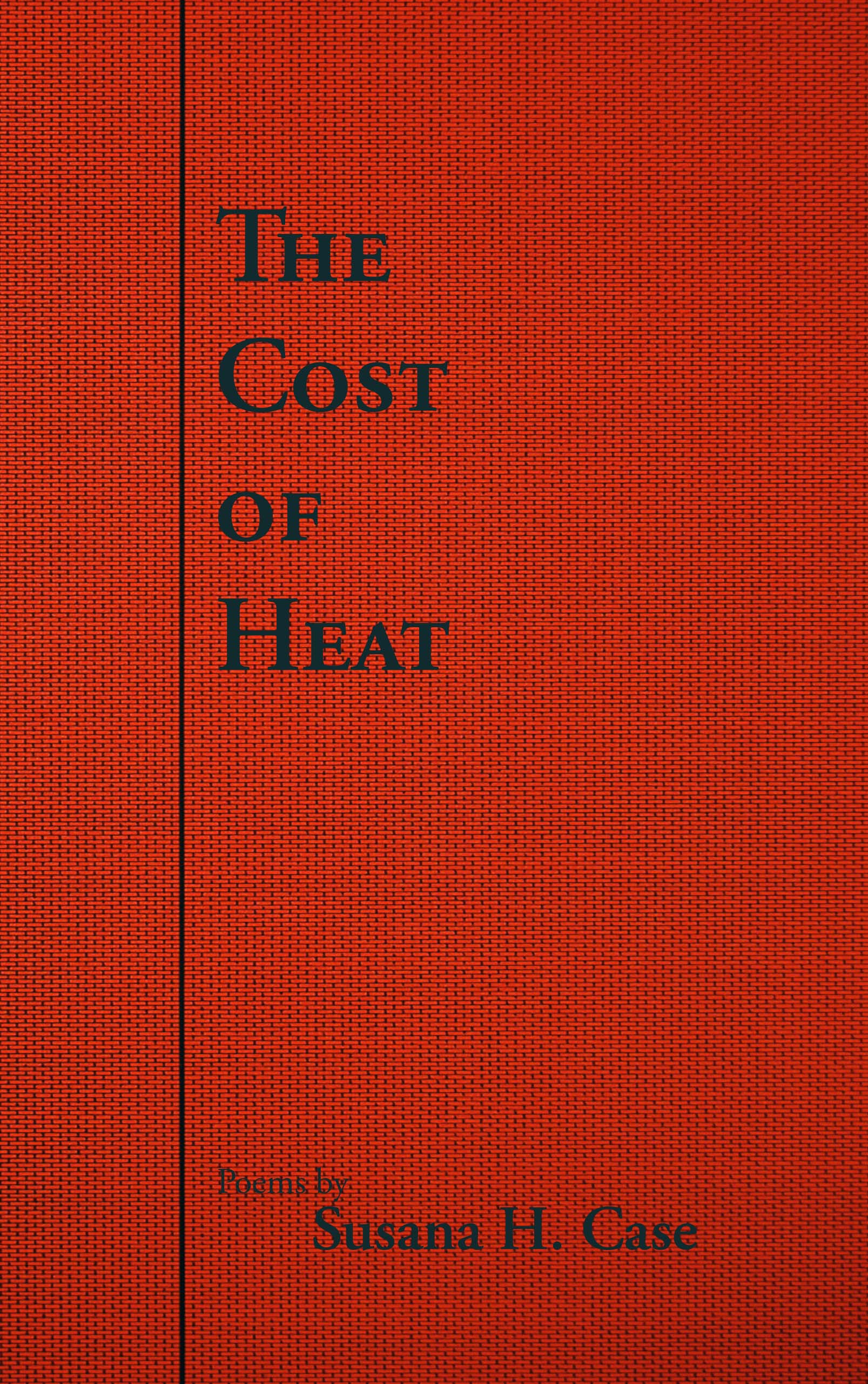
and Susana H. Case,

with several others in the works.

Branding Girls in St. Louis

As promised, here are two of the poems I read from BRANDING GIRLS in the creative writing poetry panel at MMLA.

I read five from the collection, but the door was open at the beginning of my reading and so there’s a bit of background noise in a few of the clips. I’m posting only the best.

I had a great time in STL!

Speaking of branding, I did do some tourist stuff while there, including the FREE tour of Anheuser-Bush. I’m not much for beer, any beer, American made or otherwise, but that caveat aside, Anheuser-Bush is smart in their marketing, promotion, and branding. First, the hour tour is FREE. You get to see the brewery, learn about the history of the company, and are walked around the “campus” of the company. This tour is lead by super-cute twenty-somethings who are smart, funny, and fit. They look like they would drink beer. They look like they’d be fun to hang out with. During the tour, you get to see the Clydesdale horses munching happily in an expansive arena. In the stables, the dalmatians, on cue, enter and mingle with the crowd, tails a-wagging. The dogs are friendly. They let you pet, scratch, and snap their picture. After the tour, you are given two FREE beers and as many FREE pretzels as you can eat and as much FREE Pepsi products as you can drink. Then you go home and tell all your friends about all the FREE stuff, post pictures of your FREE tour on Facebook, maybe *ahem* write about all the FREE stuff on your blog, and likely, have a new fondness, by the fact of all the FREENESS alone, for Anheuser-Bush.

Smart, smart, branding.

Branding St. Louis

I’m reading from BRANDING GIRLS in the panel “Creative Writing: Poetry” this Friday at MMLA. Sunday, I join fellow DISPATCHES FROM THE CLASSROOM anthology contributors in the panel “Writers at Play: Exercises and Suggestions for the Creative Writing Classroom.” If you won’t be able to attend and still want a copy of the activity “Playing with Their Senses: The Feel of Things in the Creative Writing Classroom,” send me a note and I’ll send it your way.

Reading (poetry) at MMLA
12-1:30, Friday, November 4, 2011
St. Louis, Missouri

Reading (prose) at MMLA
8:30-10, Sunday, November 6, 2011
St. Louis, Missouri

I’m super excited for the reading and panel! I promise video clips when I return. In other news, I’m in UNL’s recent newsletter. The current issue of Cream City Review features two of poems on Matilda Fletcher from my dissertation. I’ve been working on getting stuff ready for my forthcoming chapbook SHE WHO LOVES HER FATHER from Dancing Girl Press. More on that soon.

up north

I’ve returned from Fargo, North Dakota where I gave a poetry reading at 3:15 p.m. on March 26 at Red River Graduate Student Conference at the Memorial Union at North Dakota State University. I read from my dissertation on Matilda Fletcher and from Branding Girls.

I had a great time at the conference listening to good presentations and Q&A. I also got to do some research on a new project I’ve started during brief stopovers in Iowa. But I must say the travels to the conference were by far the most surprising. For example, I saw many deer, a muskrat, eagles, migrating birds, a pair of sandhill cranes, another pair of Canadian Geese walking the parking lot at Mills Fleet Farm, a fox, and two wolves along the freeway making their way through a field of snow in South Dakota. Wolves. Kid you not. I’d heard wolves before. I’d seen caged wolves at zoos, but seeing the two wolves free and wild was worth the trip. Wow.

Up and coming, I will be reading from my dissertation at the Rawley Conference, 9 a.m. Saturday April 9, 2011, here at UNL in the Union. Hope I see you there!