the chapbook interview: Michael Henson on class

I’ve just read your lovely, smart Overtime fiction chapbook Timothy Weatherstone and was particularly intrigued with your depictions of class. Ursula K. Le Guin recently gave her acceptance speech for the Medal for Distinguished Contribution to American Letters from the National Book Awards. In her speech she said, “Books, you know, they’re not just commodities. The profit motive often is in conflict with the aims of art. We live in capitalism. Its power seems inescapable. So did the divine right of kings. Any human power can be resisted and changed by human beings. Resistance and change often begin in art, and very often in our art—the art of words.” I love the idea of resistance and change that begins in art. Can you talk about issues of class and making art? What work does such depictions of class struggles do to initiate change?

I think of a line attributed to Mother Jones, “I belong to a class that has been robbed, plundered, and exploited down the long centuries. And because I belong to that class, I have an instinct to help break the chains.” She was someone who remembered who she was. For the rest of us, it can be easy to forget. And this is where art comes in. There are forces who want to keep us isolated, deluded, and demoralized and those forces create all these delusional narratives to keep us distracted from who we are and what’s really going on. Class, race, gender: these are the trifecta of American oppression. So we get these narratives about gays or Mexicans or women or rednecks as the Other and once we get these narratives in our heads, then that Other becomes the source of our problems. But art, real art, in whatever form it emerges, can tell a story that captures the truth of our situation, the good, the bad, and the ugly of it, in a manner that can actually transform our sense of ourselves and allow us to understand that the Other is not really other. Intellectuals, academics, historians, statisticians, they all have their places in transforming our way of seeing the world, but what really grabs people and really makes for change is story, getting people to see that there is only one story. Paradoxically, the only way to do that is to tell a story so individualized and true that it rings like a bell.

But there are stories within the story and so often—for women, minorities, working people, for anyone on the margins—their part of the story is silenced or distorted. I remember reading Tillie Olsen’s Silences and thinking, I know that she is speaking mainly about women and how their voices are silenced, but this is how I have felt as well. So I think that the artist has to speak his or her own truth, but always to consider the truths of those who may be otherwise silenced.
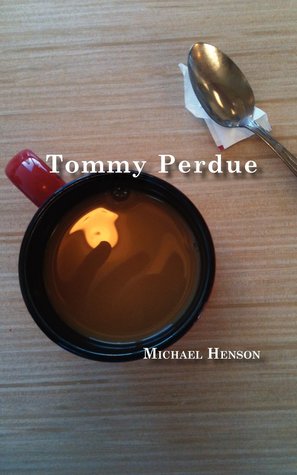
In your novels Ransack and Tommy Perdue and in your chapbook Timothy Weatherstone, you’ve created portraits of lives intimately and tragically tied to addiction, and though that might signal the fall of the hero in another story—for certainly some of your heroes do fall—there is this sense of community that enacts a healing, a coming together, a uniting around a situation in an effort and movement towards care. I recently attended the Omaha Lit Fest and Melanie Benjamin, author of The Aviator’s Wife, said during her talk on fiction and biography, “Every life is made up of hundreds of stories and I’m only picking one or two.” Talk about the stories you tell about your characters and in your answer, talk about inspiration, the writing process, and how stories unfold to you as you write them.

I have always been drawn, as a writer, to strong, working-class figures, and to figures from out of Appalachian culture. I suppose this comes from growing up so close to my grandparents who were transplants from the rural South and to a whole world of relatives and neighbors whose stories and whose language were so much stronger and more fascinating to me than those of the middle-class types my parents hoped I would become.

As it turned out, I’ve been able to inhabit both worlds and to do so comfortably. But in my writing I find these stories from working-class Appalachian life to be the most compelling. I use that word, “compelling,” consciously, because I feel compelled, commanded, as if an Old Testament angel has come to me and given me the word from God. I worked ten years on Ransack. You could read it in a morning, but it took me ten years and I don’t know how many drafts to write it, just because I couldn’t get that story off my mind and I couldn’t move on to anything else until I had that one down.
A story starts for me with a little germ of story that has to ripen over time. I’ve worked most of my career as a substance abuse counselor and a community organizer and through my work, I have been privileged to meet a number of compelling figures (there’s that word again) who by either their gift of language, or story-telling power, or their personal story, present me with that story-seed I cannot let go of until I have honored it in the way I feel it should be honored. I’ll carry around a notion for years sometimes before I can see how to make a story out of it. Once I can see the story begin to emerge, it becomes a slow, almost sedimentary process of accretion. I’m not a writer who pours out a lot of words onto a page and then has to cut it into shape. I tend to build a story up, word by word, phrase by phrase, sentence by sentence, draft after draft, until I have what I want. It’s all very slow and meticulous. But I think of my father –-he was a postal clerk, but his love was carpentry—and I think of my mother –she was a grade school teacher but she loved to sew and knit—and so I try to keep the joints precise and to keep the needles clicking.

I take a lot of inspiration from song, particularly Carter Family style songs, the Blues, Bluegrass music, the three-chords-and-the-truth John Prine-ish story-teller/songwriter types who can put a whole novel into three verses and a chorus. I aspire, in a story, to get the words to sing. It’s a different sort of music than song, more symphonic, but music is my aspiration. And once I hear that music ring all across the pages, then I know I have my story.

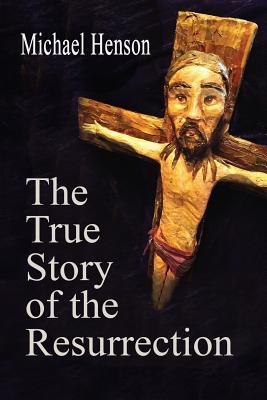
You are the author of three full-length collections of poetry, The Tao of Longing and The Body Geographic (Dos Madres Press, 2010), The True Story of the Resurrection (Wind Publication, 2014), and Crow Call (West End Press, 2006) as well as two poetry chapbooks The Dead Singing (Finishing Line Press, 2010) and the Tao of Longing (Dos Madres Press, 2005). You’ve talked about your impulse to write fiction. Talk about what inspires your poetry.

For years, I thought of myself as a fiction writer who wrote the occasional poem. I might write a poem in a year; some years, none at all.

But after my friend buddy gray was murdered in 1996, I had no other way to get out what was inside me. buddy (he preferred his name in lower case) was an activist for the poor and the homeless who had managed to get on the wrong side of some powerful people. The circumstances of his death will probably never be fully understood, but what got me was the suddenness of his death. One day, he was this powerful physical and moral presence and the next day he was gone. I literally could not speak about it. But I could write these poems, which eventually became the book, Crow Call.

I quickly discovered two things: First, I could say what was on my mind more directly than in fiction where. In fiction, I try to say and do only what the characters would say and do. But with these poems, I could speak as myself and I could range about over any topic I wanted. I wasn’t confined to a setting and a plot.

The second discovery was that I could share the poems much more quickly. Magazines print them more often since they take up less space. And I could go to an open mike reading and, in five minutes, I’ve read three poems. I have stories that have been rejected over twenty times, so nobody ever sees them. But the poems go more readily out into the world, either in print or by voice.

I have this notion that the mission of the poem is to move the soul, either the soul of the poet or that of the reader, from the world of chatter, spite, and trivia to a space that is closer to the center of truth and solemnity. I’m writing a book on the topic which I hope to finish soon, but that’s the essence of it. If I get a notion that begins to take me there, to that place where I feel I’m in touch with some little corner of ultimate reality, then I write that poem.

I don’t have a lot of use for those intellectual exercises which I refuse to call poems because they’re really just essays that they’ve broken up into short lines so that they look like poems. They might move the mind, but for me, the function of the poem, the true poem, is to move the soul.

I also have this notion that the emotional core of all true poems is grief, but then, that might just be the emotional core of everything.
Your book The Way the World Is: The Maggie Boylan Stories just won the 2014 Brighthorse Prize in Short Fiction from Brighthorse Books. Can you talk about it? When do you anticipate its release? When and where can we hear you read next?

The book should be out any day now. I’m very honored to have been selected. Brighthorse is a project of the authors Jonis Agee and Brent Spencer who decided to initiate their press by way of a competition. There were also prizes in the novel and poetry which were won by Elizabeth Oness and Rick Christman. I’m looking forward to seeing those books as well. The Way the World Is is a collection of ten linked stories that cover nine months in the life of an OxyContin addict in a rural Appalachian county. They can be read as stand-alone stories, but together, they tell a longer story of a community finding a shaky spiritual center. I wrote the book out of my frustration and dismay over seeing the many individuals and families, already hard-hit, who suffered from this corporate-created epidemic. I have some readings scheduled in local colleges here in the Cincinnati area and at the Appalachian Studies Conference, but the one I’m most excited about is at Shawnee State University, which is in Scioto County, the epicenter for opiate addiction in Ohio.

How are you trying to get better as a poet and a writer? I think any writer who understands the art is always exploring, always searching out ways to get at that thing that’s inside you that wants to get out. I find I have to re-invent the process each time I start a new project. I have to re-birth myself over and over again.

What makes a good chapbook? I think we have to remember that just because a chapbook is small, that doesn’t have to mean it’s minor. Think of Blake. His Songs of Innocence and Songs of Experience are essentially chapbooks that have gotten accepted into the canon. True story: one of my daughters used to work for the Cincinnati Art Museum and she told me they have a stash of original Blake prints in their collection. Apparently, what we see on the walls of a museum is just a part of what they actually have. So she set me up an appointment. They’re supposed to have a docent sitting over you when you look at them, but because I was Liv’s dad, they left me alone with this folder and a set of wooden tongs. I behaved myself until I found they had two copies of Innocence and one of Experience. These chapbooks were printed and bound by Blake himself and colored by Blake and his wife. I thought, this is a thing actually touched by William Blake. I couldn’t resist. I put down the tongs, picked up Songs of Experience, read the poem, “London,” to myself, and felt this surge of spiritual power. They’re tiny little books, by the way. You could easily fit one in a pocket. Anyway, Blake didn’t think his chapbooks were minor works. We shouldn’t either.

What’s next for you? I’m working on a book of essays tentatively titled, The Mission of the Poem, in which I explore issues of poetic purpose. I’m on the downhill side of it and hope to finish it within the next few months. After that, I have a novel and a book of essays on poverty and addiction. I’ve spent most of my life alternating between work as a community organizer and a drug and alcohol counselor and I have a few things to get off my chest. And I always have some sort of poem or song cooking either on the front burner or the back burner.

Residence: I live in an odd part of Cincinnati that is urban on the street side but forested on the back.

Job: retired, thank God. I’m now a full-time writer and musician subsidized by the Social Security Administration.


“a chapbook evangelist”: the chapbook interview: Allyson Whipple on feminism, festivals, and freewriting for ekphrasis

2014-07-17 12.17.07

At the Midwestern mythmaking panel at the Omaha Lit Fest, panelists discussed how their characters and stories are influenced by the landscape. One of the panelists, Karen Shoemaker, noted that though great books are written about Nebraska every few years, the general reading public forgets about them in the interval and that Nebraskan writers have to continually reinvent Nebraska, because after each great book about Nebraska there is a silence. What I love about your chapbook We’re Smaller Than We Think We Are (Finishing Line Press, 2013) is your attention to place, landscape, and travel, and the people encountered there. Talk about the Texas literary tradition. And, talk about landscape and place in your work.

That’s a hell of a question, and gave me a lot to think about. To be honest, I knew very little about Texas literary tradition until after I moved here in 2008. And while I have learned about some of the big names, like the literary great James Michener and the political brilliance of Molly Ivins, I feel like I have only scratched the surface of our literary history. I still have a lot to learn, especially about minority authors. But I feel very lucky to be part of a dynamic and diverse literary community, based in Austin but stretching out to other cities.

My chapbook is about journey and landscape, but it’s really about falling in love with Texas (despite how I feel about its politicians). There’s Ohio landscape in there as well: the suburbs, Lake Erie. I don’t think I could have put this collection together without acknowledging the state where I lived for the first 24 years of my life. It’s still important to me, and in fact the longer I am away from Ohio, the more I appreciate it. But this book is about learning to love a place and feel part of it, not simply because you were born there, but because you have traveled and explored and found that the place itself resonates with you so much that you want to make it home.

There’s also ambivalence here: about traffic and the way the cities have been constructed, about the heat. But whether you love a person or a place, you can’t really avoid ambivalence. There’s some part of love that requires taking a critical look at your beloved, recognizing the flaws or the things you don’t like, and deciding you accept them anyway.

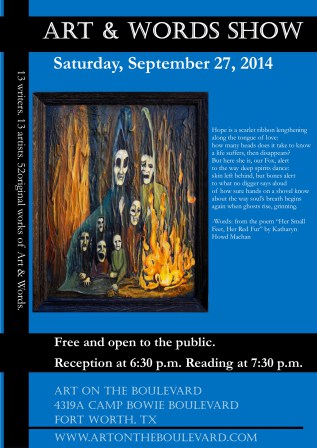
I love collaborations. I know we both recently participated in the Art & Words Show in Texas curated by Bonnie Shufflebeam, a show that starts with a CFP for art and words. After the art is selected, the curator assigns one short story, essay, or poem to an artist and one piece of art to the writer. The artists and writers then have a few months to create something inspired by the assigned work. I enjoyed hearing all the writers, including you, read their work at the show, as well as walking around the gallery to study the art and writing together. What was the collaborative experience like for you?

The interesting thing to me about ekphrasis is that it’s a collaboration, but one that is a lot more solitary than other collaborations I’ve done. Especially if you’re working with a very old piece of art, you can’t just call up the artist and ask for advice on how to shape your poem. I’ve always felt with ekphrasis, you’re collaborating more with the work of art itself than the artist who created it.

In this case, I spent a lot of time freewriting, and wrote lots of drafts that I tossed out because they relied so heavily on description. I think that’s one of the challenges of ekphrasis: to not rely so heavily on description of the piece, or to use description in a way that doesn’t come across as prose or as a list. The Art & Words pieces all did a terrific job of that.

In the end, I came to the poem through focusing on sound. The “Syncopated Rhythm” painting struck me as quite musical (in fact, I think the slopes in it represent a sort of sound wave), and I came to the poem through playing with the different sounds that were drawn from the vowels and consonants of the title.

I was happy with how it turned out, and the artist who did the painting loved it as well. I was glad I could do something that the artist felt embodied her work. My biggest fear was to write a piece that the artist didn’t like.

In her interview in the March/April 20013 issue of The Writer’s Chronicle Kim Barnes talks a lot about women and violence and when we as a culture allow women to perpetrate violence and when we do not. She says, “It’s hard for us to accept female authors writing violence that is not linked to the victimization of women” (105) and also “trying to change that paradigm is a fascinating exercise and frustrating” (104). Reading your one-act play Hand in Unlovable Hand made me think about the lingering effects of child abuse, gender violence, and addiction, but also the interview with Kim Barnes on women who are violent and how one writes such women into fiction. Talk about depicting complicated violence in a given genre.

When I wrote Hand in Unlovable Hand, I wasn’t even trying to write a play. I was trying to write a short story and come to terms with the abusive relationships I had witnessed as a child. But it was so dialogue-heavy that the critique group I was in told me to just write a play instead!

Although most of my poems are based on life experience, Hand in Unlovable Hand is probably the most personal, intimate thing I have ever written. Although none of the events of the play actually happened, the spirit of mutual destruction is there. I grew up in a situation where the violence was, at least in my perception, mutual. (If my parents see this they might disagree, but that’s how I saw it.) I spent a lot of time as a teenager blaming one parent, and a lot of time in my twenties blaming the other. In writing this play, I got to explore mutual violence on an exaggerated level, and really came to terms what I grew up with.

It wasn’t hard to write. But it was scary to produce and then publish, because in some ways it still makes me feel very raw. It was difficult to rub rehearsals and hear those violent sentiments over and over. But I was glad I did it. The act of getting it off my hard drive and into the world added another level of closure.

The funny thing is, it sat on my hard drive for about three years before I did anything with it. And it was produced just as I was getting divorced. I had so many people assume it was based on my marriage, which was both amusing and unsettling.

Though I was unable to attend, I do have the notes from the “Toward an Inclusive Feminist Poetics” workshop you gave at this year’s Austin Feminist Poetry Festival. What brought you to think critically about feminist poetics? How can feminist poetics be apply to the art of writing a chapbook?

Feminist poetics was something that only recently piqued my interest. While I don’t regret getting my M.A. in English, I will say that it did sour me on academia for a while (though that sourness has subsided and I’m considering going back for an MFA). But now that I’ve spent several years of my life concentrating on writing poetry, I’ve become interested in the ways we understand, study, and write about it. Being interested in the ways in which people understand/receive/learn about poems has become important to me as someone focusing on poetry as my creative mode of choice. And since I’m getting more focused on the intersection of art and politics, it was only natural for me to start considering questions about the ways in which gender and feminism influence approaches to poetry, both in the past and in the present.

I wasn’t really interested in poetics at the time I did We’re Smaller Than We Think We Are, but as I look back on it, I think that the act of organizing a chapbook (or a full-length collection) is about doing the best you can to look at your work from the mind of an outside reader, a stranger who might encounter your book. It involves really studying your work not just to select the poems, but to put them in the best arrangement.

I think that if you’re a feminist poet, and one who is conscious about the fact that you are writing feminist poetry, approaching poetics in your own chapbook or collection is about creating a book that reflects the blending of your artistic and political vision. It’s not just about presenting you as a poet, but about what you envision for art, and for the world.

I know that you’re participating in Choice: Texas, an interactive fiction about reproductive rights in Texas (www.playchoicetexas.com) by writing the last character. Talk about this project, what it hopes to accomplish in terms of addressing reproductive rights in Texas, and creating a character that seeks to represent the complicated issues women face when considering family planning.

Just to clarify: I just finished writing the last character, but have been involved with the writing of all 5. The first two characters, which are currently up online, were 50-50 collaborations on the writing. The third character, Jess, who will be out soon, was all my work. Maria, who will also be out soon, and Alex (the 5th character who I just sent for beta testing this weekend), started with Carly as the author for the first 25%, and I finished the rest.

This started out as Carly Kocurek’s vision. She had originally wanted to do a tabletop RPG about reproductive rights, but had trouble creating a balanced game. She eventually came up with the idea of a text-based computer game, with five characters, each with a different set of financial, emotional, and familial circumstances that can stack the challenges they face in different ways. So Leah is poor, lives in a rural area, and is a rape victim. On the other hand, Latrice is financially stable and lives in an urban area, but choosing motherhood doesn’t mesh well with being an attorney, and she doesn’t have a family situation where the decision to abort is acceptable.

The point of this game is to illustrate the social and financial barriers that women encounter no matter which option they choose. Adoption might be consistent with your moral views, but it gets romanticized in the media, and the emotional trauma of giving a child up gets glossed over. (I’m not saying that all mothers who give up their babies regret it, but the fact is that those who do are often silenced or ignored.) Choosing an abortion might mean more stability, but it’s not an easy way out. And motherhood is fraught with a mix of intense frustration and intense love, even under ideal circumstances. We want to show that women don’t make any of these choices lightly, and that no matter what choice you make, the path is not black and white, not necessarily simple.

How do you define chapbook? A collection of anywhere from 10-25 poems, usually with at least a loose thematic structure.

What is inspiring you these days? Found poetry, the ModPo MOOC, rules and restrictions (both in terms of poetic form and as a subject of exploration in the poems themselves), spiders.

How are you trying to get better as a poet? Attending open mics or giving readings at least once a month; going to critique groups when my schedule allows (I’m testing for my black belt next month so most of my time is spent on that right now), taking workshops/classes when finances permit, applying to an amazing MFA program, studying self-publishing (because I love small presses but feel it’s important to be aware of all of my options).

What makes a good chapbook? Being thematic, but not being too heavy-handed about that theme. I like when chapbooks are unified around a concept, but have some poems that bend the constraints of the overall subject matter.

What’s next for you? Testing for my black belt in Kung Fu, getting the Feminist Poetry Festival registered as a nonprofit and planning for 2015; co-editing the 2016 Texas Poetry Calendar; being a featured poet at the 2015 Austin International Poetry Festival; applying to an MFA program; publishing my first full-length collection (possibly self-published, and possibly with a publisher).

Your chapbook credo: Quality of poems, not quantity of poems.

Number of chapbooks you own: I don’t have an exact count, but at least two dozen.

Number of chapbooks you’ve read: There are 23 on my shelf, and I’ve read all of those, so the 6-8 I haven’t read are somewhere in my to-be-read shelf.

Ways you promote and serve other chapbook poets: Even when I was blogging more regularly, I rarely did book reviews, but I do try to promote chapbook authors and presses on Twitter, and buy them whenever I can. Really, I just try to be a chapbook evangelist! A lot of people who aren’t in the poetry community, or who are new to poetry, haven’t heard about chapbooks, and don’t realize how amazing they are.

Where you spend your chapbook earnings: Most of my sales come directly from readings I do at bookstores or open mic events. So I usually spend most of my earnings either on books from other poets at the event, or on drinks at the bar. Really, I’m just happy when I don’t have to use the cash to pay for parking!

Your chapbook wish: To do another one! I have a full-length collection out for submission, but I’d love for what comes after that to be another chap. I had so much fun with the first one.

Residence: Austin, Texas

Job: Adjunct Associate Professor in the Technical and Business Communication department at Austin Community College
Administrative Assistant at Master Gorhing’s Tai Chi an Kung Fu

Chapbook education: Spending the summer of 2011 working with poet Abe Louise Young to work on revising and assembling. Plus, reading chapbooks!

Chapbook Bio: My bio has changed so much since this chapbook came out! The up-to-date version: Allyson Whipple is the director of the Austin Feminist Poetry Festival and co-editor of the 2016 Texas Poetry Calendar. She is also the author of the chapbook We’re Smaller Than We Think We Are and co-creator of Choice:Texas. In her spare time, Allyson is working toward a black belt in Hung Gar Kung Fu. Her weapon of choice is the staff.

Where we can find your chapbook: Via Finishing Line Press or Amazon (Or, if you’re in Austin, at BookWoman Bookstore)

The Chapbook Interview with Julie Brooks Barbour on retellings

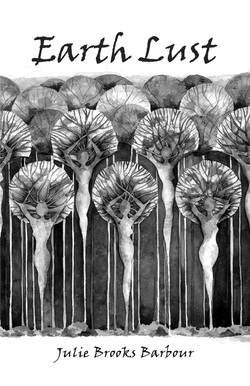
How did the series of poems in Earth Lust start—with a phrase, a sentence, a character, or something else?

It started with a quote from Rebecca Lee’s book Bobcat and Other Stories: “If I were willing to see the simplicity, the purity, of my own desire, then I also had to see the entire landscape—the way desire rises from every corner and intersects, creates a wilderness over the earth.” At the time I read Lee’s book, I was also reading Woman and Nature: The Roaring Inside Her by Susan Griffin, which discusses woman’s body as a landscape man wants to tame. The two merged to make me consider how women navigate the landscape of desire within our culture.

I love that Earth Lust is influenced by fairy tales and includes a retelling of “The Maiden without Hands.” Were you ever scared to experiment with retellings?

Yes! I admire the work of many contemporary women writers who experiment with retellings, so I wasn’t sure if I was up to the task. I was a Classical Studies major in college, and attempted to retell various myths during an independent study with a poetry professor in my senior year. At the time, this work turned out to be more difficult than I thought; I did not take into account that I would have to re-imagine the story to retell it. I put that work aside, uncertain if I would ever pick it up again. About four years ago I started reading the work of Jeannine Hall Gailey.

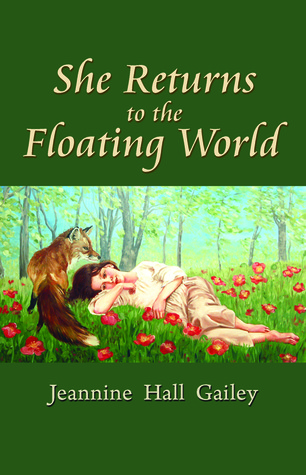
I fell in love with She Returns to the Floating World, her collection of Japanese fairy tale poems. Gailey rekindled my interest in retellings. Since then, I’ve been paying attention to the retellings of other writers, but I never thought I could do it, or that I would be able to find a way to retell fairy tales that would be interesting to me, let alone anyone else. There’s such a rich history of this work in literature, be it myth or fairy tale, and I wasn’t sure I had anything to add to the conversation. If it weren’t for Susan Griffin, I don’t think I would have had the desire to get started. I needed to have a fire lit under me to take on such an historical task.

Marriage is a theme in Earth Lust. How does motherhood inspire your work? Is it difficult to balance family life with the writing life?

Since I am the mother of a daughter, I am constantly reminded of the transitions women make from girlhood to womanhood. When my daughter was an infant and toddler, I thought more about the bond between mother and child. Now that she’s older, I find myself thinking about adolescence and the early years of womanhood. Much of what my daughter experiences inspires me to think and write about my own past, but also how women connect through shared experiences.

It can be difficult to balance family life with writing life. I’ve learned to adapt, as every age has its own challenges. I learned early on to take spare moments when they presented themselves, so now I can write whenever I have free time.


In Earth Lust I adore the tension created in the chapbook by the line, “Off to the side were other roads.” Can you talk about desire and longing in this collection?

I wanted this chapbook to look not just at the ways we navigate desire, but also at our own desires. While there are poems about the dangers of desire, there are also poems about the longing to be noticed as well as what outsiders think we should want. If we don’t want the things we’re told to want, how then do we live our lives so they reflect what we value? And how do we inch out of the expectations of others? The characters in these poems are caught up in societal roles but many of them break free: the Minstrel’s Daughter chooses to live in the forest, away from her father, and the Woman without Hands finds a way to have physical contact with her infant even though her hands have been taken from her. A woman puts herself in a vending machine by choice: it is her only escape from the colorless countryside in which she lives. These other roads are opportunities the characters take, if only by moonlight.

Who were the writers you admired when you first started writing? Sylvia Plath, Anne Sexton, Randall Jarrell, and H.D.

What is inspiring you these days? The stories of Franz Kafka and Lydia Davis. Sherlock. Photographs of abandoned houses.

How are you trying to get better as a poet? By experimenting and writing outside my comfort zone. I like to challenge myself as a poet. I can only hope it improves my writing!

Your chapbook credo: Little books give poets the chance to experiment.

Number of chapbooks you own: 34 (and counting)

Number of chapbooks you’ve read: 24

Ways you promote and serve other chapbook poets: Through Facebook and Twitter, and mentioning their work to my students and other poets

Where you spend your chapbook earnings: On bills or on books by other poets

Your chapbook wish: That more people read chapbooks. It’s a great way to be introduced to the work of a poet.

Residence: The Upper Peninsula of Michigan

Job: Assistant Professor of English

Chapbook education: The chapbooks of Angela Vogel and Sally Rosen Kindred

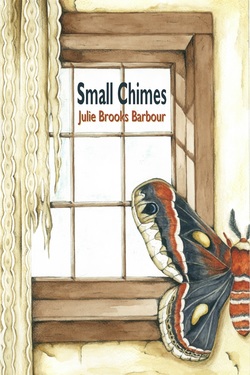
Chapbook Bio: Julie Brooks Barbour is the author of Small Chimes (2014) and two chapbooks: Earth Lust (forthcoming 2014) and Come To Me and Drink (2012). She is an Associate Poetry Editor at Connotation Press: An Online Artifact and Poetry Editor of Border Crossing. She teaches composition and creative writing at Lake Superior State University.

“Like some sort of intervention”: The chapbook interview: Jenn Monroe on readings, publishing, and prose poems

me_gloucester_inplace

In the July/August 2013 Issue of Poets & Writers, Kevin Samsell coordinator of events at Powell’s books asked several of his favorite readers how they’ve gotten good at readings. You’ve organized and hosted countless readings, some of which you published in the “In Place” feature of Extract(s): Daily Dose of it. First, I’m wondering if you can talk about some of readers you’ve had that have given excellent readings and what was it about their readings that made the audience respond so positively.

This is such a great question because often I book writers whose work is fantastic on the page, read in my own head or voice, but I have no idea whether or not they are good readers. And I know this is risky because there are many well-respected and loved writers who are notoriously “bad” readers. But when I fall for someone’s work I forget all about that, and hope it will all turn out well.

What the best of the readers in my series have in common—and I’m thinking right now of you, Ruth Foley, Carol Berg, and Paul Hostovsky—is their very obvious pleasure at being able to read their work to people who are interested in listening. There is this authenticity about them—a real expression of gratitude that I think is hard to fake. They are sincerely grateful to have the opportunity to share their work. An audience can sense when they are being manipulated, I think, and the best readers are those who are honest in their work as well as talking about the work. Even though poetry began in the oral mode, to tell stories, it has become so private. If you consider it honestly, it is weird to stand up in front a room filled with strangers and read it to them. Like some sort of intervention. But that is the beauty of readings, and poetry especially—we rediscover our commonalities as humans. And if the poems are truly honest, and delivered honestly, everyone in the audience will find a connection. We will all be in that poem, in that emotional space together. That’s powerful.


Second, in the Samsell piece, Michael Herald talks about introduction: “Writers aren’t comedians, and it’s important to remember that distinction, but if you’re reading something brutal and depression it’s not a bad idea to say something funny while introducing yourself. It’ll help you relax and keep people on your side while you wade into this brutal, depressing stuff” (76). Can you describe some of the ways you’ve heard good readers introduce themselves and/or some of the ways you’ve introduced yourself on stage and the effect such introductions have had on the audience?

I think I disagree to some extent with Herald, although I understand his sentiment. As poets reading we are performers—actors and entertainers to some extent—and for me this means we are whatever the poem demands. Each poem has its own persona, and to share that with an audience requires the reader to take on that voice.

That said, I think everyone says something light before they read, especially if they give some sort of “road map” of what will be coming. Often it’s inclusive, such as “we’ll get through this together” or reassuring “but I’m here to share them with you.”

For me, I don’t do much on the front end of the heavy work. I will explain the nature of the situation from which the poem(s) arose, but I don’t try to dilute the emotional weight of the work for me or for the audience. If the room seems need to breathe, I’ll save the “laugh” for the transition and say something like “Okay, now for something much less dark,” or “so you don’t all go home feeling terrible about the world,” and then read a funny poem. Pacing the entire set is more effective, I think, than trying to set a mood at the beginning. I want the audience to take the ride, and that is tough to do if they have certain expectations at the outset. I think that is more useful in keeping people “on your side.”

It’s a pleasure to read your poems in Something More Like Love (Finishing Line Press, 2012), in the prose poem form and otherwise. In Michel Deville’s essay “Stranger Tales and Bitter Emergencies: A Few Notes on the Prose Poem in An Exaltation of Forms (2009) edited by Annie Finch and Katherine Varnes, he traces the origin of the form to Gertrude Stein’s Tender Buttons (1914) and notes how the form uses “virtually all the devises of poetry” (262) as it “tends to include or exclude, subscribe to or subvert” (263) the genre. He writes that “the prose poem has transformed the concerns of contemporary poetics by focusing attention on consideration of form, mode, genre, and representational strategies” (266). Though he notes the difficulty of such delineation, he divides the form into two camps, the “narrative” and the “language-oriented” trend (262). Can you talk about what camp your prose poems lean towards and why?

I get the “prose poem” question all the time, even though just about every line in every poem in my chapbook is deliberately and, more often than not, painstakingly broken. I never intended to be someone who pushed the boundaries of the line and I find most of my energy in revision goes into making my line breaks as successful as possible.

So I’ve been forced to think about this, what to do so as not to be too possessive of these poems and my “intentions” and this is where I’ve landed: I write prose poems with deliberate line breaks. In essence, I’ve added another poetic device to the prose poem.

I usually find myself working in this mode when the poem does not have a specific story to tell, but begins already in scene. They lean much toward the “language-oriented” trend, although I don’t experiment much with language. At least I don’t think so, but perhaps the long phrasing is an experiment of a sort. I guess the question would be, if I don’t want these to be considered prose poems, why not break the line sooner? I find I slip into longer lines when my poems get more surreal, more dreamlike, and rely on images more than narrative. These poems capture certain moments and evoke a mood while avoiding sentimentality. I like to use the prose mode to explore-I have an obsession with Love and a desire to look at it from every angle-and I find it is such a fine vehicle for exploration because it invites (requires?) progression, whether narrative or lyrical, without necessarily having to worry about line breaks (unless you are me). My guides in this mode range wildly and include Charles Baudelaire, Fanny Howe, Lyn Hejinian, David Shumate, and Rosemarie Waldrop among others. I’m constantly inspired by their work.

Beyond this interview and the last time we spoke in person, one of the things that really struck me about our conversation was the ways you talked about the publishing industry today. Rather than lament as so many do about ebooks, Amazon, the digital revolution, etc., etc., you talked about how you saw today’s publishing world as exciting, more akin to the world F. Scott Fitzgerald, Gertrude Stein, and Earnest Hemmingway would have experienced. Can you talk about your sense of publishing today for poets and why it is an exciting time to be a writer today?

My enthusiasm for the publishing world today comes from the vast number of publishing opportunities. This has come from the tremendous growth in the number of literary journals-both online and in print-and the growth of small independent presses. One of the reasons why my colleague Christopher Anderson and I started Extract(s) and wanted to have an “Excerpts” feature is to help people become familiar with some of (what we consider) the best of these smaller presses. And we’ve even taken it a step farther and established our own press, just to make sure the writers we love can get their work read.

It is so heartening to me that you no longer need an agent, to get published in a “top tier” lit mag, or picked up by a major publishing house to get your work out there. Writers still need to do their research, but with the growth of social media it has become even easier to find your “niche:” those editors and magazines and readers. And while it would be great to have an agent, get a poem in Paris Review or have Harper Collins want one of my books, I don’t think these are necessarily the measures of “success.” At least they seem to be less and less important. What seems to matter most, and this is where my comment about how today is more like the mid-20th century, is that what we called “networking” is exactly what those writers were doing: building connections that start with close friends and ripple out wider and wider. And that was for everything-publications, teaching positions, places to stay.

I think the growth in the number of MFA programs is probably partially responsible for this “community boom,” and then social media has allowed it to explode. I joined Facebook reluctantly and used it only occasionally until I noticed a number of literary magazines joining. Then I realized just how to use it. And then came the groups. I don’t belong to too many that are literary/writing based, and only two in which I am a stranger to most of the members. But one of these groups is for calls for submissions, and the other puts together submission “bombings” of a wide range of literary magazines, some upper tier, some not. In the early days everyone was so wary of online magazines because of quality and rights. Not so today. The internet has made hybrid forms possible (I’m thinking of MotionPoems, as one example but there are so many others). And who knows what other creative ideas will come in the next 10 years. All of this should energize writers. I know it certainly energizes me.

Let’s talk about the work of the poet. In the September/October 2013 issue of Poets & Writers and in the special section on the MFA, Michael Bourne notes in his essay “Degrees of Value: What Happens After the MFA Program” that “roughly four thousand MFA students graduate every year” and job wise AWP “reported 282 full-time tenure-track positions, 130 of which were for teaching creative writing” (111). You have an MFA, a chapbook, and have taught creative writing. You also run a press and a journal. Can you talk about what has happened since your MFA and the work you do as a poet?

I am probably the only MFA-holding poet who has voluntarily walked away from a full-time teaching gig—something I did at the end of this past May despite knowing, inherently, that I am a teacher. I am driven to share my passion for reading and writing and to help uncover the poet in everyone. What is becoming clear to me, however, is that I don’t necessarily have to be in a college classroom to accomplish this. My work as a poet includes bringing poetry to my community by hosting readings and open mic nights. The press I’ve launched with my colleague Chris gives me the opportunity to put great chapbooks—poetry and prose—into circulation. Our literary blog offers daily “doses” of poetry, prose, music, art, and more. Our “lit house” business provides workshops and editorial support for writers of all levels. And of course there is my own writing. I am finding myself now more immersed in poetry and writing than I was when teaching full-time. And it feels authentic. More like what a poet should be doing. Or at least what I as a poet should be doing.

In “Consociational Poetics: An Interview with Anne Waldman” the March/April 2013 issue of The Writer’s Chronicle, Waldman explains, “No one asks you to write: You need to be lit from within somehow” (64). How do you keep your fire lit? What to you feed it to keep it burning, especially for someone who writes love poems?

I’m so glad you mentioned Anne Waldman. She was an important part of my MFA experience. I only had the opportunity to have one workshop with her, but her presence and her performances have left valuable impressions.

I’ll admit keeping that fire lit has taken some effort since I became a mom. But because so much of my work examines the different aspects of love much of it now comes from my observations of my three-year-old daughter. Watching the person you love more than anyone discover the world is unlike anything else and I’m constantly inspired by the events of our days-both large and small-and write about them when I get the chance to sit down and put them on paper. Most days this is during nap time or late at night, but it gets done. I have an amazing husband who has shared all parenting responsibilities since day one. To be honest, he has been the reason I’ve been able to continue my creative work. And now that I am no longer teaching full-time, and my daughter will be in pre-school twice a week, I think the writing time will become much more regular again. It feels as though I’m about to embark on a trip. I have no idea where I’m going, or what I’ll discover, but it feels exhilarating.

With a young child, is it difficult to balance family life with writing life?

Becoming a mom has been the most challenging thing I’ve ever undertaken and yes, balancing time with my daughter and my husband with the time I need to dedicate to my writing (and until recently to a full-time teaching job) has been exhausting. I had a great deal of confidence in my ability to be able to “do it all” and to do it all well, but I the end, that wasn’t possible for me. So I took an honest look at my priorities, and made some tough choices. But even through these transitions, the ideas and images keep coming, so I try to make sure I have a pen and pad of paper close by to catch them.

What is inspiring you these days?

In addition to my daughter, I continue to be inspired by the mystery of nature and the metaphors I find there. I’m an amateur birder—I have a number of feeders in my back yard—and am fascinated by their behavior, how they communicate and seem to “relate” to one another. Music, too, serves as a continual source of inspiration for me. I’m also quite moved by all the youthful energy in the writing world today. I took my first poetry workshop when I was 27 as part of my first graduate program (I have an MA in English as well as the MFA). I’m so inspired by kids who go all in from the start.


How are you trying to get better as a poet?

I read as much poetry as I can, and I read at least one poem every day. I read essays about writing poetry. And I continue to write, daily when possible.

But what I think makes me better as a poet is being an active part of the world. My daughter helps with this. It is like I am re-learning how to experience everything around me. For example we shared her first rainbow the other day and drove around chasing it, trying to get the best view, until it disappeared. I haven’t done that in years. She asked all the questions you’d expect someone who had never seen a “real” rainbow before to ask and I couldn’t answer them all. That moment will be a poem and it probably won’t end up “about” her at all. Trying to be open to finding poems everywhere—that’s how I’m trying to get better as a poet.

Number of chapbooks you own: 13

Number of chapbooks you’ve read: 40+

Ways you promote other poets: Lit blog, press, reading series, & social media.

Where you spend your poetry earnings: I’d like to say I spend it on more poetry, but the truth is I use it to support my vintage dress addiction.

Inspirations and influences: There are so many and it depends on what I need at any given moment, but always Sharon Olds and my mentors Barbara Louise Ungar and Judith Vollmer. Fanny Howe inspires me to forget about genre and boundaries in general. I want to be that free, that brave. I’m also completely inspired by my friend Karen Dietrich. She has two chapbooks, makes great music with her husband as Essential Machine, and her memoir, The Girl Factory, comes out this fall. She’s a mom and a teacher too, and one of the most generous, kind, and truly happy people I’ve ever had the pleasure to know.

Residence: Manchester, NH

Job and education: More than 15 years teaching writing at the college level at a number of institutions including Oneonta State College, Keene State College, Chester College of New England, and the New Hampshire Institute of Art. Currently: executive producer, Extract(s): Daily Dose of Lit; executive editor, Eastern Point Press; co-founder, Eastern Point Lit House; BA St. Bonaventure University; MA, The College of Saint Rose; MFA, New England College

Bio: Jenn Monroe is the author of the chapbook Something More Like Love (2012, Finishing Line Press). A Pushcart Prize nominee, her work has been published in a number of journals, both online and in print, and is forthcoming in Tower Journal and Dressing Room Poetry Journal.

book trailers, times three

There are three Women Write Resistance events coming up in the next few days. If you’re in San Francisco, Los Angeles, or Lincoln, I hope to see you there. The bookstore for the Lincoln event is donating a percentage of all WWR book sales to a local women’s crisis center.

Reading of Women Write Resistance in Lincoln with Grace Bauer, Jennifer Perrine, Marianne Kunkel, and Sara Henning
7 pm, September 5, 2013
Indigo Bridge Books, 701 P Street #102
Lincoln, Nebraska 68508


Reading of Women Write Resistance in LA with Kathleen Tyler, Cati Porter, Alexis Krasilovsky, Laure-Anne Bosselaar and more (editor in absentia)
8 pm, September 7, 2013
Beyond Baroque, 681 Venice Blvd.
Venice, CA 90291


Reading of Women Write Resistance in Sausalito with Rebecca Foust, Judy Grahn, Judy Juanita, and Andrena Zawinski (editor in absentia)
Sunset Poetry By the Bay Series hosted by Marin Hickel
7 pm, September 11, 2013
333 Caledonia, Sausalito,CA

My presale period for my forthcoming chapbook, Stranger Still, finished up this weekend. Thank you to all of you who ordered copies! It’s much appreciated and determines the press run at Finishing Line Press. This little book of Martians will ship October 25th, just in time for Halloween. Trick-or-treat!

Finally, just out is my new chapbook First Wife from Hyacinth Girl Press. Yay!


the chapbook interview: Ellaraine Lockie on getting your chapbook reviewed and other ways to promote and market

In February 2013 issue of The Writers Chronicle, Ronald Goldfarb writes in his article “The Changing Publishing Landscape” that “we are asked now to market and design and edit our own books—writing, by itself, is not enough” (61). Though Goldfarb’s examples in his article suggest he’s talking about novelists and memoirists rather than poets, I’m curious about the effect of e-publishing and “do-it-yourself publishing” (60) on chapbook poets and poetry. What have publishers done to market, edit, and design poetry chapbooks and books in the past? Has this changed? What is the role of publishers in promotion for chapbook poets? As a poet who has had ten chapbooks published, do you get the sense that poets are being paid less in this “digital revolution” (58)? In your experience, how are chapbooks fairing in the digital revolution?

My chapbooks have spanned the last twelve years, and they’ve been published by the smallest of chapbook publishers as well as the largest and those in between. With none of my chapbooks have I been expected to do the designing or editing. It’s a good thing because I don’t have the interest or expertise in these areas. For all but one of the chapbooks, my publishers have graciously asked for my opinions about design, and all of them have sought my permission for editing changes. I especially appreciate the editing part, as I rely heavily on editors to catch mistakes. We all make them. In fact, one of my main objections to self-publishing is that there is no overseer to see the problems that we as authors don’t see.

Marketing is another matter. I get involved in that because I enjoy it and have a background in it. I also think it’s my duty, since publishers have invested time, money and energy to bring my books to life. So when one of them is released, I do announcements via an e-mail list I maintain. I send the book out for reviews and contests. I do release readings and interviews. I record the poems. I try to get radio shows.

I’ve never expected much marketing from a publisher after a book is released. I understand there isn’t enough payback for them for further involvement. Most chapbooks are as much a labor of love for the publishers as they are for the authors. They are usually a publisher’s way of endorsing an author’s work, making a chapbook acceptance more of an honor than a business arrangement.

My first chapbooks were published before the Internet exploded, and there was little or no marketing on the part of publishers. With the last several chapbooks though, publishers have assisted by listing the books on their websites and sending them to a few of the bigger reviewers. This publisher involvement seems to be increasing as online opportunities increase.

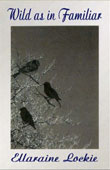
The bigger chapbook publishers are more able to invest time and energy in advertising and in assisting their authors after publication. Finishing Line Press was very helpful in providing explicit marketing strategies for my ninth chapbook, Wild as in Familiar. Silver Birch Press, who just released my Coffee House Confessions, is playing a much more active part in marketing than earlier publishers. Mine is their first chapbook, and they are giving it the same status and treatment as they do all their other books.

Concerning money, I do think that chapbook authors are in a better position now to make more than in the past. A good deal of the reason is Internet exposure. I just received an e-mail from someone in Russia who wanted to buy Coffee House Confessions because she sees reviews of it on the Internet, and two writers from Canada have expressed interest in reviewing the book. This hasn’t happened in the past.

And then there are Kindle books/e-books now that are more affordable than hard copies, thus making more purchases possible. Also, the advertising possibilities with blogging and social media such as Facebook, YouTube, Twitter, Instagram, Pinterest, etc. provide endless opportunities to advertise, which can’t help but increase sales.

As for chapbooks in general, I believe they are enjoying a resurgence of popularity. I’m seeing more and more chapbook contests and publications. I’m personally enamored with chapbooks as a means to share my work-so much that I’ve lacked the motivation to get my first full collection out there. A chapbook always insists upon itself when I assemble about thirty pages of poems on a given theme.


In “ABR and Chapbooks: A Personal View” Rochelle Ratner writes that “reviewing chapbooks strikes me as an experience akin to seeing a monologue,” due to the lack of tension and subtext. She argues that poetry books have sections and that “these sections show the poet in slightly or vastly altered states, creating tension, giving the reviewer a handle. Without this handle, the best most reviewers can do is what I’ve come to call ‘plot summary’.” Despite Ratner’s disparage of chapbook reviews, I’m delighted that your newest chap has been reviewed well, that it has been reviewed at all—even poet and newly named Poet Laureate of L.A., Eloise Klein Healy mentioned in her recent Nebraska Lit Girl Hour interview the difficulty of getting your poetry collections reviewed. I’m curious about this difficultly. Are chapbooks not reviewed due to lack of tension and subtext, or is it something else—a limited press run, placing chapbook reviews, the number of poetry collections published verse the number of reviewers, etc.? I’m curious about your thoughts—what makes or does not make a chapbook reviewable? Can a chapbook have tension and subtest? If “plot summary” is a “genre” of chapbook reviews, what are other genres? Is it the role of chapbook poets to also write reviews of other chapbooks? If it’s not our role, than who should write them?

Each of my chapbooks, except for the first one, has garnered multiple reviews. (With the first, I didn’t know enough to even send it out for review.) The chapbooks have all been theme oriented, and I haven’t encountered any criticism for that. Nor have I found getting reviews difficult in the small presses.

My experience and observation tell me that timing and progression of order are important when both submitting a chapbook for publication and for review consideration. If the person being asked to judge a chapbook is already familiar with the author’s work and likes it, the chances of getting accepted or reviewed are much greater. Sometimes poets ask my advice for getting their chapbooks “out there,” when the poems in the chapbooks haven’t been individually published. I tell them to stop thinking about getting a collection published and start getting credits for the poems, thus establishing themselves with publishers and reviewers. When editors receive a chapbook or request to review one that contains poems that either they or publishers have published, those editors are much more likely to at least read and consider a review.

I don’t yet have a full collection, but I can’t see why chapbooks would be any harder than full collections to get reviewed if quality of content is the consideration. Poets usually choose their best poems when having to assemble only twenty-thirty pages. So quality should be higher in chapbooks, and I think it often is. I don’t know how many full collections I’ve read where only a small percentage of the poems get a star (my way of evaluating a collection), whereas the ratio is usually higher with a chapbook. It would also seemingly be easier to interest a reviewer in a chapbook, since they require far less reading time.

I don’t understand how a themed book could automatically be categorized as lacking tension and subtext. It’s possible to develop a strong story-type tension when themes are artfully developed, giving reviewers much to work with, even if they are writing about plot summary. But there can also be many styles of poetry inside a themed collection that give a reviewer fodder-mixing the poems with different forms and syntax and presenting the same subject from multiple angles, etc. It all comes down to how good the poet is at making a theme varied and interesting. I just finished reading The Blue Hills-Poems after the Life of Maud Gonne, 2011 winner of the Jessie Bryce Niles Chapbook Award, a contest for which I was a finalist. This chapbook by Lucinda Grey is chock-full of pathos, politics, mother and man passion, sickness, death, war . . . there’s not much in terms of tension and subtext that isn’t in this entertaining, 29-page collection.

If chapbooks are harder to get reviewed, the reason could be appearance. Most are stapled, spineless with more flimsy covers than full collections. This is usually negative for bookstore placement, and maybe the pamphlet-like quality is a factor for reviewers too, as is maybe the limited-edition aspect. There’s an upside, though, to having a book published in limited edition that some may not realize, and that is the increased value when a book is officially declared out of print. Mine are priced from $65-$125 each on the online collectable book sites. I’m not sure how this relates to reviews-perhaps inversely in that good and multiple reviews are important for that inflationary effect.

Who should write reviews? My answer is anybody who finds pleasure in it and who is credentialed in some way to do it. I used to write them but found the process stressful, so now I give back to poetry in other ways. However, when I did do reviews, I liked that feeling of contributing in a tiny way to what constitutes good poetry in our era. I get the same feedback now when I judge contests. I encourage other writers to get involved with either or both of these activities. They are important to the writing world.

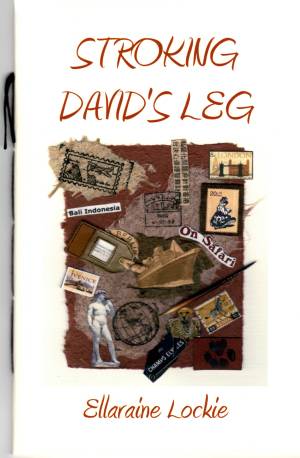
In his easy “Finding, Unifying, and Revising the Body of our Work” in Ordering the Storm: How to Put Together a Book of Poems, Robert Miltner discusses revising “for unity” (24) as “we assemble a collection of our work that will be unified, compelling, and generate interests from editors or readers” (31). Of your ten published chapbooks, I’ve read four—Wild as in Familiar (Finishing Line Press, 2011) on nature, Stroking David’s Leg (Foothills Publishing, 2009) on travel, Red for the Funeral (San Gabriel Valley Poetry Festival, 2010) on funerals, and Coffee House Confessions (Silver Birch Press, 2013) on coffee shops—and I’m curious about your thoughts about selecting poems for a chapbook manuscript and ordering those poems in a sequence that offers readers, as you note, a “strong story-type tension” that is “theme oriented.” For example in Stroking David’s Leg, the persona begins in the “sensory overload” (5) of travel, but returns to the United States in the final two poems, after learning to see through tourist traps, upstanding and appreciating the function of foreign appliances like the bidet, communication and reading the communications of body language, surviving theft and overpriced venders, and facing the constant and unexpected surprises of traveling abroad. Readers feel your keen observation and cross-cultural savvy while they learn something new about traveling aboard by the end. To me, in Stroking there seems to be a clear narrative arc with linked by themes and a subtext of exploration and discovery. Because all your chaps are themed and Stroking has such a strong story line, I’m curious if you think chapbooks can get away with not having that narrative arc, that story, and subtext that offer an interior logic driving the poems one, by one to the end. If such a chapbook lacked those, could that chapbook still be unified and compelling?

I don’t think a chapbook requires a narrative theme to be unified or compelling. It can still be cohesive and reflect varied aspects of the author’s or someone else’s life, a particular concept, or the poems might be related by a certain rhythm or mood. And some themes aren’t really themes at all; the poems just have a kind of esoteric bond.

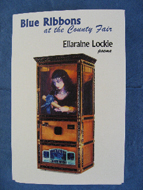
One of my chapbooks, Blue Ribbons at the County Fair, from PWJ Publishing is a 53-page collection of poems that have won First Place prizes in contests. The binding element was just sitting there waiting for me to see it, and the poem choices were already made for me. The poems are all over the topic board-from nostalgic Montana, to poems about losses of different kinds, love, sex, infidelity, menopause, old age, the homeless, humor, politics and war. There are even a couple of haiku. Did the collection work? Reviewers thought so.

Katerina Stoykova-Klemer, radio host of Accents, talks about making a chapbook of your orphan poems-poems that just haven’t fit into collections. She suggests putting them together to see what happens. That’s the kind of innovative thinking that creates scintillating yet subtle themes for collections.

Chapbooks can contain even stronger poems as a whole if they aren’t themed at all however, because the poet is free to use her/his best work, unrestricted by boundaries. Chapbooks are easy sites to showcase our best work because it’s fine to use poems that have already been published one or more times. When following a theme, we sometimes end up using lesser-quality poems to carry out that theme. In non-themed books, the unification could feasibly be the higher caliber of work, and as far as compelling is concerned . . . well, what could be better in a collection of any size than a poet’s best work, assuming the poet is good. Having said this, I’m very drawn to themed collections for my own work.

For one thing, they are easier to assemble than a group of random poems. There’s a definite art to putting together any collection. Logical progression and organization are essential to a satisfying read, so it’s important to get it right. I start by first deciding what poems to use, usually choosing more than what I’ll end up with. I like to use poems that have already been published. I actually have a “business plan” for each of my poems. If I think a poem is good enough, I put it on the contest circuit for a few months before submitting it for regular publication. I usually don’t even consider a poem for chapbooks until it’s published at least once. This process gets the most mileage out of each poem.

After I’ve chosen the poems for a given chapbook, I print each one on a separate piece of paper. I read them through and begin pairing, grouping and eliminating. I do this many times, often spreading the sheets out on a table, kind of like puzzle pieces. I do this procedure over a period of weeks or months until I feel good about the way the collection reads. I can’t accomplish this on a computer because I need the tactile aspect. Pivotal decisions are the first page or two and the last page or two. It’s so important to hook a reader fast and to leave her/him with a strong impression. On small matters of organization or indecisions, I rely on my editors once I have them. Often they see things I don’t see or see them in a different, better way.

Tell me about your process of writing the other three chapbooks—Wild as in Familiar (Finishing Line Press, 2011), Red for the Funeral (San Gabriel Valley Poetry Festival, 2010), and Coffee House Confessions (Silver Birch Press, 2013). Did you write each collection individually and than move onto the next or did you just write poem—not obsessively say about funerals or nature—but then discovered in looking through your poems that you had thirty-plus poems about the visitors to coffee shops.

I’ve never set out to write a particular collection. I just write whenever and whatever my muse tells me to write. She’s a tyrant, and I’ve learned not to argue. At nearly any given time, I’m working on several poems at once and usually all on different topics. That works out well because if I have a stumbling block in one, I can move on to another and let my subconscious work on the problem.

When I notice I’m getting several poems on a certain subject, I start thinking collection, and try to nudge my muse in that direction, even though it might be months or years before the collection is complete. Right now, I can see the seeds of two possible new themes sprouting in my work.

What current projects are you working on?

I’ve put together a full poetry collection, and this time (there have been many previous times), I’ve just recently submitted it to a few contests. The manuscript began last year as a chapbook and had achieved finalist status in two contests when I realized I had enough poems on the theme for a full collection. The chapbook version is still floating around in contests, so now the full-collection is as well. I thought I’d see what happens. The more I think about it, the more I’m rooting for the chapbook to get published first. It could serve as a nice steppingstone to a full collection later-yet another positive attribute of chapbooks.

I presently have an additional chapbook in contests too. Plus, a new chapbook manuscript is near completion. And of course I’m writing single poems whenever my muse blesses (or obsesses) me with them. Oh, and one of my pen names has a chapbook coming out later this year, and that’s great fun.

Where can we hear you read next?

I’ll be a featured reader at Michael Hathaway’s (Chiron Review) Poetry Rendezvous in Kansas in the first part of August. I’ll also be teaching a poetry workshop for that event.

I can be heard fairly often reading a poem or two on Thursdays on PoetsWest at KSER 90.7 FM at 6:30 p.m. in the Seattle area. The programs are simultaneously broadcast via streaming by going to http://www.kser.org/ and following the Listen Live links.

Number of chapbooks you own: I don’t own many because I donate most poetry books after I’m finished with them to a small press editor who sorts them and sells applicable ones to college and university libraries. The funds contribute to the support of his magazine.

Number of chapbooks you’ve read: I have no idea how many I’ve read; it would be a lot though. I read almost exclusively chapbooks in the poetry genre now because I’m visually impaired and can’t handle long collections.

Ways you promote other poets: One of the best ways to support other poets is to buy their work, so I buy as much as I can of both individual collections and poetry journals. Because my reading power is limited, I rarely read all of any publication, but I skim through and read samples. It’s especially important to support the magazines, journals and anthologies, in order to insure that our publishers stay in business. Most of them break even at best, and that’s not including their time investments.

Another way to support our publishers and indirectly support poets is to enter publishers’ contests. The fees are often what keep them afloat. I do plenty of that.

I teach writing/poetry workshops and sometimes donate it to libraries and other non-profit organizations, as in the above-mentioned Poetry Rendezvous. I’ll be doing that at the Los Gatos California Library in December. When I teach privately, I use a sliding scale for writers/poets and allow them to pay what they can afford.

I watch for poetry that I like and that fits into Lilipoh, the magazine for which I’m Poetry Editor. I use an “invitation only” policy for choosing the poems, partly because I prefer to publish poems that have already been published. I feel that excellent poems deserve a wider readership, and so many publications require first copyrights.

But my pet poetry project is an annual high school poetry contest that I started nine years ago and continue to sponsor and judge in my Montana hometown. The contest now encompasses junior high as well because the junior high students wanted to be part of it. I work in tandem with the high school English teacher there. It’s so very exciting to witness the progress that these students make from year to year and to be a part of giving them the gift of poetry.

Where you spend your poetry earnings: Money from poetry has always taken on a special significance for me. I at least thought about framing the dollar bill prize I once received from a Lucidity contest. I typically separate poetry money from other money, even that made from my nonfiction books. I think it’s in a different and higher category because poetry itself means so much to me.

I’m long over desiring more things, so I usually spend the money on experiences. That invariably involves travel. Travel feels to me like the perfect way to spend poetry money because the act of it nearly always creates new poetry . . . and so it feeds back into itself.

Inspirations and influences: Poetry came to me late in life and through the backdoor of children’s picture book writing. Of course, my initial exposure was in high school; I read one Shakespeare poem and decided I hated poetry. I didn’t read any poetry after that for nearly forty years. I did write in other genres, nonfiction books, essays and children’s picture books. After I learned from my children’s writing mentors, authors SuAnn and Kevin Kiser, that poetry didn’t have to rhyme, I decided to try it. I used the same rules and style that I used when writing for children. How much I loved it was, and still is, maybe the biggest surprise of my life.

I knew from writing in other genres that I needed a strong cover letter with acknowledgments to get poems published. I decided to try to get credits through contests, so that’s what I did for the first year. At the end of that year, my poems had won over sixty awards and Poetry Forum’s chapbook award. Since editors and contest judges seemed to like what I wrote, I just kept writing in my same style without reading other people’s poetry.

I felt like an imposter and was so unsure of myself that if I read other work, I just knew I’d feel intimidated. So for years I didn’t; I just pressed ahead in own way. Two editors, Harvey Stanbrough (Raintown Review) and Robert K. Johnson (Ibbetson Street), mentored me and gave me not only valuable advice but self-confidence. I got in a couple of years’ worth of heavy poetry reading then, but because of the vision difficulty that ensued, most of my inspiration comes not from other poets but from the world around me: life experiences (both others’ and my own), acute observations, being a good listener, travel and an understanding of human behavior which I owe to early studies in the social sciences.

Residence: I live in Northern California but spend extended periods of time in other parts of the country, especially in Montana, Taos, Port Townsend and NYC.

Job and education: I’m a full-time writer and papermaker. I have a Bachelor’s Degree with emphasis in Sociology and Psychology. I find this degree to have been a wise choice for a writer.

Bio: Ellaraine Lockie is a widely published and awarded poet, nonfiction book author and essayist. Her recent work has been awarded the 2013 Women’s National Book Association’s Poetry Prize, Best Individual Collection from Purple Patch magazine in England for Stroking David’s Leg, winner of the San Gabriel Poetry Festival Chapbook Contest for Red for the Funeral and The Aurorean’s 2012 Chapbook Spring Pick for Wild as in Familiar. Her tenth chapbook, Coffee House Confessions, has just been released from Silver Birch Press. Ellaraine serves as Poetry Editor for the lifestyles magazine, Lilipoh. She is a frequent judge of poetry contests and will be judging Voices Israel’s 2013 Reuben Rose Poetry Competition.


Selected Works Cited

Goldfarb, Ronald. “The Changing Publishing Landscape.” The Writers Chronicle, February 2013.

Miltner, Robert. “Finding, Unifying, and Revising the Body of our Work.” Ordering the Storm: How to Put Together a Book of Poems.

Ratner, Rochelle. “ABR and Chapbooks: A Personal View.” American Book Review.

Alvarado, Melissa and Wyatt Underwood. “Nebraska Lit Girl Hour Presents Eloise Klein Healy.” Blog Talk Radio. March 2013.

December and January News

Unclose the Door cover and Ether, wiseman

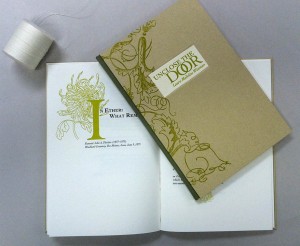
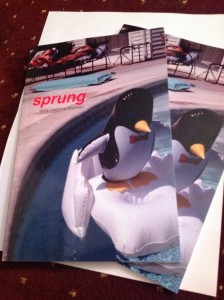
My debut full-length book Sprung is reviewed in New Orleans Review, Book Review: My Imaginary Rest on a Cushion of Benjamins.” There’s an interview by Amorak Huey, “‘They Wouldn’t Be Poems If I didn’t Make Them’: A Conversation with Laura Madeline Wiseman,” in the current issue of Menacing Hedge and an interview with Jeff Hecker, “Sprung Is Not About Spring: an interview with Laura Madeline Wiseman” in Apt. My letterpress book Unclose the Door is now available from Gold Quoin Press. My chapbook Stranger Still has just been accepted by Finishing Line Press.

sprung

I have poems in the current issue of Silver Blade, Spittoon, and Menacing Hedge. I also have poems forthcoming in The Meadowland Review, Martian Lit, Thirteen Myna Birds, and in the anthology Les Femmes Folles: The Women, 2012. My essay “How to be a Russian Sleeper for US” is forthcoming in The Places We’ve Been: Field Reports from Travelers Under 35.

Tuesday with writers 12.2012, 2

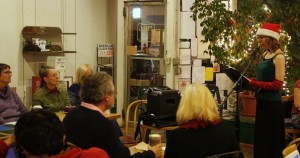
In December, I participated in the group holiday read at Tuesday with Writers and read from Sprung.