“sometimes the title comes first”: the chapbook interview with Amorak Huey

Let’s begin with your (poetic) origin story.

Start with family. I am fortunate enough to come from a family of readers, writers, storytellers. One of those families with bookshelves in every room. My parents read and read to my brother and me, read us more books than I can remember: the ones that stand out in my memory are Treasure Island, Where the Red Fern Grows, To Kill a Mockingbird. Besides Mother Goose, the only poetry book I specifically remember being around was my father’s collected poems of Theodore Roethke. One year we went to a Halloween party where everyone was to recite a poem for the occasion; I memorized Roethke’s “The Bat.”

Place. We moved from Michigan to Alabama the year I was turning four. I grew up in a tiny ramshackle house three miles outside a small town twenty miles outside Birmingham, Alabama. The rhythms and music and weather of the South remain inside me. But I was always acutely aware that I’d moved there from somewhere else. I’ve spent my life feeling like an outsider, like everyone else has a connection that I don’t. As I’ve grown older, I’ve come to think that everyone feels this way, that this is just life. I’m guessing my poems are my attempt to come to terms with this sense of disconnection. But that’s just a guess.

Writing. I thought I was going to be a novelist. I still might be someday. I was an English major. I started grad school in fiction writing. I quit and worked in newspapers for more than a decade. I lived in Florida and Kentucky, then serendipitously Michigan again. I did an MFA in poetry, commuting to Kalamazoo for classes, coursework and thesis spread over several years while also working for the sports desk of the newspaper in Grand Rapids. Again, just guessing, but I think my poems are restless. Unsettled. Acutely aware of their own temporariness. Not just my poems; all poems. All art? What else is important enough to create art about?

Now. I teach, I write, I read. At my job, at home, I am surrounded by people who value words. I am reading Ender’s Game to my kids, wondering if this will be the book they remember.


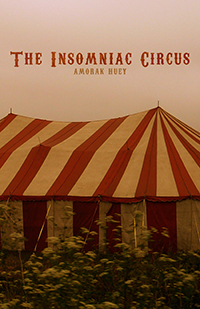
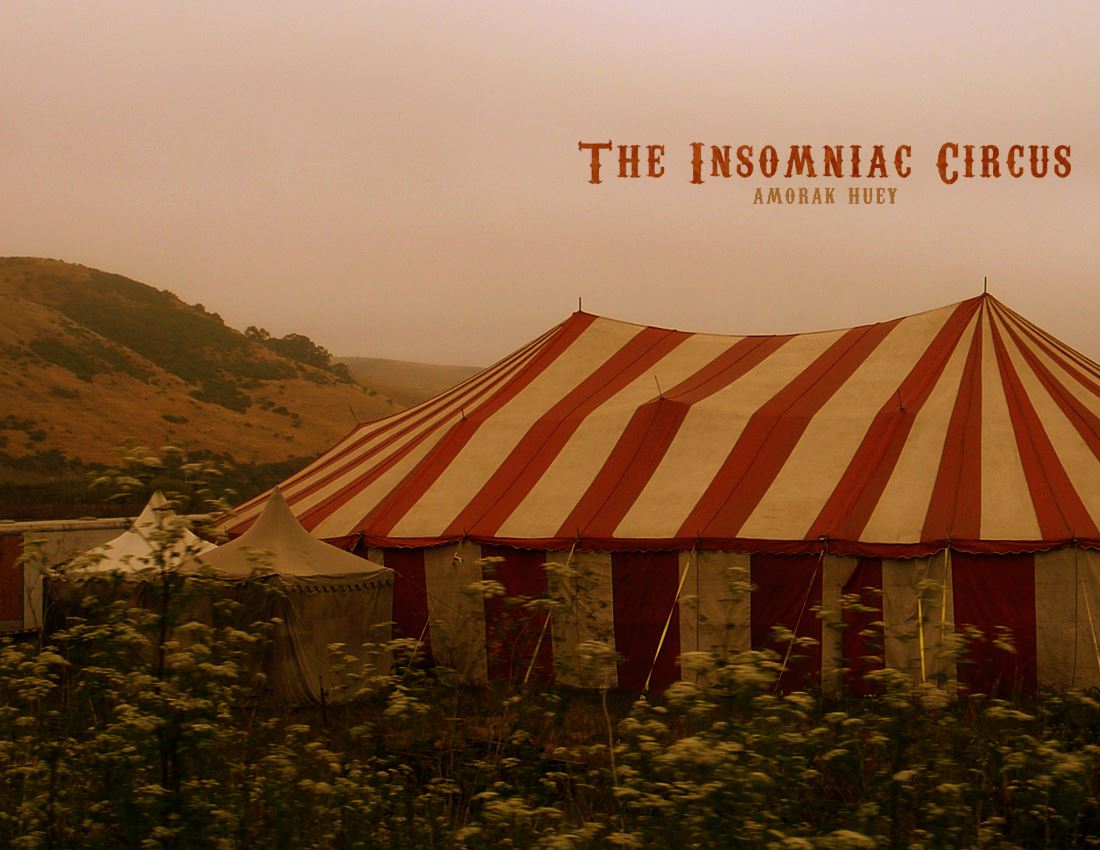
Titles of chapbooks and titles of poems can be so tricky to get right, but offer such an opportunity for the poet. I love the poem titles in your forthcoming chapbook The Insomniac Circus (Hyacinth Girl Press). Reading the table of contents made me laugh with delight. Perhaps pointing to some writers and their work with titles that work, can you talk about your titling process?

This whole chapbook came about because of the title “The Sword Swallower Wonders What’s the Point.” The title led to that poem, and I had so much fun that I wrote “The Tight Rope Walker Gets High” immediately afterward, and the project quickly took on a life of its own. I feel sheepish admitting that sometimes the title comes first, like I’m cheating somehow. Am I the only one who feels this way? Yes, sometimes I write the poem first and then flail about looking for a title until I settle on (or settle for) something. But sometimes, as in this project, the titles come first and lend shape to their poems from the very beginning. The title is the idea, the unifying force, the narrative – then within the poem, I’m free to play with language, to fight against the title or work with it, to complement and contrast, to confound or fulfill the expectations established in the title. In this case, I was going for punny titles, while the poems themselves are darker, more somber. At the risk of over-explicating my own work, I was hoping this contrast would say something about the circus life itself: glitz and show on the surface while the hours outside the spotlight are much more difficult.

I am drawn to long titles both as a reader and as a writer. I suspect this stems from my previous life and all those thousands of headlines I wrote as a newspaper copy editor. There’s an art to headline writing. You have a finite space, three or five or nine words, whatever the page designer’s assigned, and you have to capture the essence of an entire story, the most newsworthy heart of the piece – and you also have to be clever or creative enough to grab the readers’ attention. This is something I miss about real newspapers that is not replicated online, where the headlines even in allegedly respectable media outlets are more likely to be “25 Things You Will NOT BELIEVE About Fuzzy Kittens.”

Poets whose titles I greatly admire include Catie Rosemurgy (for example, “Miss Peach Returns to High School to Retake Driver’s Ed”); Karynna McGlynn, whose debut collection was called, brilliantly, I Have to Go Back to 1994 and Kill a Girl; Collier Nogues (example, “In My Father’s Father’s Airstream Trailer”); and Timothy Donnelly, whose Cloud Corporation is full of gems like “The Malady That Took the Place of Thinking” and “Partial Inventory of Airborne Debris.”

I adore your poems. There’s a loneliness so exquisitely drawn in this chap. The couples in many of the poems add to the pace, the space, the way those of us who are outsiders—like the circus freak—feel. Why this chapbook right now in your life?

Thank for your kind words. It pleases me to no end that you like the poems. This pleasure fits my answer here, because human connection is a fundamental purpose of art. We seek to understand ourselves and each other by reading, by viewing, by listening, by creating. I write because I want to discover something about myself and the world around me; I write because I hope someone will read my words and recognize something about themselves. This chapbook is about masks, makeup, costumes, performance. The circus. The show we are all putting on for each other every day. We are all lonely.

I’m being melodramatic. I am not actually a lonely person. I have a happy marriage and two active, eager, wonderful kids. I have dear friends and supportive, inspiring colleagues. My life is great, which I say in all sincerity. Maybe, then, that’s why this chapbook right now – because my life is in a good place, I feel safe to explore what the comedian Louis CK calls the “forever empty” we all have inside us but don’t like to acknowledge.
What is inspiring you these days? I am reading so much good poetry these days it kills me. Kills, inspires, whatever. I am freshly in love with Elisa Gabbert’s The Self Unstable and Lucy Brock-Broido’s Stay, Illusion. I am in an online writing group, and the poets in the group flabbergast/inspire me every month with their prompts and poems. This semester, I am teaching collections by Bob Hicok and Traci Brimhall, a prospect both daunting and inspiring.

How are you trying to get better as a poet? Read every day. Write more days than not. Listen to the world around me.

Your chapbook credo: Now I wish I had one of these. I’ll work on that.

Number of chapbooks you own: Around 20.

Number of chapbooks you’ve read: 40? Just a guess.

Ways you promote and serve other chapbook poets: I buy and read their books. Sometimes I review them on Goodreads or write about them on my website. I recently provided a blurb for an excellent chapbook called His Late Wives. I could always do more.

Where you spend your chapbook earnings: I have spent so much on book-contest entry fees that my poetry balance sheet will never be in the black. I am fortunate to have a job that means I can afford to write poetry without worrying about earnings.

Your chapbook wish: That lots of people read my chapbook when it comes out. If some of them like it, that would be nice, but mostly I just want them to read it.

Residence: East Grand Rapids, Michigan.

Job: I teach writing to college students at Grand Valley State University.

Chapbook education: I am self-educated when it comes to chapbooks, I’d say. There was a time not that long ago when I didn’t know what a chapbook was, beyond “a book shorter than a regular book.” A conversation with my friend Brian Clements, author of four chapbooks including not meant for you Dear Love (Mudlark, 2012) < http://mudlark.webdelsol.com/mudlark49/contents_clements.html>, led me to think of a chapbook as necessarily more unified than a full-length book of poems, cohering around a central idea or question, and by virtue of its brevity, expressing or exploring that idea quickly. Ooh, this is starting to sound like it could turn into a credo.

The non-chapbook portion of my education includes an undergraduate degree from Birmingham-Southern College and an MFA from Western Michigan.

Chapbook Bio: My chapbook The Insomniac Circus is from Hyacinth Girl. I am presently working with my friend W. Todd Kaneko on a chapbook inspired by Slash, the guitarist. The rest of my bio is pretty non-chapbooky: born in Michigan, grew up in Alabama, ended up back in Michigan as an adult; wrote some things, planning to write more things.


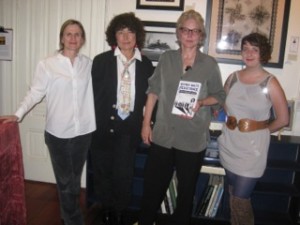
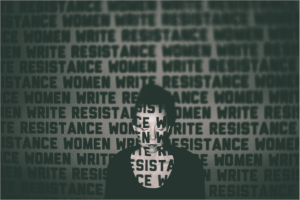
Women Write Resistance reading at the Indiana Writers’ Consortium’s 2014 Creative Writing Conference and Book Fair

WWR_poster_indiana

Women Write Resistance Poets read at IWC

Reading of Women Write Resistance
with Shevaun Brannigan, Sara Henning, Laura Madeline Wiseman, Larissa Shmailo, Jill Khoury, Meg Day, & Mary Stone Dockery
Indiana Writers’ Consortium’s 2014 Creative Writing Conference and Book Fair
4:00-5:10 PM, Saturday, October 11, 2014
Salon A, Hilton Garden Inn, 7775 Mississippi Street
Merrillville, Indiana

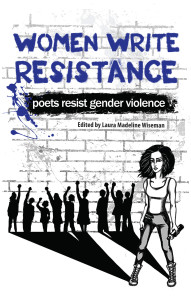
Women Write Resistance: Poets Resist Violence (Hyacinth Girl Press, 2013), edited by Laura Madeline Wiseman, views poetry as a transformative art. By deploying techniques to challenge narratives about violence against women and making alternatives to that violence visible. Poetry of resistance distinguishes itself by a persuasive rhetoric that asks readers to act. The anthology’s stance believes poetry can compel action using both rhetoric and poetic techniques to motivate readers. In their deployment of these techniques, poets of resistance claim the power to name and talk about gender violence in and on their own terms. Indeed, these poets resist for change by revising justice and framing poetry as action. This IWC Conference reading will include an introduction by the editor and feature Women Write Resistance poets who will read their poems and others from Women Write Resistance.

WWR going to STR 2

The featured Women Write Resistance poets

“When you sit down to write a poem, I think you’re making a really brave and bold statement that is at once insistent upon your own existence and also wildly generous in the sacrificing of that existence to the possibility of a reader. To be a person—to insist on personhood—is a right we see refused to the majority of the people in this country (and other countries, with our country’s help) on a daily basis, even when we aren’t hearing about it on the news or social media.” - Meg Day, Blotterature

Meg Day, selected for Best New Poets of 2013, is a 2013 recipient of an NEA Fellowship in Poetry and the author of Last Psalm at Sea Level, winner of the Barrow Street Press Poetry Prize (forthcoming 2014), When All You Have Is a Hammer (winner of the 2012 Gertrude Press Chapbook Contest) and We Can’t Read This (winner of the 2013 Gazing Grain Chapbook Contest). A 2012 AWP Intro Journals Award Winner, she has also received awards and fellowships from the Lambda Literary Foundation, Hedgebrook, Squaw Valley Writers, the Taft-Nicholson Center for Environmental Humanities, and the International Queer Arts Festival. Meg is currently a PhD candidate, Steffensen-Cannon Fellow, & Point Foundation Scholar in Poetry & Disability Poetics at the University of Utah. www.megday.com

“I also do not think of poems or poets as static—just because someone writes poetry, does not mean they cannot be an activist. In fact, poetry, which is a vital form of connecting with others, may predispose someone to be more in tune with the world’s injustices.” - Shevaun Brannigan, Blotterature

Shevaun Brannigan is a graduate of the Bennington Writing Seminars, as well as The Jimenez-Porter Writers’ House at The University of Maryland. She has had poems appear in such journals as Best New Poets 2012, Lumina, Rhino, Court Green, and Free State Review. She has been an Arts & Letters Poetry Prize finalist, received an honorable mention in So to Speak’s 2012 Poetry Contest, as well as a Pushcart nomination by Rattle.

“Sometimes, the attempt at truth is all that one can muster, and that is its own truth.” - Sara Henning, The Conversant

Sara Henning is the author of A Sweeter Water (Lavender Ink, 2013), as well as a chapbook, To Speak of Dahlias (Finishing Line Press, 2012). Her poetry, fiction, interviews and book reviews have appeared or are forthcoming in such journals as Willow Springs, Bombay Gin and the Crab Orchard Review. Currently a doctoral student in English and Creative Writing at the University of South Dakota, she serves as Managing Editor for The South Dakota Review.

“Poetry has been revolutionary and transformative for me since I became interested in poetry.” - Jill Khoury, Blotterature

Jill Khoury earned her Masters of Fine Arts from The Ohio State University. She teaches writing and literature in high school, university, and enrichment environments. Her poems have appeared or are forthcoming in numerous journals, including Bone Bouquet, RHINO, Inter|rupture, and Stone Highway Review. She has been nominated for two Pushcart Prizes and a Best of the Net award. Her chapbook Borrowed Bodies was released from Pudding House Press. You can find her at jillkhoury.com.

“Poetry transformed me… into a powerful woman…Poetry continues to mold and shape my life by offering new possibilities each day.” - Larissa Shmailo, Blotterature

Larissa Shmailo is the editor of the anthology Twenty-first Century Russian Poetry, poetry editor for MadHat Annual, and founder of The Feminist Poets in Low-Cut Blouses. She translated Victory over the Sun for the Los Angeles County Museum of Art’s landmark restaging of the multimedia opera and has been a translator on the Bible in Russia for the American Bible Society. Her books of poetry are #specialcharacters (Unlikely Books), In Paran (BlazeVOX [books]), A Cure for Suicide (Červená Barva Press), and Fib Sequence (Argotist Ebooks); her poetry CDs are The No-Net World and Exorcism (SongCrew).

“There have been times in my life where poetry gave me all the answers about myself and about the world and about what it means to be a woman.” - Mary Stone Dockery, Blotterature

Mary Stone Dockery is the author of One Last Cigarette and Mythology of Touch, and two chapbooks, Blink Finch and Aching Buttons. Her poetry and prose have appeared in many fine journals, including Mid-American Review, Gargoyle, South Dakota Review, Arts & Letters.

omaha2014

“As I wrote in the critical introduction to Women Write Resistance: Poets Resist Gender Violence, I believe poetry is power. Poetry is action.” - Laura Madeline Wiseman, Blotterature

Laura Madeline Wiseman is the author of more than a dozen books and chapbooks and the editor of Women Write Resistance: Poets Resist Gender Violence (Hyacinth Girl Press, 2013). Her recent books are American Galactic (Martian Lit Books, 2014), Some Fatal Effects of Curiosity and Disobedience (Lavender Ink, 2014), Queen of the Platform (Anaphora Literary Press, 2013), Sprung (San Francisco Bay Press, 2012), and the collaborative book Intimates and Fools (Les Femmes Folles Books, 2014) with artist Sally Deskins. Her work has appeared in Prairie Schooner, Margie, Mid-American Review, and Feminist Studies. www.lauramadelinewiseman.com

More recent interviews with poets from Women Write Resistance:

An Interview with Poets from Women Write Resistance: Poets Resist Gender Violence,” Blotterature, October 2014

“‘To make a new whole of the fragments’: A Roundtable Discussion with poets in Women Write Resistance,The Conversant, October 2014

“‘We invent the forms of resistance we wish to see‘: A Roundtable Discussion with Poets in Women Write Resistance,” Les Femmes Folles, September 2014

“Blot Lit Reviews: An Interview with Writers from Women Write Resistance: Poets Resist Gender Violence,Blotterature Literary Magazine, by Julie Demoff-Larson with Sarah Chavez, Tyler Mills, Jennifer Perrine, Carly Sachs, Monica Wendel, and Margo Taft Stever, May 2014, Part I & Part II

“‘their words make this possible‘: A Roundtable Discussion of Poetics of Emplacement with Poets from Women Write Resistance,” Spoon River Poetry Review, April 2014

“tales we carry around with us”: The Chapbook Interview with Sally Rosen Kindred

Sally1

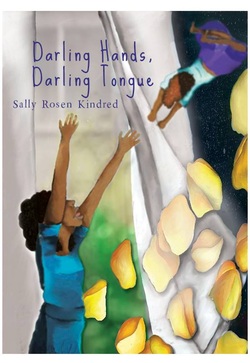
Darling Hands, Darling Tongue (Hyacinth Girl Press, 2013) is a retelling that explores aspects of Peter Pan by giving voice to Wendy, Tiger Lily, and Tinker Bell. Why retell women’s stories? What is your process when writing poems based on pre-existing texts such as Peter Pan?

My interest in these kinds of retellings began with reading them. Some of my favorite poems do this kind of work—poems by H.D., Anne Sexton, Carol Ann Duffy, Louise Gluck, Rita Dove. I am a narrative thinker; my approach to identity, spirituality, family is narrative. I love story, and I get attached to stories. I think the stories we’re told as children, in particular, take on a special weight, illuminate and shape the rest of our lives. And so when these stories have people in them who don’t speak much but would probably have a lot to say, and there is some opportunity to re-connect with them, to give them new shape to reflect new ways to think about who they, and we, are—well for me, a project like that is irresistible.

I tend to focus on women’s stories because I’m a feminist, and there’s a lot of work still to be done in thinking about how gender and race are constructed in these tales we carry around with us. Peter Pan and Wendy is a rich, compelling tale; it’s also extremely problematic. Little girls still watch Disney’s Peter Pan today and want to be Wendy Darling. Many grown women in our country are walking around with Tinker Bell’s tiny fairy body in their heads. My sons, who are Latino and were very young when I first read Peter Pan aloud to them, wanted to know why there was a football team in the story—and I had to explain what J.M. Barrie meant by “Redskins.” Tiger Lily doesn’t even speak in the original Peter Pan and Wendy. She doesn’t even speak! She does in Darling Hands. The story of Peter Pan isn’t going away, but I can’t see holding onto it without doing this kind of work.

About the process: I start by reading and re-reading the primary text, as well as annotated versions and some criticism for context. Practically, it can be easier to get started each day on a sequence that works from a pre-existing text. I can always begin by returning to the original story. With Darling Hands, I often started my writing time by re-reading some part of Peter Pan and Wendy, copying down a sentence, and using it as a point of departure. I kept many such sentences as epigraphs.

It’s got to be careful work, because the reader already has a stake in the voices at play. If she cares about this story before she picks up the poem, if she believes that she knows the speaker, then I have to give her both something she knows (a voice, a scene, a feeling) and something she doesn’t (some reward for her return to this tale).


The cover art for Darling Hands, Darling Tongue is lovely. Can you talk about it?

The cover art, by the incredibly talented Nashay Jones (www.nyelarebirth.com), is one of my favorite things about the chapbook, and every time I see it, I’m grateful again for the chance to work with Hyacinth Girl Press. Editor Margaret Bashaar suggested several possible artists to work on the cover-artists who had done work for Hyacinth Girl Press before-and when I looked at their work, I was struck by Nashay Jones’s ability to depict girls and women of color in her work, giving them real bodies and convincing presence but also a kind of luminous magic and personality and strength that I just loved. The last thing I wanted on the cover was a pale golden Tinker Bell flying easily with a too-delicate, too-ethereal fairy body. Just as I hoped that my take on the Peter Pan story would not be a Disney echo, I was confident that Nashay Jones’s vision would be her own, and it is, and it’s stunning.

In the November/December 2013 issue of Poets & Writers, Jennifer Ciotta argues that “if you want to be a successful self-published or traditionally published author in today’s market, your mind-set should be: ‘It’s all about the money, honey.’ You have to be the businessperson and the author. Your job is to write a great book and sell it” (69). As an author of two full-length books, an award-winning chapbook, and an additional chapbook, discuss your experiences with publishing and promoting your collections and reaching your readers.

Well, I have to say, I look at that comment, and I think, “What money?” Anyone who’s signed up for a lifetime of writing poetry is going to need to eat and keep warm somehow, and going to want to do her press proud, but she is unlikely to be “all about the money.” I have similar questions about wanting to be “successful.” I mean, again, what is the definition of success when a person wants to spend her life with poems?

I’ve never had trouble finding someone else who would be willing to define literary success for me, but I have often been sorry to have gone looking. There will always be people—in MFA programs, in the latest issue of Poets and Writers—who will be happy to set the terms. It makes sense to listen to these folks, because I want to be part of a literary community. It also makes sense to tune them out when I’ve heard enough.

I do think it’s important to promote my work, though, so that I can find the readers who will be most interested in it. I owe it to the wonderful presses who have generously taken a chance on me, and I owe it to my poems. I also think I have to balance that need against my horror at having to “sell” myself, and the realistic limits on my energy—what I, as an introverted person, can reasonably do, and what’s effective, and so worth doing. I want to spend more time writing than marketing—though I do love the opportunities that promoting a book has given me to visit classrooms and libraries, and meet people who love poems, and talk with people about poems, and share my work.

I feel lucky to be publishing during the era of social networking, because I am so much more comfortable making my first impressions about my writing through writing. I confess, I love the safety of being behind the screen. I feel much less pestery and invasive mentioning I have a new book in a feed someone can scroll on by, rather than walking up to them at…what, a cocktail party? Do people go to cocktail parties, or is that just on tv? I don’t go to cocktail parties. Even at a poetry reading, I’m the type to sit in the audience, have the amazing auditory experience, and duck out afterwards without mingling.

I also love reaching people in a personal way through postal mail. When Darling Hands, Darling Tongue was coming out, my kids and I made collage-and-paint postcards to celebrate—we stuck to fairy-related imagery, in honor of Tinker Bell—and we mailed them out to the first 25 people who said they wanted them. I have no idea if this was a “successful marketing campaign,” but it sure made a few days of summer vacation fly by. I’m pretty much up for any promotional activity that involves finger paints. I liked that each postcard was different, and we spent time deciding who would get which one. It felt personal. That’s my favorite kind of “promotion”—the personal kind, that brings news of a book, without a sense of obligation.

What is inspiring you these days?

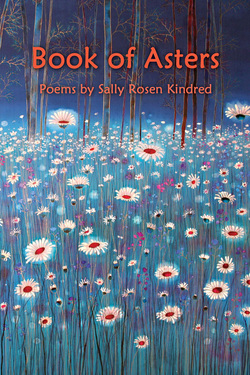
I’m inspired by walking outside and reading field guides. I have a full-length book coming out this month, Book of Asters, that uses the science and lore of the aster family of flowers to talk about human families (and specifically my family). I’m also inspired by Grimm fairy tales—all those bad things that happen to girls in the woods, and how they marked us as children—and I’m excited about paintings, and bodies in paintings: reading Natasha Trethewey’s Thrall and Molly Brodak’s chapbook The Flood has got me thinking about how our historical and cultural moment teaches us to see and represent bodies. And right now my brain is crowded with the life of Charles Dickens, whose childhood, city and lexical adventures are finding their way into my work.

How are you trying to get better as a poet?

Mostly I try to get better by reading, and talking to others about reading, poetry. I also read a lot of novels and nonfiction (about those obsessions that feed writing: botany, history, theology, language—thank goodness for the library!). I read books on the other arts, and books on craft. I try to get better by writing, too, of course—which means scrawling on paper but also walking and waiting—and talking with others I trust about what I’m writing.

Your chapbook credo: A chapbook has the chance for concentration and intensity that a full-length book doesn’t always have, so a good chapbook is intimate in the hand and the mind. A great chapbook is bound with a ribbon!

Number of chapbooks you own: Over fifty.

Number of chapbooks you’ve read: Maybe forty? Forty-five? (Still a few in the to-read pile—I subscribe to Hyacinth Girl Press, and they just keep coming! Hooray!)

Ways you promote and serve other chapbook poets: I buy and read chapbooks and talk about them on Facebook and GoodReads. I also write reviews for publication. My most recent review is of Molly Brodak’s The Flood in The Rumpus.

Where you spend your chapbook earnings: That money (such as it is) goes back into buying books, chapbooks, and the tea I drink while I read them.

Your chapbook wish: To write more and to read more chapbooks…preferably chaps bound with ribbons.

Residence: Columbia, Maryland

Job: I’m lucky to write from home, where I also take care of my children. I taught writing in the classroom for seven years, and then on-line for eight; I still love doing classroom visits and workshops in schools.

Chapbook education: The first chapbook I read was Bodies of Water by Sarah Lindsay (Unicorn Press). I got it in high school and carried it around in my bookbag. I quoted from it on Mrs. Windham’s chemistry test. Thus began my chapbook education.

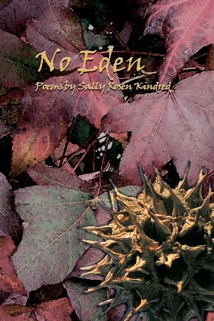
Bio: I’m a native of Greensboro, North Carolina, who lives in Maryland and also has a special love for Pittsburgh. I’ve received fellowships from the Maryland State Arts Council and the Virginia Center for Creative Arts. My chapbooks are Garnet Lanterns, winner of the Anabiosis Press Prize (2005) and Darling Hands, Darling Tongue (Hyacinth Girl Press, 2013), and my full-length collections are both from Mayapple Press: No Eden (2011) and Book of Asters (2014). For more information, see sallyrosenkindred.com

The Chapbook Interview: Juliet Cook & Robert Cole on Collaborative Chapbooks

How did your collaborative chapbook begin?

Juliet Cook - My memory issues might be warped, but my recollection remembers me posting tortured Saint photos on my facebook page and then Robert Cole suddenly emailing me, asking if I might be interested in poetic collaborating. I wasn’t familiar with his poetry and I don’t think he was familiar with mine, so I suggested that first we should send each other a few poems to find out if we were interested in each other’s creative style and thought the two styles might fuse together well, and I think both of our initial impulses were YES and so we dove in.

Robert Cole - Yeah at first, I wasn’t very familiar with Juliet Cook’s poetry, but after we exchanged some of our work, the idea crossed my mind that it may be interesting to see how our writing would work together if we did some collaboration. After I approached her about it, I read a poem by her in an issue of Caketrain that caught my attention and pretty much sealed the deal. At the time we didn’t have a chapbook in mind necessarily, but we quickly started to realize we were producing enough poems to put together a cohesive manuscript.

I wanted to start a collaboration with Juliet to explore the aspects of life that I have been afraid to confront. I wanted to scare myself, really. It became apparent pretty fast that our combined style of writing was doing just that. Also, what few collaborative chapbooks I’ve read had always interested me. I wanted to step away from myself and my own work to see what would happen if I gave up complete control. Creating a hybrid, doing something strange, I wanted to try that. It turned out to be an inspiring experience. Collaborative poetry (or any kind of collaborative art for that matter) is something I think artists should explore more often.

Can you describe your collaborative process? How did you go about revising each poem, the sequence of poems, and finding a home for the chapbook? Was anything frustrating about the experience? Delightful? Surprising?

JC - For me, there have been a few times in the past when I’ve attempted poetic collaboration with writers I am familiar with and whose writing I like, but either our styles don’t seem to mesh very well together OR nothing ever happens after our initial attempts at collaborative writing.

I think part of the reason nothing ever happens (beyond the writing itself) is because oftentimes when you’re working with another individual, aside from the writing, you don’t know what their style is in terms of revising, submitting, and so forth. Robert seemed pretty open along those lines, so I handled our submission process the same way I handle my own work – start submitting poems almost as soon as I think they seem done. I’m good at staying organized when it comes to keeping notes about when and where I have stuff submitted – and I kept Robert on top of acceptances and rejections.

As far as the poems went, we worked on one at a time – some lines of his, some lines of mine, some lines of his, some lines of mine, arrange the lines, slightly revise some lines, remove some lines, rearrange the lines until we both agreed a poem seemed done – and then on to the next poem.

Most of Robert and my collaborative writing happened in April and I knew that Hyacinth Girl Press was accepting chapbook manuscript submissions in May, so I ordered and organized our poems into chapbook format, sent that to Robert for his approval, he approved, and I submitted it. Obviously I didn’t know if Hyacinth Girl was going to accept it or not (and if they didn’t, we would have submitted it to other sources), but it was accepted by Hyacinth Girl, the very first source it was submitted to.

Writing twenty some collaborative poems in about a month, organizing nineteen of them into chapbook format, already having nine of those nineteen poems accepted for publication by literary magazines, and having the whole collection accepted by the very first press it was submitted to made it a delightful writing experience for me (and hopefully for him too, but I don’t live in his brain, so I don’t know).

The only aspect of the collaboration that was slightly frustrating for me (and maybe for him too, but again I don’t know) is that poetry is such an emotional realm for me and such a mental turn on that if I’m working on poetically collaborating with someone and it’s going well, then I also tend to spurt a bunch of other personal information (thoughts, feelings, ideas, personal opinions), sometimes maybe to the point of causing them to feel uncomfortable or overwhelmed. After several times of sending Robert long emails and receiving a three sentence response, I realized I needed to back off emotionally and just stick to the poetry with him and so I did.

He’s a young guy anyway; he probably doesn’t need some mentally imbalanced middle aged woman spewing her junk at him. Except for in poetry land.

RC - The process was surprising in that I didn’t expect it to happen so easily. Nothing was forced. We started by exchanging 3-6 lines of whatever came to mind, adding to each set of lines through email, and quickly found a rhythm. Our chapbook was written primarily through email exchanges in just a few weeks time. Poetry is always frustrating, but the collaboration didn’t come with any stress that wouldn’t otherwise be there had I been writing by myself. It was also perfect timing. I was in the middle of this period in my life where I was struggling financially every day, living alone in a dismal apartment, eating rarely, battling plenty of health problems and worries to fuel my expression. That’s not to say things are different now, but after working with Juliet on this book, I have been able to enjoy a sort of creative relief.

What collaborative collections do you admire and what is it about them that works?

RC - A few months ago I began corresponding with poet John Amen, editor at The Pedestal Magazine, and he was kind enough to send me several copies of his chapbooks. But one book in particular, “The New Arcana”, really grabbed my attention. This collaborative project Amen did with Daniel Y. Harris is interesting to say the least. I’m not a book reviewer, and wouldn’t know how to elaborate on why I enjoy this collaborative project so much, but it contains a great deal of innovative language. The humor in “The New Arcana” also hit home for me. A portion of the humor in this book that I continue to return to pokes a bit of fun at the academia and their impossibly outstanding author bios and curriculum vitae.

JC – I don’t recall reading any new collaborative books or chapbooks recently; for the most past, I’ve always tended towards individual creative expression more so than collaboration (until recently, do to my awesome collaborative experience with Robert). However, in 2012, I solicited several poets to participate in a collaborative chapbook to be published by my Blood Pudding Press – “Fainting Couch Idioglossia”- and I really enjoyed how some of those collaborations turned out, such as Daniel M. Shapiro & Jessy Randall and Kelly Boyker & Margaret Bashaar. Both of those collaborators two different styles fused together really interestingly. Also, I’ve fairly recently read some uniquely interesting collaborative work published by the online literary magazine, Counterexample Poetics.

I’ve had the opportunity and sneak-peak of your chapbook Mutant Neuron Codex Swarm forthcoming from Hyacinth Girl Press. I enjoyed the word play, the rhythm, and sound. Can you talk about how this chapbook is similar to or different from work you’ve done alone or in collaboration with other artists?

RC - I personally have never written work myself quite like what Juliet and I managed to create. I appreciate how it’s a combination of our voices, virtually a 50/50 share of writing work load. Many lines I contributed to this collaboration were simple sentences or 5 word lines I had been sitting on for months or years but never found a place for them. When I handed them to Juliet, suddenly more substance could be pulled from them and I was happy to finally put these ‘stand alone phrases’ into something more substantial. Although I’m working on another collaborative project now, this chapbook was my first attempt at working with another artist. The difference between collaborative work and writing I do alone is the sense of not being fully responsible for the completion of a poem. In other words, if I wrote 4 lines or so but couldn’t think of how to continue, Juliet had no problems expanding upon the lines in a way I would have never considered.

JC - I feel similarly to Robert on this. I was delighted by how our two different styles seemed to interestingly mesh and fuse together so well. Also, since as an individual writer I seem to use similar content and even similar words a lot, I really enjoyed receiving lines that included words that don’t usually pop out of my poetry brain (like scrimshaw and sultans and puppies) and integrating that stuff into the same forum as my kind of words (like egg cups and tentacles and a blow torch) and probably creating new kinds of descriptions for both of us. I’m currently working on another collaborative project too, but there’s no way it’s going to come close to the lightning fast blow torch pace of Robert’s and mine. I don’t usually write my own poems anywhere near that fast, so it was a really unique experience for me in that respect too.

What cover art do you have in mind for Mutant Neuron Codex Swarm?

RC - We’ve been looking at a few different options. Juliet, I believe, may have a better answer to this question.

JC - When I participated in a Hyacinth Girl Press poetry reading this past July, HGP editor, Margaret Bashaar mentioned an artist she had in mind for the cover art, whose work she thought might fit well with the dark twisted MUTANT content and I was able to meet that artist. Her name is Rachael Deacon and she’s an independent film maker, as well as a creator of her own unique art photos and drawings and paintings. I’ve seen some of her art that already exists and am definitely a fan. I think she is going to create a whole new piece of art for the MUTANT cover and I think it will be hideously, gruesomely powerful and non-humanly awesome.

What is inspiring you these days?

RC – Music, documentaries, B-rated sci-fi movies, artifacts, ancient mysteries, playing chess online. I like to entertain the idea that there might be a scroll of forbidden wisdom hidden beneath a floorboard in my house. I’m not entirely sure if I get inspired or not. Some nights I just wake up around 3 or 4am with an urge to write one sentence that won’t leave me alone and it kind of just goes from there.

JC – Visual imagery sometimes inspires my words (and vice versa). Plus other poetry, movies, music, thoughts, feelings, mental imbalance, and dreams too.

A bottom leg got cut off/
in last night’s dream.

How are you trying to get better as a poet?

RC - I’m never content with how accurate my writing reflects what I mean to say, so that helps. Reading a lot is important. I keep up with as much new poetry and fiction as I can, but I also read things like microwave instruction manuals or spam mail.

JC – Continue to read, write, re-read, revise, think in a focused way, and express myself my way.

Your chapbook credo:

RC - Since this project with Juliet will be my first chapbook, I haven’t been able to develop any kind of credo. I think it helps to visualize how the words will appear on the printed page while remaining detached from the idea of publishing it until it’s completed.

JC – I don’t have a set in stone credo, but if I have close to 15 new poems that do not yet appear in a chapbook, I might start thinking about how they might fit into one - and then concept, poem order, other formatting, title, and so forth.

Number of chapbooks you own:

RC - Thirty or so.

JC – Hundreds.

Number of chapbooks you’ve read:

RC - Probably 18.

JC – Hundreds.

Ways you promote and serve other chapbook poets:

RC - When I have the money I think the best way to promote and help other poets is to simply buy and read the chapbook. I have mixed feelings about Facebook, but I think social media can be useful for networking and helping promote other poets who are really worth reading.

JC – Purchase chapbooks, read chapbooks, share lines from chapbooks, and publish chapbooks through my Blood Pudding Press. I’m currently in the process of reading chapbook manuscripts submitted to the latest Blood Pudding Press chapbook contest.

Where you spend your chapbook earnings:

RC - Buying time to write more stuff. Time is really expensive. When I earn money from my creative writing it tends to go toward groceries or bills which translates to me having to work a few less hours one week, giving me breathing room to think and make poems.

JC – Towards publishing chapbooks and buying other art supplies and art and unique tidbits.

Your chapbook wish:

RC - I have three chapbooks I’ve been rewriting back and forth for years now. I’d like to extract what I like from these three and create a new chapbook altogether.

JC – Sometime in 2014, organize another new chapbook of mine and find a new press to accept it.

Residence:

RC - The Paseo Arts District in Oklahoma City.

JC – State-wise, I live in Ohio – but mostly, I live in my warped brain.

Job:

RC - I recently found good work as a copywriter and editor, but for most of my adult life I worked in customer service, food establishments, casinos, gas stations, anywhere really.

JC – I help at a paint your own pottery shop - but passion-wise, my job is mostly poetry and artistic pursuit in various ways.

Chapbook education:

RC - I have a lot to learn.

JC – Ongoing. I’ve been interested in the content and design of zines and chapbooks for more than twenty years. I was involved in the Dusie Kollektiv chapbook trading group from 2008 through 2011. I started my own indie chapbook press, Blood Pudding Press, in 2006 and it still exists.

Chapbook Bio:

RC - Right now I’m in the process of writing a collaborative novel with another poet/editor that I’ve appreciated for some time and hope to have some news on that soon.

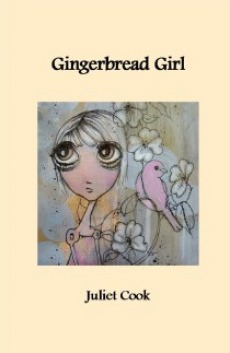
JC – My own poetry chapbooks include “The Laura Poems” (Blood Pudding Press, 2006), “Girl Gang” (Blood Pudding Press, 2007), “Planchette” (Blood Pudding Press, 2008), “Gingerbread Girl” (Trainwreck Press, 2008), “Projectile Vomit” (Scantily Clad Press, 2008), “MONDO CRAMPO” (Dusie Kollektiv 3, 2009), “PINK LEOTARD & SHOCK COLLAR” (Spooky Girlfriend Press, 2009), “Tongue Like a Stinger” (Wheelhouse, 2009), “Fondant Pig Angst” (Slash Pine Press, 2009), “Soft Foam” (Blood Pudding Press for Dusie Kollektiv 4, 2010), POST-STROKE (Blood Pudding Press for Dusie Kollektiv 5, 2011), Thirteen Designer Vaginas (Hyacinth Girl Press, 2011), and POISONOUS BEAUTYSKULL LOLLIPOP (Grey Book Press, 2013). Plus the forthcoming “MUTANT NEURON CODEX SWARM” by Robert and me, to be published by Hyacinth Girl Press sometime in 2014.

Blood Pudding Press chapbooks by others include, “GROWLING SOFTLY” (a multi-writer chapbook, 2007), “ w i n g’d” by Kyle Simonsen (2008), “ECTOPLASMIC NECROPOLIS” (a multi-writer chapbook, 2008), “SPIDER VEIN IMPASTO” (a multi-writer chapbook, 2009), “At night, the dead” by Lisa Ciccarello (2009), “The Spare Room” by Dana Guthrie Martin (2009), “LETTERS FROM ROOM 27 OF THE GRAND MIDWAY HOTEL” by Margaret Bashaar (2011), “FAINTING COUCH IDIOGLOSSIA” (a multi-writer chapbook, 2012), “Renegade//Heart” by Lisa M. Cole (2013), “Poking through the Fabric of the Light that Formed Us: Songs and Stories to Read in the Mirror” by Lora Bloom (2013), and “Sister, Blood and Bone” by Paula Cary (2013). Plus the two winners of the current Blood Pudding Press chapbook contest will be announced in early 2014.

six months of Women Write Resistance: Poets Resist Gender Violence

It’s been six months since Women Write Resistance: Poets Resist Gender Violence (Hyacinth Girl Press, 2013) was released. So, what’s been going on?

Rebecca Foust, Ellaraine Lockie, Dawn McGuire and July Westhale WWR reading April 2013

WWR poets have been featured in journals, blogs, and newspapers. These features have included WWR poems, mini-interviews, and stories by several of the poets. I’ve also had the opportunity to talk about WWR in interviews.

“On the Revolutionary and Transformative Effects of Poetry: A Five Part Interview Series with Five Poets from Women Write Resistance” in Les Femmes Folles with WWR poets Rebecca Foust, Gaynell Gavin, Jane Satterfield, Ellin Sarot, and Alexis Krasilosky.


Interview on “Friday Live” at the Mill with Marge Saiser and Wendy Jane Bantam on NET radio by William Stibor. (starts 26:50, or 28:23).


A Women Write Resistance feature in Menacing Hedge, with interviews with WWR poets Kathleen Aguero, Elliott BatTzedek, Ann Bracken, and Maria Luisa Arroyo and their poems from the anthology.


Poetry Crush Special Feature: Women Write Resistance” in Poetry Crush. The feature includes interviews with WWR poets Dawn McGuire, Billie Tadros, Nicole Hospital-Medenia, and Angele Ellis.


A feature by Shelby Fleig “UNL lecturer Laura Wiseman curates collection of women’s ‘resistance’ poetry” in the Daily Nebraskan. The feature includes interviews with other WWR poets Deborah McGinn, Lucy Adkins, and Marjorie Saiser.


Interview with The Nebraska Girls Lit Hour on the letterpress books Farm Hands and Unclose the Door, the full-length book Sprung, and the anthology Women Write Resistance.


An excerpt from Women Write Resistance: Poets Resist Gender Violence in Extract(s).

wwr_lincoln

WWR has been reviewed.

A review of Women Write Resistance in Broad Blogs by Georgia Platts.


A review of Women Write Resistance by Grace Cavalieri “May Exemplars” in Washington Independent Review of Books.


A review of Women Write Resistance: Poets Resist Gender Violence by Sally Deskins in Les Femmes Folles.

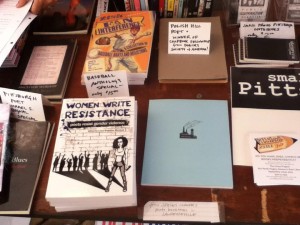
WWR at the Polish Hill Arts Festival! 2013

Several WWR readings have taken place in New York City, Philly, the San Francisco Bay Area, and Nebraska, with more to come in Nebraska, California, and elsewhere.

McGinn photo WWR

As such, recordings of recent WWR events are on YouTube and photos have been posted to facebook and twitter.

One WWR poet, Angele Ellis, made a video poem of her WWR piece.

WWR is also in public libraries, thanks to the work of several WWR poets. Copies of WWR have been donated to women’s shelters and crisis centers.

Wiseman photo WWR

And finally, WWR has raised money for three organizations that seek to end gender violence and violence against women.

Bauer photo WWR

What’s next? More WWR features, interviews, and reviews are in press and/or in the works. There’s also more WWR readings taking place in the next few months.

Chavez photo WWR

Finally as editor, I’m so honored to know and work with such amazing poets. I’ve had much support from WWR contributors, editors, designers, writers, poets, and friends in the production and promotion of this anthology. Their work continues to inspire me. It is my hope and the hope of this anthology that when women write resistance their work resists gender violence, changes culture, and makes the world a little better place for us all.

book trailers, times three

There are three Women Write Resistance events coming up in the next few days. If you’re in San Francisco, Los Angeles, or Lincoln, I hope to see you there. The bookstore for the Lincoln event is donating a percentage of all WWR book sales to a local women’s crisis center.

Reading of Women Write Resistance in Lincoln with Grace Bauer, Jennifer Perrine, Marianne Kunkel, and Sara Henning
7 pm, September 5, 2013
Indigo Bridge Books, 701 P Street #102
Lincoln, Nebraska 68508


Reading of Women Write Resistance in LA with Kathleen Tyler, Cati Porter, Alexis Krasilovsky, Laure-Anne Bosselaar and more (editor in absentia)
8 pm, September 7, 2013
Beyond Baroque, 681 Venice Blvd.
Venice, CA 90291


Reading of Women Write Resistance in Sausalito with Rebecca Foust, Judy Grahn, Judy Juanita, and Andrena Zawinski (editor in absentia)
Sunset Poetry By the Bay Series hosted by Marin Hickel
7 pm, September 11, 2013
333 Caledonia, Sausalito,CA

My presale period for my forthcoming chapbook, Stranger Still, finished up this weekend. Thank you to all of you who ordered copies! It’s much appreciated and determines the press run at Finishing Line Press. This little book of Martians will ship October 25th, just in time for Halloween. Trick-or-treat!

Finally, just out is my new chapbook First Wife from Hyacinth Girl Press. Yay!


the chapbook interview: Mary Stone Dockery on the chapbook review

In the July/August 2013 issue of Poets & Writers Pamela Paul, the new editor of the New York Book Review explains that “A really good book review answers a fundamental question: Is this a book I want to read?” while also identifying what the book is about and if its good (21). Like Paul, you too are an editor—Stone Highway Review—a journal that published reviews, as well as poetry, prose, and interviews. I’m curious about what constitutes a good chapbook review—a genre not likely covered in NYTBR. Does it tell what the chapbook is about if poetry chapbooks sometimes resist a narrative unity more often found in memoirs and novels? What constitutes “goodness” of chapbooks—form, tone, narrative arc, design/layout, experimental—or something else? Does it answer “is this a [chap]book I want to read.” Or maybe let me ask this another way, who are the readers for chapbook reviews? Do they fear a potential “spoiler alert” by such a reading experience, even if it is a really good review?

When I read a chapbook review, I definitely hope to know after if it’s a book I’d like to read. But I don’t think I need to necessarily know what the chapbook is about. I would rather know what the chapbook does that makes it a worthy read and a good buy; I want to know if this is a writer I’d like to get to know and support. The chapbook genre fascinates me because the qualities of a good chapbook are probably all of those things you mentioned – form, tone, narrative arc, design/layout, and experimentation, plus language, structure, and theme. When a review helps me decide to read a chapbook, though, it analyzes the language, structure, and themes in such a way that the reader sees how the chapbook is constructed. It will tell me how the chapbook attempts a narrative arc in a way that connects with its content. Or how the chapbook’s form speaks to its overall narrative arc. Or how the tone and experimentation in the chapbook create its overall theme. Or if the chapbook is organically structured, if a reader can sit down and read it in one sitting, or if the poems can each be read separately in any order (this is an important question because readers of chapbooks have so many varied reading styles). Or how the chapbook’s order and characters contribute to its overall emotional impact. Obviously a review cannot answer all of these questions, but will hopefully figure out the main components the chapbook relies on and how those components work together and what kind of reading experience they create. What a chapbook review should not do is tell us that it’s just a really good chapbook and that we should simply read it. I think all readers of chapbook reviews want to know why we should read it and what makes it awesome or different, all while using powerful excerpts from the chapbook, and from the poems that hold the chap together. It’s complicated, really, because while I don’t think the readers of these reviews worry about spoilers, I do think they want a little bit of a tease, and expect to rely mostly on the reviewer’s analysis of the chap. Can you tell this writer was excited about her reading experience? Can you tell this writer has thought about the book because the book asks you to think about it in these ways? And does the reviewer seem genuine in her own interpretation and evaluation? These are the questions I ask myself when I read a review and if I trust the reviewer after that experience, then I’m more likely to purchase the chapbook. And I’ll be honest, I’ve purchased a lot of chapbooks based solely on a review that made me excited, too.

In her interview in the February 2013 issue of The Writer’s Chronicle Julianna Baggott notes “The irony of social media is that it gives the illusion of being connected when the residual effect is a nagging sense of isolation” (64) and in the July/August 2013 issue of Poets & Writers Neil Gaiman notes in his interview, “Do I feel that writers should be on Twitter? No, I think writers should write. Do I think people who enjoy using Twitter should use Twitter? Sure. Do I think people should use the web to advertise? No. Do I think they should use it as themselves? Yes….The first time I went to the web and I posted a signing-tour schedule, the people who came to the signings were people who found out about it from my website. And suddenly, I was bulletproof. I had my audience” (35). Like yourself, Gaiman and Baggott are prolific writers in their genres and like them, you too use social media. I’m curious about your thoughts on the role of social media for the chapbook poet. Does social media make the chapbook poet feel isolated given that few people read poetry, let alone chapbooks or does social media offer a necessary place for chapbook poets to connect with other chapbook poets and anyone else who might be their audience? How does one use Twitter and the web “as themselves,” if the self that is constructed via social media is determined by the medium of delivery? If the self is constructed and if we are different selves in different venues (e.g. open-mic night, at the in-laws, at the gym, on facebook) aren’t all those selves authentic and real and don’t they all serve the chapbook poet in some way?

When my husband’s uncle told my in-laws that he had read some of my poems because I posted them to Facebook, and that he enjoyed them, I realized the important role social media would play in my own writerly identity. This is a man who may have only read a few poems in his life, and here he was talking about my work, reading it, and even sharing that experience with others. Recently, I was matron of honor in a wedding and during the reception, an ex-boyfriend told me he also had access to my work because of the Internet. Social media has actually helped shape and connect to an audience I may not have had access to otherwise. Social media is a great tool for writers. I “met” you because of social media. Many of my writer friends, who support other writers, who purchase chapbooks or books, or share one another’s work, are people I’ve only gotten to meet online. Not only does my work seem to have a bigger reach, but as an editor I’ve been able to see just how those connections matter and help to create more work, and foster collaboration. Rather than isolating, I think these tools help connect writers. For most of my life I felt pretty isolated as a writer and saw authors as these foggy blobs of greatness, and once Facebook and blogging became a bigger part of my writer life, it helped me put those faces to the work, even voices. While it’s often pretty clear that a writer who lives online as solely a writer is usually only revealing one aspect of herself, social media also nurtures community, if used in a positive way, and allows us to create our best writer selves. Of course, I’m still getting used to it all. Separating these selves has actually made using social media a little more daunting because just as we are constantly revising our many selves in different places, we are also required to do the same via social media. How many status updates have I typed in and then deleted immediately, thinking my writer personality would be immediately tainted? Ha. I’ll admit it’s quite a few.

You’re the author of one book, Mythology of Touch, and one chapbook of poetry, Aching Buttons, with several things forthcoming What risks do you take as a poet?

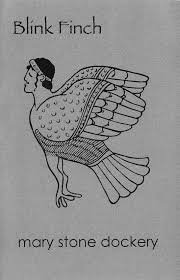
Sometimes I think that being a poet is risk enough. But within the realm of poetry, I take the most risks by focusing on form, on collaboration, on challenging content and language. In Blink Finch, most of the poems are fifty words. I like constraints like that. In The Dopamine Letters, the poems alternate between prose and verse, and instead of having individual poems with titles, it’s more like one long poem that tells a story. A lot of my writing slips easily into the surreal or strange, avoiding straight-forwardness. I want my poems to be memorable and even overly dramatic. I kind of like making people cringe. Writing about sex is always a risk, too, so content matters, and it’s fascinating to me to explore abortion, incest, infertility - things we don’t always want to talk about at the dinner table, right? I want my poems to be complex, even difficult, and I know that this can threaten potential audiences and alienate them. But I kind of like the idea of alienating people. It’s all about getting a reaction, isn’t it?

What is inspiring you this year?

Anxiety and a new-found fear of the future. I’m terrified it’s all moving too quickly. This makes me write in a rush, feverish, saying things I never thought I’d have the guts to say.

What current project(s) are you working on?

Currently I am working on a collection about mothering. It’s partially autobiographical, exploring the loss of my mother when I was a child and the ways our memories recreate things that never happened and or make what happened totally different. I’m hoping to include a section of poems inspired by famous mothers, both fictional and real. It’s about loss, about what it means to be a mother, and what it means to lose a mother.

Also working on a collaborative chapbook with Katie Longofono. We’re stealing Facebook status updates, writing poems from them, and have a chapbook in the works. It’s nearly done and we hope to get it submitted soon.

How are you trying to get better as a poet?

Cooking more. Taking longer walks. Playing with my dog. Ignoring emails. Painting. Making each kiss last just a little longer. Fantasizing more. Eating more fruit. Reading novels and reading the local newspaper. Learning how to maintain my privacy and to keep secrets. Spending whole days in silence.

Number of chapbooks you own:

Never counted. They fill many shelves. I’ve let people borrow a number of chapbooks that have never been returned, but that’s okay because someone else is hopefully reading them and loving them.

Number of chapbooks you’ve read:

It’s my favorite kind of collection to read. I would guess, but I’d probably be underestimating.

Ways you promote other poets:

My blog (marystonedockery.wordpress.com), Facebook, Twitter, Interviews and other features at Stone Highway Review, inviting (sometimes forcing) poets to read at the First Thursday poetry reading series I host each month, sharing those poems that matter, giving out books I’ve read and loved and know they will never return to me, reading others’ work for my students, and sometimes name dropping in interviews.

Where you spend your poetry earnings:

Do poets have earnings? If I did have any earnings, I’d probably buy more chapbooks. Like immediately.

Inspirations and influences:

The most inspiring thing to me are those poets I’ve encountered in real life and seen struggle and grow and whose work amazes me every time I read it: Katie Longofono, Anne Champion, Callista Buchen, Erin Elizabeth Smith, just to name a few really important influences on my writing and the way I view what a poem “should” do.

Residence:

St. Joseph, MO.

Job and education:

Full-time Instructor of English at Missouri Western State University; MFA Creative Writing from the University of Kansas and BA in Literature from Missouri Western State University.

Bio:

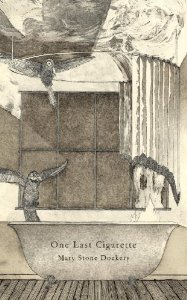
Mary Stone Dockery is the author of two collections of poetry, Mythology of Touch and One Last Cigarette (November 2013, Honest Publishing). Her chapbooks include Aching Buttons, Blink Finch, and The Dopamine Letters (forthcoming from Hyacinth Girl Press) and Honey and Bandages (co-written with Katie Longofono, forthcoming from Folded Word Press). She coordinates the First Thursday Poetry Reading Series in St. Joseph, MO, where she also teaches English and co-edits Stone Highway Review. She’s tried to quit smoking many times and forgets to take her vitamins. She believes in solitude and love at first kiss.