“sometimes the title comes first”: the chapbook interview with Amorak Huey

Let’s begin with your (poetic) origin story.

Start with family. I am fortunate enough to come from a family of readers, writers, storytellers. One of those families with bookshelves in every room. My parents read and read to my brother and me, read us more books than I can remember: the ones that stand out in my memory are Treasure Island, Where the Red Fern Grows, To Kill a Mockingbird. Besides Mother Goose, the only poetry book I specifically remember being around was my father’s collected poems of Theodore Roethke. One year we went to a Halloween party where everyone was to recite a poem for the occasion; I memorized Roethke’s “The Bat.”

Place. We moved from Michigan to Alabama the year I was turning four. I grew up in a tiny ramshackle house three miles outside a small town twenty miles outside Birmingham, Alabama. The rhythms and music and weather of the South remain inside me. But I was always acutely aware that I’d moved there from somewhere else. I’ve spent my life feeling like an outsider, like everyone else has a connection that I don’t. As I’ve grown older, I’ve come to think that everyone feels this way, that this is just life. I’m guessing my poems are my attempt to come to terms with this sense of disconnection. But that’s just a guess.

Writing. I thought I was going to be a novelist. I still might be someday. I was an English major. I started grad school in fiction writing. I quit and worked in newspapers for more than a decade. I lived in Florida and Kentucky, then serendipitously Michigan again. I did an MFA in poetry, commuting to Kalamazoo for classes, coursework and thesis spread over several years while also working for the sports desk of the newspaper in Grand Rapids. Again, just guessing, but I think my poems are restless. Unsettled. Acutely aware of their own temporariness. Not just my poems; all poems. All art? What else is important enough to create art about?

Now. I teach, I write, I read. At my job, at home, I am surrounded by people who value words. I am reading Ender’s Game to my kids, wondering if this will be the book they remember.


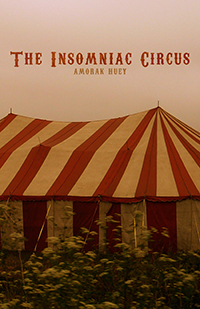
Titles of chapbooks and titles of poems can be so tricky to get right, but offer such an opportunity for the poet. I love the poem titles in your forthcoming chapbook The Insomniac Circus (Hyacinth Girl Press). Reading the table of contents made me laugh with delight. Perhaps pointing to some writers and their work with titles that work, can you talk about your titling process?

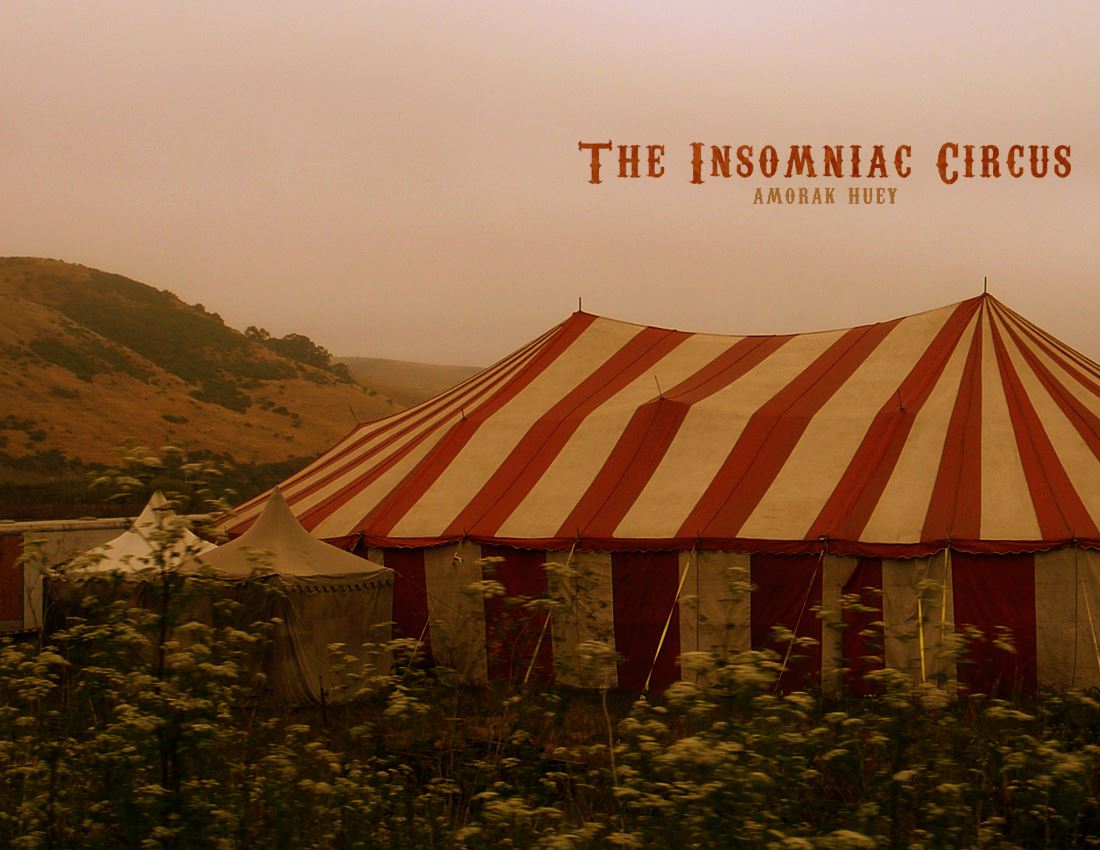
This whole chapbook came about because of the title “The Sword Swallower Wonders What’s the Point.” The title led to that poem, and I had so much fun that I wrote “The Tight Rope Walker Gets High” immediately afterward, and the project quickly took on a life of its own. I feel sheepish admitting that sometimes the title comes first, like I’m cheating somehow. Am I the only one who feels this way? Yes, sometimes I write the poem first and then flail about looking for a title until I settle on (or settle for) something. But sometimes, as in this project, the titles come first and lend shape to their poems from the very beginning. The title is the idea, the unifying force, the narrative – then within the poem, I’m free to play with language, to fight against the title or work with it, to complement and contrast, to confound or fulfill the expectations established in the title. In this case, I was going for punny titles, while the poems themselves are darker, more somber. At the risk of over-explicating my own work, I was hoping this contrast would say something about the circus life itself: glitz and show on the surface while the hours outside the spotlight are much more difficult.

I am drawn to long titles both as a reader and as a writer. I suspect this stems from my previous life and all those thousands of headlines I wrote as a newspaper copy editor. There’s an art to headline writing. You have a finite space, three or five or nine words, whatever the page designer’s assigned, and you have to capture the essence of an entire story, the most newsworthy heart of the piece – and you also have to be clever or creative enough to grab the readers’ attention. This is something I miss about real newspapers that is not replicated online, where the headlines even in allegedly respectable media outlets are more likely to be “25 Things You Will NOT BELIEVE About Fuzzy Kittens.”

Poets whose titles I greatly admire include Catie Rosemurgy (for example, “Miss Peach Returns to High School to Retake Driver’s Ed”); Karynna McGlynn, whose debut collection was called, brilliantly, I Have to Go Back to 1994 and Kill a Girl; Collier Nogues (example, “In My Father’s Father’s Airstream Trailer”); and Timothy Donnelly, whose Cloud Corporation is full of gems like “The Malady That Took the Place of Thinking” and “Partial Inventory of Airborne Debris.”

I adore your poems. There’s a loneliness so exquisitely drawn in this chap. The couples in many of the poems add to the pace, the space, the way those of us who are outsiders—like the circus freak—feel. Why this chapbook right now in your life?

Thank for your kind words. It pleases me to no end that you like the poems. This pleasure fits my answer here, because human connection is a fundamental purpose of art. We seek to understand ourselves and each other by reading, by viewing, by listening, by creating. I write because I want to discover something about myself and the world around me; I write because I hope someone will read my words and recognize something about themselves. This chapbook is about masks, makeup, costumes, performance. The circus. The show we are all putting on for each other every day. We are all lonely.

I’m being melodramatic. I am not actually a lonely person. I have a happy marriage and two active, eager, wonderful kids. I have dear friends and supportive, inspiring colleagues. My life is great, which I say in all sincerity. Maybe, then, that’s why this chapbook right now – because my life is in a good place, I feel safe to explore what the comedian Louis CK calls the “forever empty” we all have inside us but don’t like to acknowledge.
What is inspiring you these days? I am reading so much good poetry these days it kills me. Kills, inspires, whatever. I am freshly in love with Elisa Gabbert’s The Self Unstable and Lucy Brock-Broido’s Stay, Illusion. I am in an online writing group, and the poets in the group flabbergast/inspire me every month with their prompts and poems. This semester, I am teaching collections by Bob Hicok and Traci Brimhall, a prospect both daunting and inspiring.

How are you trying to get better as a poet? Read every day. Write more days than not. Listen to the world around me.

Your chapbook credo: Now I wish I had one of these. I’ll work on that.

Number of chapbooks you own: Around 20.

Number of chapbooks you’ve read: 40? Just a guess.

Ways you promote and serve other chapbook poets: I buy and read their books. Sometimes I review them on Goodreads or write about them on my website. I recently provided a blurb for an excellent chapbook called His Late Wives. I could always do more.

Where you spend your chapbook earnings: I have spent so much on book-contest entry fees that my poetry balance sheet will never be in the black. I am fortunate to have a job that means I can afford to write poetry without worrying about earnings.

Your chapbook wish: That lots of people read my chapbook when it comes out. If some of them like it, that would be nice, but mostly I just want them to read it.

Residence: East Grand Rapids, Michigan.

Job: I teach writing to college students at Grand Valley State University.

Chapbook education: I am self-educated when it comes to chapbooks, I’d say. There was a time not that long ago when I didn’t know what a chapbook was, beyond “a book shorter than a regular book.” A conversation with my friend Brian Clements, author of four chapbooks including not meant for you Dear Love (Mudlark, 2012) < http://mudlark.webdelsol.com/mudlark49/contents_clements.html>, led me to think of a chapbook as necessarily more unified than a full-length book of poems, cohering around a central idea or question, and by virtue of its brevity, expressing or exploring that idea quickly. Ooh, this is starting to sound like it could turn into a credo.

The non-chapbook portion of my education includes an undergraduate degree from Birmingham-Southern College and an MFA from Western Michigan.

Chapbook Bio: My chapbook The Insomniac Circus is from Hyacinth Girl. I am presently working with my friend W. Todd Kaneko on a chapbook inspired by Slash, the guitarist. The rest of my bio is pretty non-chapbooky: born in Michigan, grew up in Alabama, ended up back in Michigan as an adult; wrote some things, planning to write more things.

 

The Chapbook Interview: Juliet Cook & Robert Cole on Collaborative Chapbooks

How did your collaborative chapbook begin?

Juliet Cook - My memory issues might be warped, but my recollection remembers me posting tortured Saint photos on my facebook page and then Robert Cole suddenly emailing me, asking if I might be interested in poetic collaborating. I wasn’t familiar with his poetry and I don’t think he was familiar with mine, so I suggested that first we should send each other a few poems to find out if we were interested in each other’s creative style and thought the two styles might fuse together well, and I think both of our initial impulses were YES and so we dove in.

Robert Cole - Yeah at first, I wasn’t very familiar with Juliet Cook’s poetry, but after we exchanged some of our work, the idea crossed my mind that it may be interesting to see how our writing would work together if we did some collaboration. After I approached her about it, I read a poem by her in an issue of Caketrain that caught my attention and pretty much sealed the deal. At the time we didn’t have a chapbook in mind necessarily, but we quickly started to realize we were producing enough poems to put together a cohesive manuscript.

I wanted to start a collaboration with Juliet to explore the aspects of life that I have been afraid to confront. I wanted to scare myself, really. It became apparent pretty fast that our combined style of writing was doing just that. Also, what few collaborative chapbooks I’ve read had always interested me. I wanted to step away from myself and my own work to see what would happen if I gave up complete control. Creating a hybrid, doing something strange, I wanted to try that. It turned out to be an inspiring experience. Collaborative poetry (or any kind of collaborative art for that matter) is something I think artists should explore more often.

Can you describe your collaborative process? How did you go about revising each poem, the sequence of poems, and finding a home for the chapbook? Was anything frustrating about the experience? Delightful? Surprising?

JC - For me, there have been a few times in the past when I’ve attempted poetic collaboration with writers I am familiar with and whose writing I like, but either our styles don’t seem to mesh very well together OR nothing ever happens after our initial attempts at collaborative writing.

I think part of the reason nothing ever happens (beyond the writing itself) is because oftentimes when you’re working with another individual, aside from the writing, you don’t know what their style is in terms of revising, submitting, and so forth. Robert seemed pretty open along those lines, so I handled our submission process the same way I handle my own work – start submitting poems almost as soon as I think they seem done. I’m good at staying organized when it comes to keeping notes about when and where I have stuff submitted – and I kept Robert on top of acceptances and rejections.

As far as the poems went, we worked on one at a time – some lines of his, some lines of mine, some lines of his, some lines of mine, arrange the lines, slightly revise some lines, remove some lines, rearrange the lines until we both agreed a poem seemed done – and then on to the next poem.

Most of Robert and my collaborative writing happened in April and I knew that Hyacinth Girl Press was accepting chapbook manuscript submissions in May, so I ordered and organized our poems into chapbook format, sent that to Robert for his approval, he approved, and I submitted it. Obviously I didn’t know if Hyacinth Girl was going to accept it or not (and if they didn’t, we would have submitted it to other sources), but it was accepted by Hyacinth Girl, the very first source it was submitted to.

Writing twenty some collaborative poems in about a month, organizing nineteen of them into chapbook format, already having nine of those nineteen poems accepted for publication by literary magazines, and having the whole collection accepted by the very first press it was submitted to made it a delightful writing experience for me (and hopefully for him too, but I don’t live in his brain, so I don’t know).

The only aspect of the collaboration that was slightly frustrating for me (and maybe for him too, but again I don’t know) is that poetry is such an emotional realm for me and such a mental turn on that if I’m working on poetically collaborating with someone and it’s going well, then I also tend to spurt a bunch of other personal information (thoughts, feelings, ideas, personal opinions), sometimes maybe to the point of causing them to feel uncomfortable or overwhelmed. After several times of sending Robert long emails and receiving a three sentence response, I realized I needed to back off emotionally and just stick to the poetry with him and so I did.

He’s a young guy anyway; he probably doesn’t need some mentally imbalanced middle aged woman spewing her junk at him. Except for in poetry land.

RC - The process was surprising in that I didn’t expect it to happen so easily. Nothing was forced. We started by exchanging 3-6 lines of whatever came to mind, adding to each set of lines through email, and quickly found a rhythm. Our chapbook was written primarily through email exchanges in just a few weeks time. Poetry is always frustrating, but the collaboration didn’t come with any stress that wouldn’t otherwise be there had I been writing by myself. It was also perfect timing. I was in the middle of this period in my life where I was struggling financially every day, living alone in a dismal apartment, eating rarely, battling plenty of health problems and worries to fuel my expression. That’s not to say things are different now, but after working with Juliet on this book, I have been able to enjoy a sort of creative relief.

What collaborative collections do you admire and what is it about them that works?

RC - A few months ago I began corresponding with poet John Amen, editor at The Pedestal Magazine, and he was kind enough to send me several copies of his chapbooks. But one book in particular, “The New Arcana”, really grabbed my attention. This collaborative project Amen did with Daniel Y. Harris is interesting to say the least. I’m not a book reviewer, and wouldn’t know how to elaborate on why I enjoy this collaborative project so much, but it contains a great deal of innovative language. The humor in “The New Arcana” also hit home for me. A portion of the humor in this book that I continue to return to pokes a bit of fun at the academia and their impossibly outstanding author bios and curriculum vitae.

JC – I don’t recall reading any new collaborative books or chapbooks recently; for the most past, I’ve always tended towards individual creative expression more so than collaboration (until recently, do to my awesome collaborative experience with Robert). However, in 2012, I solicited several poets to participate in a collaborative chapbook to be published by my Blood Pudding Press – “Fainting Couch Idioglossia”- and I really enjoyed how some of those collaborations turned out, such as Daniel M. Shapiro & Jessy Randall and Kelly Boyker & Margaret Bashaar. Both of those collaborators two different styles fused together really interestingly. Also, I’ve fairly recently read some uniquely interesting collaborative work published by the online literary magazine, Counterexample Poetics.

I’ve had the opportunity and sneak-peak of your chapbook Mutant Neuron Codex Swarm forthcoming from Hyacinth Girl Press. I enjoyed the word play, the rhythm, and sound. Can you talk about how this chapbook is similar to or different from work you’ve done alone or in collaboration with other artists?

RC - I personally have never written work myself quite like what Juliet and I managed to create. I appreciate how it’s a combination of our voices, virtually a 50/50 share of writing work load. Many lines I contributed to this collaboration were simple sentences or 5 word lines I had been sitting on for months or years but never found a place for them. When I handed them to Juliet, suddenly more substance could be pulled from them and I was happy to finally put these ‘stand alone phrases’ into something more substantial. Although I’m working on another collaborative project now, this chapbook was my first attempt at working with another artist. The difference between collaborative work and writing I do alone is the sense of not being fully responsible for the completion of a poem. In other words, if I wrote 4 lines or so but couldn’t think of how to continue, Juliet had no problems expanding upon the lines in a way I would have never considered.

JC - I feel similarly to Robert on this. I was delighted by how our two different styles seemed to interestingly mesh and fuse together so well. Also, since as an individual writer I seem to use similar content and even similar words a lot, I really enjoyed receiving lines that included words that don’t usually pop out of my poetry brain (like scrimshaw and sultans and puppies) and integrating that stuff into the same forum as my kind of words (like egg cups and tentacles and a blow torch) and probably creating new kinds of descriptions for both of us. I’m currently working on another collaborative project too, but there’s no way it’s going to come close to the lightning fast blow torch pace of Robert’s and mine. I don’t usually write my own poems anywhere near that fast, so it was a really unique experience for me in that respect too.

What cover art do you have in mind for Mutant Neuron Codex Swarm?

RC - We’ve been looking at a few different options. Juliet, I believe, may have a better answer to this question.

JC - When I participated in a Hyacinth Girl Press poetry reading this past July, HGP editor, Margaret Bashaar mentioned an artist she had in mind for the cover art, whose work she thought might fit well with the dark twisted MUTANT content and I was able to meet that artist. Her name is Rachael Deacon and she’s an independent film maker, as well as a creator of her own unique art photos and drawings and paintings. I’ve seen some of her art that already exists and am definitely a fan. I think she is going to create a whole new piece of art for the MUTANT cover and I think it will be hideously, gruesomely powerful and non-humanly awesome.

What is inspiring you these days?

RC – Music, documentaries, B-rated sci-fi movies, artifacts, ancient mysteries, playing chess online. I like to entertain the idea that there might be a scroll of forbidden wisdom hidden beneath a floorboard in my house. I’m not entirely sure if I get inspired or not. Some nights I just wake up around 3 or 4am with an urge to write one sentence that won’t leave me alone and it kind of just goes from there.

JC – Visual imagery sometimes inspires my words (and vice versa). Plus other poetry, movies, music, thoughts, feelings, mental imbalance, and dreams too.

A bottom leg got cut off/
in last night’s dream.

How are you trying to get better as a poet?

RC - I’m never content with how accurate my writing reflects what I mean to say, so that helps. Reading a lot is important. I keep up with as much new poetry and fiction as I can, but I also read things like microwave instruction manuals or spam mail.

JC – Continue to read, write, re-read, revise, think in a focused way, and express myself my way.

Your chapbook credo:

RC - Since this project with Juliet will be my first chapbook, I haven’t been able to develop any kind of credo. I think it helps to visualize how the words will appear on the printed page while remaining detached from the idea of publishing it until it’s completed.

JC – I don’t have a set in stone credo, but if I have close to 15 new poems that do not yet appear in a chapbook, I might start thinking about how they might fit into one - and then concept, poem order, other formatting, title, and so forth.

Number of chapbooks you own:

RC - Thirty or so.

JC – Hundreds.

Number of chapbooks you’ve read:

RC - Probably 18.

JC – Hundreds.

Ways you promote and serve other chapbook poets:

RC - When I have the money I think the best way to promote and help other poets is to simply buy and read the chapbook. I have mixed feelings about Facebook, but I think social media can be useful for networking and helping promote other poets who are really worth reading.

JC – Purchase chapbooks, read chapbooks, share lines from chapbooks, and publish chapbooks through my Blood Pudding Press. I’m currently in the process of reading chapbook manuscripts submitted to the latest Blood Pudding Press chapbook contest.

Where you spend your chapbook earnings:

RC - Buying time to write more stuff. Time is really expensive. When I earn money from my creative writing it tends to go toward groceries or bills which translates to me having to work a few less hours one week, giving me breathing room to think and make poems.

JC – Towards publishing chapbooks and buying other art supplies and art and unique tidbits.

Your chapbook wish:

RC - I have three chapbooks I’ve been rewriting back and forth for years now. I’d like to extract what I like from these three and create a new chapbook altogether.

JC – Sometime in 2014, organize another new chapbook of mine and find a new press to accept it.

Residence:

RC - The Paseo Arts District in Oklahoma City.

JC – State-wise, I live in Ohio – but mostly, I live in my warped brain.

Job:

RC - I recently found good work as a copywriter and editor, but for most of my adult life I worked in customer service, food establishments, casinos, gas stations, anywhere really.

JC – I help at a paint your own pottery shop - but passion-wise, my job is mostly poetry and artistic pursuit in various ways.

Chapbook education:

RC - I have a lot to learn.

JC – Ongoing. I’ve been interested in the content and design of zines and chapbooks for more than twenty years. I was involved in the Dusie Kollektiv chapbook trading group from 2008 through 2011. I started my own indie chapbook press, Blood Pudding Press, in 2006 and it still exists.

Chapbook Bio:

RC - Right now I’m in the process of writing a collaborative novel with another poet/editor that I’ve appreciated for some time and hope to have some news on that soon.

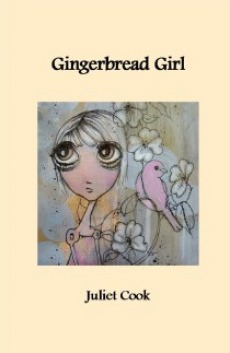
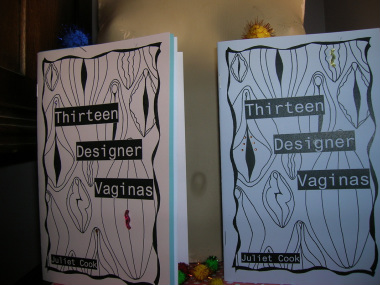
JC – My own poetry chapbooks include “The Laura Poems” (Blood Pudding Press, 2006), “Girl Gang” (Blood Pudding Press, 2007), “Planchette” (Blood Pudding Press, 2008), “Gingerbread Girl” (Trainwreck Press, 2008), “Projectile Vomit” (Scantily Clad Press, 2008), “MONDO CRAMPO” (Dusie Kollektiv 3, 2009), “PINK LEOTARD & SHOCK COLLAR” (Spooky Girlfriend Press, 2009), “Tongue Like a Stinger” (Wheelhouse, 2009), “Fondant Pig Angst” (Slash Pine Press, 2009), “Soft Foam” (Blood Pudding Press for Dusie Kollektiv 4, 2010), POST-STROKE (Blood Pudding Press for Dusie Kollektiv 5, 2011), Thirteen Designer Vaginas (Hyacinth Girl Press, 2011), and POISONOUS BEAUTYSKULL LOLLIPOP (Grey Book Press, 2013). Plus the forthcoming “MUTANT NEURON CODEX SWARM” by Robert and me, to be published by Hyacinth Girl Press sometime in 2014.

Blood Pudding Press chapbooks by others include, “GROWLING SOFTLY” (a multi-writer chapbook, 2007), “ w i n g’d” by Kyle Simonsen (2008), “ECTOPLASMIC NECROPOLIS” (a multi-writer chapbook, 2008), “SPIDER VEIN IMPASTO” (a multi-writer chapbook, 2009), “At night, the dead” by Lisa Ciccarello (2009), “The Spare Room” by Dana Guthrie Martin (2009), “LETTERS FROM ROOM 27 OF THE GRAND MIDWAY HOTEL” by Margaret Bashaar (2011), “FAINTING COUCH IDIOGLOSSIA” (a multi-writer chapbook, 2012), “Renegade//Heart” by Lisa M. Cole (2013), “Poking through the Fabric of the Light that Formed Us: Songs and Stories to Read in the Mirror” by Lora Bloom (2013), and “Sister, Blood and Bone” by Paula Cary (2013). Plus the two winners of the current Blood Pudding Press chapbook contest will be announced in early 2014.

recent interviews, news, and poetry

Indigo-Book-Table

I gave an interview yesterday with The Nebraska Girls Lit Hour. It was such fun! I’ve been listening to the interviews Wyatt Underwood and Melissa Alvarado post for some time and have enjoyed listening to them speak with Molly Peacock, Eloise Klein Healy, and many other fabulous poets and writers others. In my interview, I spoke about the letterpress books Farm Hands (2:10-7:50) and Unclose the Door (7:56-46:00), the full-length book Sprung, (58:58-60:52) and the anthology I edited Women Write Resistance: Poets Resist Gender Violence (46:04-56:28). (I’m including the times, in case you want to zip to a particular book in the interview.) Thanks Melissa and Wyatt!


I was also included in a feature by Shelby Fleig “Spring Stanzas: Professors Pick Poetry Month Favorites” in the Daily Nebraskan with Ted Kooser, Grace Bauer, and Stacey Waite. We discussed our favorite poem. Here’s the picks: “The Listeners” by Walter de la Mare, “Musée des Beaux Arts” by W.H. Auden. “Poem For People That Are Understandably Too Busy To Read Poetry” by Stephen Dunn, and “Her Kind” by Anne Sexton.


wwr_CoverImage

Finally, in poetry related news, a feature by Shelby Fleig “UNL lecturer Laura Wiseman curates collection of women’s ‘resistance’ poetry” that runs in the Daily Nebraskan today includes interviews with WWR poets Deborah McGinn, Lucy Adkins, and Marjorie Saiser. Here’s Deborah :

“It was not the appeal of gathering tragedies, but gathering truth, restoration, healing and moving on when possible,” McGinn said. “Nothing is hidden in shame.”

Marge:

“The message we get from our culture is that poems about violence toward women should not be published,” Saiser said. “Keep still and write about something nice. Violence against women: don’t talk about it.”

Lucy:

“This collection deals courageously with difficult and dangerous subjects in a way I have not encountered before,” Adkins said. “The different voices, coming one after another, after another have a cumulative power that I believe will endure for a long, long time.”

Wow. I am endlessly amazed by the fine poets in this anthology. They truly astonish me and I am grateful for their work.

The Chapbook Interview: Sarah Reck on the Chapbook Design

How do you define “chapbook”?

I tend to consider a chapbook a short collection of poetry or prose by one author that follows, more than likely, one theme or idea or emotion. I’m relatively new to the chapbook scene, though I spent time in college and graduate school reading and working on lit magazines. I don’t know if there’s really a firm definition of either, but in my mind there’s a distinction between the two in that a lit mag pulls in both poetry and prose from multiple authors and therefore they don’t all necessarily fit together perfectly. A chapbook, on the other hand, is a collection of several pieces of one whole.


In Margaret Bashaar’s interview she describes the process of turning an electronic chapbook submission to a real chapbook that “Oh! This is where I get to brag about how incredibly amazing Sarah Reck is…I send the manuscript to Sarah, Sarah does some sort of magic that I don’t completely understand, and sends me back a pdf of the manuscript.” Can you talk a little bit about your process and the “sort of magic” that you do?

The first thing I do is read through the poems and to get a feel for the tone and the themes and the overall feeling I get from the poems as I’m reading them. It sounds strange but I often have a font or fonts in mind after a read-through, and I set the poems out as soon as I do. The manuscripts come to me formatted by the poet, and I take care not to lose that formatting, because I know that an indent, a space, or a single word might change the poet’s intent. I’m a pretty visual person, which I think works well when it comes to the spacing and design of a poem on the page. Once I’ve got the entire book laid out, I get it into .pdf form and send it off to Margaret, and then we work together with the poet to make sure we’re all on the same page and everything looks fantastic.

Can you tell me about a few of the chapbooks you’ve designed for Hyacinth Girl Press?

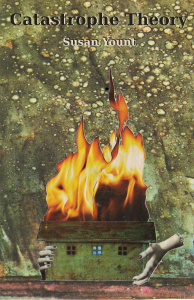
One thing I think Margaret does so well with acquiring collections for HGP is that she finds poets and collections that are so varied and unique. We started with Juliet Cook’s Thirteen Designer Vaginas, and that was my first go at laying out a chapbook. It’s interesting because the poems don’t have individual titles, and each fits like blocks on the pages. It’s a fun design, almost utilitarian, which I think fits the feel of the collection. Niina Pollari’s Book Four is another without titles, and in this case it gave me the opportunity to play with negative space and open up the poetry right there on the page. And Susan Yount’s Catastrophe Theory is a collection of poems, none of which are formatted or designed the same way. It was challenging to produce, but I like the way it translated from my computer screen to the printed page. Visually, it’s really fun and different.

What has been your favorite chapbook to design and why?

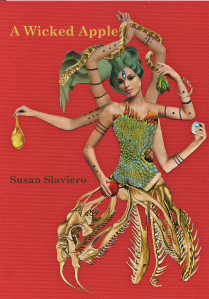
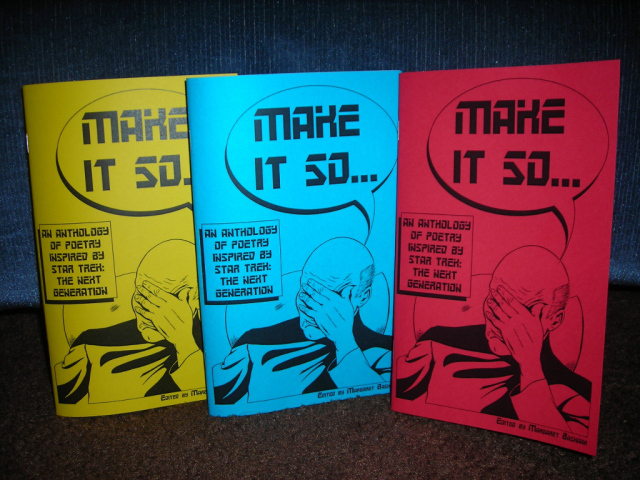
Poetically, I love Susan Slaviero’s A Wicked Apple. It’s a wonderful collection of fantastical pieces, very fairy-tale in inspiration. It’s beautiful. Stylistically, Make It So… which is an anthology of poetry inspired by “Star Trek: The Next Generation.” I had the opportunity to play a lot more with font and internal design elements, giving it a feel that really speaks to both my inner geek and to Star Trek.

What current chapbook are you working on?

I just put the finishing touches on J. Hope Stein’s [Mary]:, which will be out soon from Hyacinth Girl Press. I liked designing it because it’s a combination of poetry, prose, and the format of a screenplay or dialogue. And I’ll get started shortly on Deena November’s Dick Wad.


Since you started doing the design and layout for HGP, has there been anything new in the publishing industry that has been destructive to the art of chapbook presses? Helpful to the art to chapbook presses?

I don’t think anything has been destructive because I do think there will always be a market for handmade, hand-designed books by talented artists. There’s something comforting and exciting about knowing how a few, real people all touched a chapbook as it comes to life.


How does your day job of working as a web publicist for a major publishing house influence your work with HGP, a small feminist press?

In my day job, books come to me already packaged and complete, and I get to market and promote them. What I love about working with Margaret at HGP is that it’s a completely different period in the life of the book. I like the hands-on experience of working with a small press. I mean, I love books and the written word and supporting fellow writers more than anything, and that fits into both my job and my work at HGP. Being able to produce a beautiful piece of art for and with someone else is a wonderful feeling.


You’ve been writing young adult novels, correct? What current writing projects are you working on?

My most recent novel, Birthright, just got a rewritten and extended ending. It’s a steampunk adventure set in an alternate NYC. While I’m looking for representation for it and my other novels, I’ve started a new project that explores what faith and religion would look and feel like in an America that forbids and has essentially made it illegal to practice any kind of religion.


Number of chapbooks you own: About 10, but full disclosure, the majority of them are from Hyacinth Girl Press. I’m currently working on building my collection and seeing what other small presses are doing. I also have about a dozen several lit mags tucked away from college.

Number of chapbooks you’ve designed: 9

Favorite flavors of cupcake: Red velvet or pink lemonade.

Inspirations and influences: Edith Wharton, Marjane Satrapi, Stephen Dunn, JK Rowling, William Shakespeare, John Donne, Michael Chabon.

Residence: New York City

Job and education: I manage social media and online promotion for three inspirational and religious imprints at a major publishing house. I hold an MFA in Writing and an MA in English from Chapman University, and I did my undergrad work at Lycoming College.

Bio: Sarah Reck’s short stories and poetry have appeared in The Tributary, Elephant Tree, and Make It So: Poetry Inspired by Star Trek The Next Generation chapbook. She is co-founder and managing editor of Litterbox Magazine, now on hiatus. While she calls Pittsburgh her home, she currently lives in New York City with her cat, Lola. You can find her online on Twitter, Pinterest, and at SarahReck.com.

September News

I so much enjoyed being the interviewee of Avital Norman Nathman who offered great questions on strong, powerful women writers and historical figures: “This is What a Feminist Looks Like: Laura Madeline Wiseman” in The Mamafesto. As interviewer, the interview I did with Hyacinth Girl Press editor Margaret Bashaar got picked up by Harriet, the Poetry Foundation’s Blog, which is completely awesome! I’m up in the department’s newsletter for September. I have poems in the current issues of New Purlieu Review, Sugar Mule, Naugatuck River Review, Penwood Review, and Vermillion Literary Project. I have poems forthcoming in Menacing Hedge and Poet Lore, a short story forthcoming in Spittoon, and my book review of Amanda Auchter’s The Wishing Tomb is forthcoming in Prairie Schooner.

My chapbook Farm Hands was just released in a limited edition from Gold Quoin Press.

My full-length collection of poetry Sprung has just been released by San Francisco Bay Press. An excerpt of my book Sprung is in Extract(s).

Finally, check out the amazing art by Megan Sanders for the cover of my forthcoming chapbook FIRST WIFE.

In reading and performance news, my poem “Ms. Behaving,” will be performed in Lit Undressed: Women in Disguise / Omaha Lit Fest at the House of Loom, 1012 S. 10th Street, Omaha, NE, at 8 p.m., on October 24, 2012. And Monday, if you’re looking for some great readers, join me in 100 Thousand Poets for Change, hosted by Grace Bauer & Rex Walton, 7 p.m., October 1, 2012 at Crescent Moon, 140 N 8th St #10, Lincoln, Nebraska 68508. Other readers will be Jeff Alessandrelli, Grace Bauer, J V Brummels, Sarah Chavez, Crystal Gibbins, Neil Harrison, Kelly Madigan, and Rex Walton.


August news

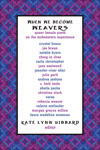
I have a poem in the current issue of Roar and Paddlefish, and in the anthologies From Glory to Glory (Poetry in the Cathedral, 2012) and When We Become Weavers (Hand Type Press, 2012). The latter isn’t technically available until October.

I also have poems forthcoming in The Raintown Review and California Quarterly and the anthologies Mercury Retrograde (Kattywompus Press) and Beverage Anthology (Pirene’s Fountain). And, I just submitted my essay “Shaking the Magic 8 Ball: Social Media for Readers and Writers” for the anthology Technology in the Literature Class: Assignments and Materials (Bedford/St. Martins, 2013).

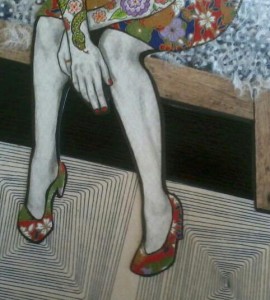
My chapbook FIRST WIFE was accepted by Hyacinth Girl Press for the 2013 line up. I’m so excited about this! Check out my interview with HGP’s editor Margaret Brashaar. As a little sneak peak, the wonderful artist Megan Sanders is doing the cover. Here’s a sample of her work:

If you’re back in town Tuesday night, I’m reading with Grace Bauer at Tuesday with Writers.

Reading (poetry) with Grace Bauer at Tuesdays with Writers
7 p.m., September 4, 2012
South Mill, 48th & Prescott, Lincoln, Nebraska

Hope to see you there!

Finally, my poem “Ms. Behaving” has been accepted by Lit Undressed.

Performance (poetry) in Lit Undressed / Omaha Lit Fest
8 p.m., October 24, 2012
House of Loom, 1012 S. 10th Street, Omaha, Nebraska

I’m very much looking forward to the performance night! Happy September, blog readers!