“sometimes the title comes first”: the chapbook interview with Amorak Huey

Let’s begin with your (poetic) origin story.

Start with family. I am fortunate enough to come from a family of readers, writers, storytellers. One of those families with bookshelves in every room. My parents read and read to my brother and me, read us more books than I can remember: the ones that stand out in my memory are Treasure Island, Where the Red Fern Grows, To Kill a Mockingbird. Besides Mother Goose, the only poetry book I specifically remember being around was my father’s collected poems of Theodore Roethke. One year we went to a Halloween party where everyone was to recite a poem for the occasion; I memorized Roethke’s “The Bat.”

Place. We moved from Michigan to Alabama the year I was turning four. I grew up in a tiny ramshackle house three miles outside a small town twenty miles outside Birmingham, Alabama. The rhythms and music and weather of the South remain inside me. But I was always acutely aware that I’d moved there from somewhere else. I’ve spent my life feeling like an outsider, like everyone else has a connection that I don’t. As I’ve grown older, I’ve come to think that everyone feels this way, that this is just life. I’m guessing my poems are my attempt to come to terms with this sense of disconnection. But that’s just a guess.

Writing. I thought I was going to be a novelist. I still might be someday. I was an English major. I started grad school in fiction writing. I quit and worked in newspapers for more than a decade. I lived in Florida and Kentucky, then serendipitously Michigan again. I did an MFA in poetry, commuting to Kalamazoo for classes, coursework and thesis spread over several years while also working for the sports desk of the newspaper in Grand Rapids. Again, just guessing, but I think my poems are restless. Unsettled. Acutely aware of their own temporariness. Not just my poems; all poems. All art? What else is important enough to create art about?

Now. I teach, I write, I read. At my job, at home, I am surrounded by people who value words. I am reading Ender’s Game to my kids, wondering if this will be the book they remember.


Titles of chapbooks and titles of poems can be so tricky to get right, but offer such an opportunity for the poet. I love the poem titles in your forthcoming chapbook The Insomniac Circus (Hyacinth Girl Press). Reading the table of contents made me laugh with delight. Perhaps pointing to some writers and their work with titles that work, can you talk about your titling process?

This whole chapbook came about because of the title “The Sword Swallower Wonders What’s the Point.” The title led to that poem, and I had so much fun that I wrote “The Tight Rope Walker Gets High” immediately afterward, and the project quickly took on a life of its own. I feel sheepish admitting that sometimes the title comes first, like I’m cheating somehow. Am I the only one who feels this way? Yes, sometimes I write the poem first and then flail about looking for a title until I settle on (or settle for) something. But sometimes, as in this project, the titles come first and lend shape to their poems from the very beginning. The title is the idea, the unifying force, the narrative – then within the poem, I’m free to play with language, to fight against the title or work with it, to complement and contrast, to confound or fulfill the expectations established in the title. In this case, I was going for punny titles, while the poems themselves are darker, more somber. At the risk of over-explicating my own work, I was hoping this contrast would say something about the circus life itself: glitz and show on the surface while the hours outside the spotlight are much more difficult.

I am drawn to long titles both as a reader and as a writer. I suspect this stems from my previous life and all those thousands of headlines I wrote as a newspaper copy editor. There’s an art to headline writing. You have a finite space, three or five or nine words, whatever the page designer’s assigned, and you have to capture the essence of an entire story, the most newsworthy heart of the piece – and you also have to be clever or creative enough to grab the readers’ attention. This is something I miss about real newspapers that is not replicated online, where the headlines even in allegedly respectable media outlets are more likely to be “25 Things You Will NOT BELIEVE About Fuzzy Kittens.”

Poets whose titles I greatly admire include Catie Rosemurgy (for example, “Miss Peach Returns to High School to Retake Driver’s Ed”); Karynna McGlynn, whose debut collection was called, brilliantly, I Have to Go Back to 1994 and Kill a Girl; Collier Nogues (example, “In My Father’s Father’s Airstream Trailer”); and Timothy Donnelly, whose Cloud Corporation is full of gems like “The Malady That Took the Place of Thinking” and “Partial Inventory of Airborne Debris.”

I adore your poems. There’s a loneliness so exquisitely drawn in this chap. The couples in many of the poems add to the pace, the space, the way those of us who are outsiders—like the circus freak—feel. Why this chapbook right now in your life?

Thank for your kind words. It pleases me to no end that you like the poems. This pleasure fits my answer here, because human connection is a fundamental purpose of art. We seek to understand ourselves and each other by reading, by viewing, by listening, by creating. I write because I want to discover something about myself and the world around me; I write because I hope someone will read my words and recognize something about themselves. This chapbook is about masks, makeup, costumes, performance. The circus. The show we are all putting on for each other every day. We are all lonely.

I’m being melodramatic. I am not actually a lonely person. I have a happy marriage and two active, eager, wonderful kids. I have dear friends and supportive, inspiring colleagues. My life is great, which I say in all sincerity. Maybe, then, that’s why this chapbook right now – because my life is in a good place, I feel safe to explore what the comedian Louis CK calls the “forever empty” we all have inside us but don’t like to acknowledge.
What is inspiring you these days? I am reading so much good poetry these days it kills me. Kills, inspires, whatever. I am freshly in love with Elisa Gabbert’s The Self Unstable and Lucy Brock-Broido’s Stay, Illusion. I am in an online writing group, and the poets in the group flabbergast/inspire me every month with their prompts and poems. This semester, I am teaching collections by Bob Hicok and Traci Brimhall, a prospect both daunting and inspiring.

How are you trying to get better as a poet? Read every day. Write more days than not. Listen to the world around me.

Your chapbook credo: Now I wish I had one of these. I’ll work on that.

Number of chapbooks you own: Around 20.

Number of chapbooks you’ve read: 40? Just a guess.

Ways you promote and serve other chapbook poets: I buy and read their books. Sometimes I review them on Goodreads or write about them on my website. I recently provided a blurb for an excellent chapbook called His Late Wives. I could always do more.

Where you spend your chapbook earnings: I have spent so much on book-contest entry fees that my poetry balance sheet will never be in the black. I am fortunate to have a job that means I can afford to write poetry without worrying about earnings.

Your chapbook wish: That lots of people read my chapbook when it comes out. If some of them like it, that would be nice, but mostly I just want them to read it.

Residence: East Grand Rapids, Michigan.

Job: I teach writing to college students at Grand Valley State University.

Chapbook education: I am self-educated when it comes to chapbooks, I’d say. There was a time not that long ago when I didn’t know what a chapbook was, beyond “a book shorter than a regular book.” A conversation with my friend Brian Clements, author of four chapbooks including not meant for you Dear Love (Mudlark, 2012) < http://mudlark.webdelsol.com/mudlark49/contents_clements.html>, led me to think of a chapbook as necessarily more unified than a full-length book of poems, cohering around a central idea or question, and by virtue of its brevity, expressing or exploring that idea quickly. Ooh, this is starting to sound like it could turn into a credo.

The non-chapbook portion of my education includes an undergraduate degree from Birmingham-Southern College and an MFA from Western Michigan.

Chapbook Bio: My chapbook The Insomniac Circus is from Hyacinth Girl. I am presently working with my friend W. Todd Kaneko on a chapbook inspired by Slash, the guitarist. The rest of my bio is pretty non-chapbooky: born in Michigan, grew up in Alabama, ended up back in Michigan as an adult; wrote some things, planning to write more things.

 

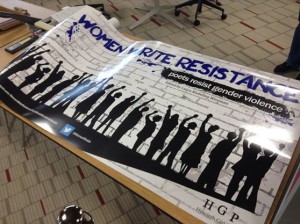
Women Write Resistance: Poets to read at Purdue University Calumet

WWR Flyer purdue

Women Write Resistance: Poets to read at Purdue University Calumet Press Release

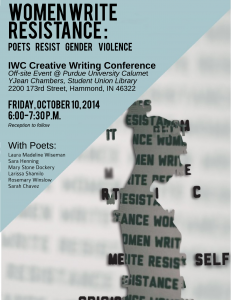
Women Write Resistance Poets Reading Event at Purdue University Calumet
with Sara Henning, Mary Stone Dockery, Laura Madeline Wiseman, Larissa Shamilo, Sarah Chavez, & Rosemary Winslow
2200 173rd Street, Hammond, IN 46322
October 10, 2014 at 6:00 p.m.
Contact: Indiana Writers’ Consortium at 219-750-1200 ext. 203
[email protected]

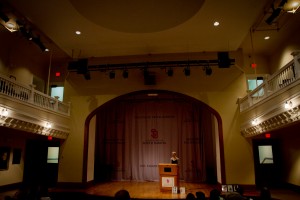
Hammond, INSeptember 19, 2014— Indiana Writers’ Consortium, in conjunction with Purdue University Calumet’s Department of English and Philosophy and student organization First Friday Wordsmiths, are hosting six nationally known poets featured in the anthology Women Write Resistance: Poets Against Gender Violence. The six featured readers are: Laura Madeline Wiseman, Sara Henning, Mary Stone Dockery, Larissa Shamilo, Rosemary Winslow, and Sarah Chavez. The event, which is free of charge and open to the public, will take place in YJean Chambers Theater in the Student Union Library Building directly north of the 173rd Street parking lot. The reading will begin at 6:00 p.m. and there will be a book signing in the Founders’ Study after the reading. Free refreshments will also be available during the signing.

Indiana Writers’ Consortium inspires and builds a community of creative writers. We are the premier group in Northwest Indiana dedicated to educating writers from the ground up through speakers, seminars, and children’s programs. IWC provides educational and networking opportunities for writers in all stages of their careers. We also sponsor an annual children’s project, where we partner with local schools to bring poetry into the classroom. For more information please visit our website indianawritersconsortium.org or contact the IWC at 219-750-1200 ext. 203. The Indiana Writers’ Consortium is located at 5209 Hohman Ave., Hammond, IN 46320.

Featured poets from Women Write Resistance: Poets Resist Gender Violence

Sarah Chavez

“As much as possible, I try to allow my poetry to embrace and inhabit conflict and conflicting truths…” - Sarah Chavez, The Conversant

Sarah A. Chavez is a mestíza born and raised in the California Central Valley completing her PhD in poetry and Ethnic Studies from the University of Nebraska – Lincoln. Her work can be found in various publications such as Not Somewhere Else But Here: A Contemporary Anthology of Women and Place, the journals North American Review, The Fourth River, and others. Her chapbook All Day, Talking has just been released from dancing girl press.

“The knowledge expressed in poetry has infinite organizing power on a subconscious as well as conscious level.” - Larissa Shamilo, Blotterature

Larissa Shmailo is the editor of the anthology Twenty-first Century Russian Poetry, poetry editor for MadHat Annual, and founder of The Feminist Poets in Low-Cut Blouses. She translated Victory over the Sun for the Los Angeles County Museum of Art’s landmark restaging of the multimedia opera and has been a translator on the Bible in Russia for the American Bible Society. Her books of poetry are #specialcharacters (Unlikely Books), In Paran (BlazeVOX [books]), A Cure for Suicide (Červená Barva Press), and Fib Sequence (Argotist Ebooks); her poetry CDs are The No-Net World and Exorcism (SongCrew).

“Poetry taught me how to search for understanding, how to empathize, and how to define myself at different stages throughout my life.” - Mary Stone Dockery, Blotterature

Mary Stone Dockery is the author of One Last Cigarette and Mythology of Touch, and two chapbooks, Blink Finch and Aching Buttons. Her poetry and prose have appeared in many fine journals, including Mid-American Review, Gargoyle, South Dakota Review, Arts & Letters.

“Poetry is suffering, lovemaking, the body at its limits demanding to be heard. Poetry is also a place to exorcise cultural paradoxes.” - Sara Henning, Blotterature

Sara Henning is the author of A Sweeter Water (Lavender Ink, 2013), as well as a chapbook, To Speak of Dahlias (Finishing Line Press, 2012). Her poetry, fiction, interviews and book reviews have appeared or are forthcoming in such journals as Willow Springs, Bombay Gin and the Crab Orchard Review. Currently a doctoral student in English and Creative Writing at the University of South Dakota, she serves as Managing Editor for The South Dakota Review.

“Teaching a junior level course to majors from every discipline at the university last spring, I noted a sea change in greater understanding of the experiences of gendered cultural forces. The evidence was most marked in responses to Adrienne Rich’s essay, “When We Dead Awaken.” To my great surprise, and counter to my experiences of previous decades, students understood, with palpable compassion, the violence to the self as Rich considers having no place or voice for a female self.” - Rosemary Winslow, Spoon River Poetry Review

Rosemary Winslow lives in Washington, D.C., and teaches at The Catholic University of America. Her book Green Bodies expressed and grappled with the complexities of love in troubled families, and sought understanding, forgiveness, and compassion for the wide circle of humankind. She has taught in shelters for women, and now enjoys yoga, hiking, swimming, kayaking, and singing in a choir.

omaha2014

“Early in college I was introduced to writers such as Adrienne Rich, Audre Lorde, and Sandra Cisneros. These writers and others allowed me to explore the rich world that poetry offered, to see how poetry was a work worth doing, and that art could be made from life, that such a writing life was possible.” - Laura Madeline Wiseman, Blotterature

Laura Madeline Wiseman is the author of more than a dozen books and chapbooks and the editor of Women Write Resistance: Poets Resist Gender Violence (Hyacinth Girl Press, 2013). Her recent books are American Galactic (Martian Lit Books, 2014), Some Fatal Effects of Curiosity and Disobedience (Lavender Ink, 2014), Queen of the Platform (Anaphora Literary Press, 2013), Sprung (San Francisco Bay Press, 2012), and the collaborative book Intimates and Fools (Les Femmes Folles Books, 2014) with artist Sally Deskins. Her work has appeared in Prairie Schooner, Margie, Mid-American Review, and Feminist Studies. www.lauramadelinewiseman.com

Women write resistance banner

More recent interviews with poets from Women Write Resistance:

An Interview with Poets from Women Write Resistance: Poets Resist Gender Violence,” Blotterature, October 2014

“‘To make a new whole of the fragments’: A Roundtable Discussion with poets in Women Write Resistance,The Conversant, October 2014

“‘We invent the forms of resistance we wish to see‘: A Roundtable Discussion with Poets in Women Write Resistance,” Les Femmes Folles, September 2014

“Blot Lit Reviews: An Interview with Writers from Women Write Resistance: Poets Resist Gender Violence,Blotterature Literary Magazine, by Julie Demoff-Larson with Sarah Chavez, Tyler Mills, Jennifer Perrine, Carly Sachs, Monica Wendel, and Margo Taft Stever, May 2014, Part I & Part II

“‘their words make this possible‘: A Roundtable Discussion of Poetics of Emplacement with Poets from Women Write Resistance,” Spoon River Poetry Review, April 2014

wwr_CoverImage

Lavender Ink releases Some Fatal Effects of Curiosity and Disobedience

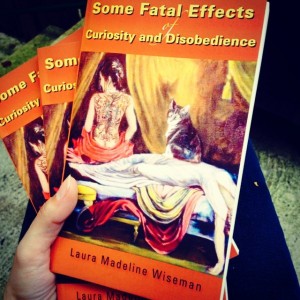
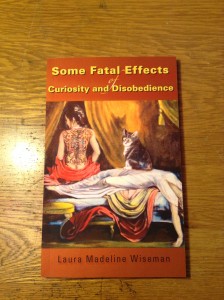
My book Some Fatal Effects of Curiosity and Disobedience was released this spring from Lavender Ink. I thought I’d post an update about what’s been happening since it’s release. Some Fatal Effects of Curiosity and Disobedience is a campy, contemporary retelling of the Bluebeard myth, that charts the love of three sisters who each marry the same man upon the demise of the sister who preceded her. Bluebeard is usually framed as a story of blood and gore, but this telling focuses on the love each of his unfortunate wives felt, the first blush of romance and young marriage, the complicated turns of mature desire and the past we bring into our present affections.

lmw_omaha1

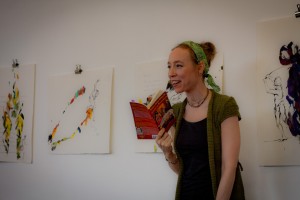
I’ve given readings from my new book in West Virginia, Nebraska, Illinois, and elsewhere, including at the Nebraska Book Festival in April. There’s a YouTube playlist of poems from the book.

Recently, I had the opportunity to have a conversation with sister poet Sara Henning about her Lavender Ink title A Sweeter Water in The Sundress Blog. I was able to talk about reading and researching the bluebeard myth, as well as her own smart, lovely book.

My mother had a baby blue hardback edition of the Grimm fairy tales, one with gold embossed lettering on the cover and edge gilding. Sometimes at bedtime we were allowed to crawl into her queen-sized bed and she would read us a story from those pages of onion skin, those tiny words, under that soft glow of her bedside light. I’m not sure if she read the versions of the bluebeard story from Grimm to us, but it was a story I recognized later while I was working on my masters degree in women’s studies at the University of Arizona.

I also spoke with sibling poet Megan Burns about her Lavender Ink title Sound and Basin in Pank. I discussed the interconnectiveness of desire and violence within the bluebeard myth.

If fairy tales and myths are meant to be didactic, even if we no longer live in the time of their original construction, I wrote Some Fatal Effects of Curiosity and Disobedience because I was curious to know what it offered us today. I kept coming back to a line from Charles Dickens’ version: “But the fair twin loved him, and the dark twin hated him, so he chose the fair one.” I thought about hate and resentment and marriage and why we might stay with someone, sensing the threat of bodily harm towards us, even if that violence isn’t manifested until our murder. I also was working within the bluebeard frame and the ways in which each of the sisters may have been aware of plot—a meta-awareness of the larger story their small place fit into—much as any of us may reflect on our place in plot (e.g. marriage, American Dream, keeping up with Jones’, etc.) even as we may (or may not) think of them as story lines, narratives, fiction. The sister in “Self-Portrait” chose to desire a violent man. Or perhaps he chose her. Or perhaps, she was framed and so thus framed, was made to be what she became.

npr_interview2

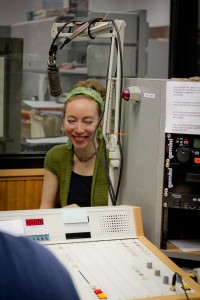
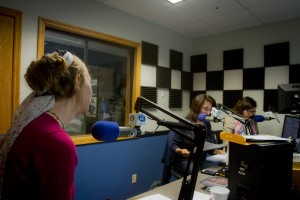
I also talked about Some Fatal Effects of Curiosity and Disobedience on KIOS-FM, Omaha Public Radio and read from the book on air. Here are a few mp3s from that reading and more.

Fruits

Widower’s Insomnia

Our Sister Cared

The Blue Funeral

apollon-books-2

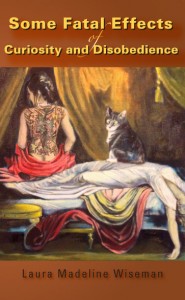
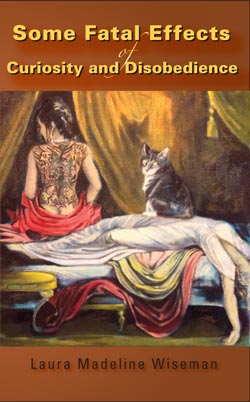
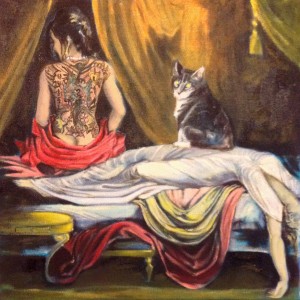
Right after the book’s release, I featured the cover artist Lauren Rindaldi about her gorgeous cover art. Here’s Lauren’s artist description of the piece:

Desire’s Conquest and Demise
The Nightmare, which depicts an incubus, a horse and a sleeping woman. In my painting, the incubus is replaced by my deceased cat. The woman takes a position believed to encourage nightmares, and the horse (or mare), in my piece, is replaced by another woman. It is meant to simultaneously show a woman dreaming and the contents of her dream or fantasy. This painting is part of my most recent series of works exploring ideas about the pursuit of fantasies resulting in deterioration, decay or even death.

fatal effects in the hands of artist Lauren Rinaldi

Here’s some praise about my new book.

Some Fatal Effects of Curiosity and Disobedience is an ingenious narrative of poems that transposes the Bluebeard myth to our contemporary lives with a chilling authenticity. The juxtapositions of desire and danger, trust and betrayal, innocence and cunning all seem absolutely modern, as if they could be happening down the street or in our own lives, even as we recognize their ancient, terrible truths. Laura Madeline Wiseman’s command of the language and balance between irony and dead seriousness is pitch-perfect and this is a haunting book. - Ellen Bass


What happens when a woman dares to enter forbidden spaces? Tucked into legend, the poems in this collection shift from sensual to sexy and from enchanting to haunting, as they explore the question. Laura Madeline Wiseman is both poet and storyteller, deftly moving back and forth through time, weaving breathtaking parts into a heart-stopping whole. - Tania Rochelle


Predicated on the Bluebeard tale, Wiseman weaves a contemporary mythology that reaches more deeply and pervasively into the very human psychology and psychosis we name love. These poems traverse a dark storm of sexuality—the forbidden, the cruel, the guilty-pleasures. Lunacy and denial pulse mysteriously as mating ritual, as in these lines from “Solo Artist, Another Late Wife”: “…and she pretends for a moment / that this cheap condo is Carnegie Hall and his hands / that rain down on her are applause…” Control and conviction are knives bladed as sharply as the key to truth. Some Fatal Effects of Curiosity and Disobedience is erotic, disturbing, and utterly compelling. This collection, the stuff of nightmarish transformations, may cause you to see an altered face when you gaze in your day-lit mirror. - Lana Hechtman Ayers


Wiseman’s imagination is expansive, sultry, and wild. Some Fatal Effects of Curiosity and Disobedience is a masterpiece of antonyms. Wiseman’s speaker first appears to be a traditional woman: married, want of secrets, but curious and complex. Like many women, she wrestles with society’s fetters, which is easily identifiable and sympathetic. It is in this way she acts as a great literary heroine; the reader, perhaps lost themselves, roots for her to find her footing. Just as we think we have her understood, the book quickly transforms from a biography of a marriage into a lesson in the subversive. Wiseman’s speaker does reference work in the taboo. She struggles with the direction of her sexuality, fidelity, even marrying her late sister’s dangerous husband seems to be out of her control. She has simultaneous desires: to be dominant, to be taken, to be voyeur/watched, to be pursued/left alone, to be safe, to be killed. Ultimately, this book begs the question: how well can we ever know those closest to us? And perhaps more importantly, how well can we ever know ourselves? - Danielle Sellers


Drawing from Bluebeard and other renderings of misogynistic myth, Wiseman captures the universal experience of love skewed by an imbalance of power. Seduction, eroticism, betrayal, self-knowledge in the aftermath—it’s all here in this beautiful book, in fierce, aching lines chiseled with elegance and compression. - Rebecca Foust

radio2

What’s next? I’ll be on the local radio on The Joy Factor next week.

Interview on The Joy Factor with Shelia Stratton
6:00-6:30 pm, June 24th, 2014
89.3, KZUM FM & HD (radio)
Lincoln, NE’s community radio

sd_4

I’ll also be reading from this book and more soon. I hope to see you there!

Reading in the Wit Rabbit Reading Series
with Lavender Ink Poets Sara Henning & Megan Burns
7 pm, Tuesday September 2, 2014
Quencher’s Saloon
2401 N. Western, Ave.
Chicago, IL

Reading in the Smoking Glue Gun‘s Sunchild Austin Summer Readings
with Christopher Klingbeil, Jerrod Bohn, Kendra Fortmeyer, & Kelly Luce
Sundown, Friday, September 26, 2014
SSG House, 2845 B San Gabriel St.
Austin, Texas

Poetry & Pints Reading
with Lavender Ink Poets Megan Burns & Sara Henning
8 pm, Sunday, November 16, 2014
Harmony Brewing Company
1551 Lake Drive Southeast
Grand Rapids, MI 49506

magnets

It’s the Beat! and Tuesday with Writers, plus recent readings in Nebraska

radioGroup

I’m going to be interviewed on It’s the Beat! this week and I’m reading with Grace Bauer and Michelle Menting next week at Tuesday with Writers. Here’s the information for those upcoming events:

Interview with Karen Sokolof Jovitch & Jody Vinci
It’s the Beat Radio show, Mighty 1290 KOIL (am)
noon-1pm, Saturday May 3, 2014

Reading with Grace Bauer and Michelle Menting
Tuesday with Writers
7 p.m., May 6, 2014
South Mill, 48th & Prescott
Lincoln, Nebraska

I hope you can catch the radio piece if you’re near a radio Saturday. It will also appear on the site’s website and I’ll link to it here. The South Mill reading with Tuesday with Writers should be great fun!

Last week, I read from Women Write Resistance at the Nebraska Book Festival. It was a great turn out! It was such an honor to read from the anthology that I edited. I read from the preface and from a poem by Wendy Barker. I also read from Intimates and Fools and my new book on the bluebeard myth Some Fatal Effects of Curiosity and Disobedience.

Earlier in the week, I read at Connect Gallery with Sally Deskins and Cat Dixon. It was a great turn out, too!

connect reading image

Finally, Monday I was part of the Bodies of Work: a Collaborative Exhibition and Reading. Sally and I were able to read from Intimates and Fools collaboratively - a real treat!

g. thompson higgins photography did a beautiful job at capturing the event. Thanks, Greg!

bodies of work 3

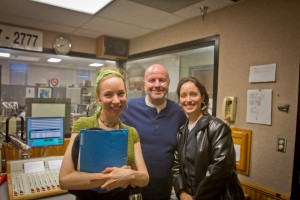
I was graciously interviewed with Rachel Mindrop by Michael Lyon on KIOS-FM early that same morning. It was so much fun! Thanks, Michael!

npr_interview2

If you missed the airing, you can listen to the mp3 of Bodies of Work on KIOS-FM, Omaha Public Radio and Michael Lyon. My poem “The Blue Funeral” is about 3/4ths in.

Bodies of Work: A Collaboration Exhibition & Reading

Tomorrow I’m reading from Intimates & Fools at the Apollon. Here’s a link to the press release, but the full details are also below. I hope to see you there!

a bunch of books

The Apollon & Les Femmes Folles Present:

Bodies of Work: A Collaboration Exhibition & Reading
One-night only: April 21, 2014
Apollon Omaha, 1801 Vinton St., Omaha, NE

Featuring a collaborative art series by figurative artist Rachel Mindrup, body-artist Sally Deskins, and poet Fran Higgins and A live reading featuring Higgins and poet Laura Madeline Wiseman, author of Intimates & Fools (Les Femmes Folles Books, 2014) with body-art by Deskins.

Art exhibit opens: 6pm (free)
Reading: 6:30pm (free)

SPECIAL EVENT: Drink n Draw, 8-10pm ($5)

We will also be collecting new bras/undergarments, and/or gently used women’s clothing for Heartland Family Service! Heartland Family Service, founded in Omaha in 1875, is a non-profit, non-sectarian social work agency. We help parents who struggle; couples who want to save their relationship; children who are removed from unsafe homes; teens who made the wrong decisions about alcohol, drugs or crime; survivors of family violence; low-income families–mostly women and children–who fall into homelessness; and many, many more who need a helping hand to get back on track. Annually we serve 35,000 to 40,000 people in twelve counties. heartlandfamilyservice.org

Collaborative Series (above: “Grammar Man”): Poet Fran Higgins, body-artist Sally Deskins and figurative artist Rachel Mindrup come together to create a series of mixed-media work that explores body image, art history, womanhood and motherhood, furthering their “Mother-Artist” project originally debuted Feb. 2013. The trio of artists started with Deskins’ acrylic body-painting; “Inspired by Yves’ Klein’s Anthropometries, I take a feminist approach, as artist, model and director, examining how our outside selves both hides and radiates our mind,” describes Deskins of her approach. Thereafter, Mindrup was given the twenty large works to draw on at her discretion; “Usually I spend so much time painting figures, paying attention to every resolute detail; with this series, I wanted to draw quickly to echo Sally’s swift body-printing method, and I kept seeing these mythological characters, coming in and out of the body parts like the bodies represented a whole world,” describes Mindrup. Mindrup then passed the work onto Higgins who, penned ekphrastic poetry on each, based on her own perspective, displaying irony, hilarity, and sometimes raw truth on the female, motherhood, and human experience.

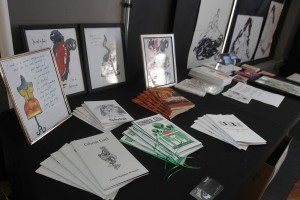
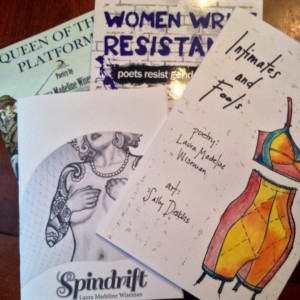
Intimates & Fools: Coupling body art and poetry, ‘Intimates and Fools‘ intimates the complicating pairing of the female form and cultural notions of beauty while playfully seeking to bare and bear such burdens of their weight. Laura Madeline Wiseman’s poetry explores notions of the bra and its place near the hearts of women, while contemplating literary and pop cultural allusions and illusions of such intimate apparel. Sally Deskins’ body art and illustrations make vivid and bright the female form while calling into question the cultural narratives on such various shapes we hold dear, be they natural, consumer, or whimsy. The book is published by Les Femmes Folles Books, 2014 and is available on amazon.com.

Les Femmes Folles is a completely volunteer run organization founded by Sally Deskins in 2011 with the mission to support and promote women in all forms, styles and levels of art with the online journal, books and public events; originally inspired by artist Wanda Ewing and her curated exhibit by the name Les Femmes Folles (Wild Women). Les Femmes Folles Books is a micro feminist press that publishes 1-2 titles a year by invitation. Other books include Les Femmes Folles: The Women, 2011, 2012 and 2013, also available at this event and at blurb.com. femmesfollesnebraska.tumblr.com

The Apollon is Omaha’s multi-genre arts and entertainment hub where all are welcome to indulge their tastes in a place of welcome and warmth. The Apollon experience is co-created by a vibrant, well-supported arts community and an equally vibrant, well-rewarded audience. apollonomaha.com

Fran Higgins earned her BFA, graduate certificate in Advanced Writing, and a Masters in English from the University of Nebraska Omaha. Her work has appeared in Plains Song Review, Celebrate, SlipTongue, NEBRASKAland magazine, and The Untidy Season: An Anthology of Nebraska Women Poets.

Rachel Mindrup is a professional artist and art educator. Her current painting practice is about the study of the figure and portraiture in contemporary art and its relation to medicine. Mindrup’s client list includes: Kiewit Corporation, Boys Town, Creighton University, Boys Town National Research Hospital, and the Kansas City University of Medicine and Biosciences. Her artwork is held in many private collections including those of Primatologist Jane Goodall and Supreme Court Justice Clarence Thomas. Rmindrup.com

Laura Madeline Wiseman is the author of more than a dozen books and chapbooks and the editor of Women Write Resistance: Poets Resist Gender Violence (Hyacinth Girl Press, 2013). She holds a doctorate from the University of Nebraska and has received an Academy of American Poets Award and the Wurlitzer Foundation Fellowship. Her work has appeared in Prairie Schooner, Mid-American Review, Margie, and Feminist Studies.

Sally Deskins is an artist and writer, focusing on women and feminist writers and artists, including herself. Her art has been exhibited in galleries in Omaha, New York, Philadelphia and Chicago; and has been published in publications such as Certain Circuits, Weave Magazine, and Painters & Poets. She has curated various solo and group exhibitions, readings and performances centered on women’s perspective and the body. Her writing has been published internationally in journals such as Stirring, Prick of the Spindle, Bookslut and Bitch. She edits the online journal Les Femmes Folles, has published three anthologies of art and writing and her first illustrated book Intimates & Fools, with poetry by Laura Madeline Wiseman, was published in Jan. 2014. Femmesfollesnebraska.tumblr.com, Sallydeskins.tumblr.com

SPECIAL EVENT: DRINK N DRAW, 8-10pm, 19+

Drink n Draw Omaha is a socially creative event inviting artists (painting, sculpting or drawing) to come and practice their craft inspired by two professional art models. Cost is just $5 for artists 19+. Bring your own supplies and take advantage of APOLLON’s beverage service. No photography permitted. (Photo above by Drink n Draw photographer g thompson higgins.)

More information at facebook.com/drinkndrawomaha

introducing cover artist Lauren Rinaldi for Some Fatal Effects of Curiosity and Disobedience

I’m very excited to have my new book, Some Fatal Effects of Curiosity and Disobedience now available from Lavender Ink. It is a campy, contemporary retelling of the Bluebeard myth, that charts the love of three sisters who each marry the same man upon the demise of the sister who preceded her. Bluebeard is usually framed as a story of blood and gore, but this telling focuses on the love each of his unfortunate wives felt, the first blush of romance and young marriage, the complicated turns of mature desire and the past we bring into our present affections.

bluebeard book arrives

When I went looking for cover art, I asked Les Femme Folles and Les Femme Folles Books editor Sally Deskins if she knew of any artists who had created anything that might make the perfect cover art for a bluebeard retelling. She suggested several artists, some of whom she’d recently featured in her journal and others in the Les Femmes Folles 2014 Calendar, a calendar that featured art by artists like Wanda Ewing, Bonnie Gloris, Rachel Mindrup, Kristin Pluhacek, Megan Loudon Sanders, and Lauren Rinaldi. I researched these artists and others and then read the interview with Lauren Rinaldi in LFF. Here’s her bio:

Lauren Rinaldi is an artist whose work tells intricate and personal stories exploring the meanings of encountering the unexpected through painting. Her works depicting the female figure are meant to inhabit the space where the line between sexual empowerment and objectification is blurred. She draws inspiration from children’s books, old Hollywood, art history, meditations, memories, badly written paranormal romance novels, her cat and her surrounding environment. Lauren currently lives and works in Philadelphia with her husband and son, and is represented by Paradigm Gallery + Studio.

The interview featured this beautiful piece:

Desire'sConquestAndDemise

Lauren’s artist description of the piece:

Desire’s Conquest and Demise
The Nightmare, which depicts an incubus, a horse and a sleeping woman. In my painting, the incubus is replaced by my deceased cat. The woman takes a position believed to encourage nightmares, and the horse (or mare), in my piece, is replaced by another woman. It is meant to simultaneously show a woman dreaming and the contents of her dream or fantasy. This painting is part of my most recent series of works exploring ideas about the pursuit of fantasies resulting in deterioration, decay or even death.

I contacted Lauren to see if she’d be interested in having her art on my book. She said, “Yes.” Yay! Check out more of her fabulous work here: http://laurenrinaldi.tumblr.com/ and http://www.laurenrinaldi.com/.

I gave a reading from Some Fatal Effects of Curiosity and Disobedience and more late last month in West Virginia. I’ll be reading from my work soon in Nebraska, as well as talking about my work on the radio. Here’s the information about those events. I hope to see you soon!

Reading and Interview with Michael Lyon & Rachel Mindrup
KIOS-FM, Omaha Public Radio
8:30 am, Monday, April 21, 2014
30th & Leavenworth, Omaha, NE

Reading and Show of Intimates and Fools with Fran Higgins
Les Femmes Folles
6 pm, Monday, April 21, 2014
Apollon, 1801 Vinton St
Omaha, NE 68108

Reading from Intimates & Fools and more with Sally Deskins and Cat Dixon
Noon, Tuesday, April 22, 2014
Connect Gallery, 3901 Leavenworth St
Omaha, NE

Reading of Women Write Resitance and more
Nebraska Book Festival
3:15 pm, Saturday April 26, 2014
Omaha, NE

Interview with Karen Sokolof Jovitch & Jody Vinci
It’s the Beat Radio show, Mighty 1290 KOIL (am)
noon-1pm, Saturday May 3, 2014
9740 Brentwood Rd
Omaha, NE 68411


The Chapbook Interview: Juliet Cook & Robert Cole on Collaborative Chapbooks

How did your collaborative chapbook begin?

Juliet Cook - My memory issues might be warped, but my recollection remembers me posting tortured Saint photos on my facebook page and then Robert Cole suddenly emailing me, asking if I might be interested in poetic collaborating. I wasn’t familiar with his poetry and I don’t think he was familiar with mine, so I suggested that first we should send each other a few poems to find out if we were interested in each other’s creative style and thought the two styles might fuse together well, and I think both of our initial impulses were YES and so we dove in.

Robert Cole - Yeah at first, I wasn’t very familiar with Juliet Cook’s poetry, but after we exchanged some of our work, the idea crossed my mind that it may be interesting to see how our writing would work together if we did some collaboration. After I approached her about it, I read a poem by her in an issue of Caketrain that caught my attention and pretty much sealed the deal. At the time we didn’t have a chapbook in mind necessarily, but we quickly started to realize we were producing enough poems to put together a cohesive manuscript.

I wanted to start a collaboration with Juliet to explore the aspects of life that I have been afraid to confront. I wanted to scare myself, really. It became apparent pretty fast that our combined style of writing was doing just that. Also, what few collaborative chapbooks I’ve read had always interested me. I wanted to step away from myself and my own work to see what would happen if I gave up complete control. Creating a hybrid, doing something strange, I wanted to try that. It turned out to be an inspiring experience. Collaborative poetry (or any kind of collaborative art for that matter) is something I think artists should explore more often.

Can you describe your collaborative process? How did you go about revising each poem, the sequence of poems, and finding a home for the chapbook? Was anything frustrating about the experience? Delightful? Surprising?

JC - For me, there have been a few times in the past when I’ve attempted poetic collaboration with writers I am familiar with and whose writing I like, but either our styles don’t seem to mesh very well together OR nothing ever happens after our initial attempts at collaborative writing.

I think part of the reason nothing ever happens (beyond the writing itself) is because oftentimes when you’re working with another individual, aside from the writing, you don’t know what their style is in terms of revising, submitting, and so forth. Robert seemed pretty open along those lines, so I handled our submission process the same way I handle my own work – start submitting poems almost as soon as I think they seem done. I’m good at staying organized when it comes to keeping notes about when and where I have stuff submitted – and I kept Robert on top of acceptances and rejections.

As far as the poems went, we worked on one at a time – some lines of his, some lines of mine, some lines of his, some lines of mine, arrange the lines, slightly revise some lines, remove some lines, rearrange the lines until we both agreed a poem seemed done – and then on to the next poem.

Most of Robert and my collaborative writing happened in April and I knew that Hyacinth Girl Press was accepting chapbook manuscript submissions in May, so I ordered and organized our poems into chapbook format, sent that to Robert for his approval, he approved, and I submitted it. Obviously I didn’t know if Hyacinth Girl was going to accept it or not (and if they didn’t, we would have submitted it to other sources), but it was accepted by Hyacinth Girl, the very first source it was submitted to.

Writing twenty some collaborative poems in about a month, organizing nineteen of them into chapbook format, already having nine of those nineteen poems accepted for publication by literary magazines, and having the whole collection accepted by the very first press it was submitted to made it a delightful writing experience for me (and hopefully for him too, but I don’t live in his brain, so I don’t know).

The only aspect of the collaboration that was slightly frustrating for me (and maybe for him too, but again I don’t know) is that poetry is such an emotional realm for me and such a mental turn on that if I’m working on poetically collaborating with someone and it’s going well, then I also tend to spurt a bunch of other personal information (thoughts, feelings, ideas, personal opinions), sometimes maybe to the point of causing them to feel uncomfortable or overwhelmed. After several times of sending Robert long emails and receiving a three sentence response, I realized I needed to back off emotionally and just stick to the poetry with him and so I did.

He’s a young guy anyway; he probably doesn’t need some mentally imbalanced middle aged woman spewing her junk at him. Except for in poetry land.

RC - The process was surprising in that I didn’t expect it to happen so easily. Nothing was forced. We started by exchanging 3-6 lines of whatever came to mind, adding to each set of lines through email, and quickly found a rhythm. Our chapbook was written primarily through email exchanges in just a few weeks time. Poetry is always frustrating, but the collaboration didn’t come with any stress that wouldn’t otherwise be there had I been writing by myself. It was also perfect timing. I was in the middle of this period in my life where I was struggling financially every day, living alone in a dismal apartment, eating rarely, battling plenty of health problems and worries to fuel my expression. That’s not to say things are different now, but after working with Juliet on this book, I have been able to enjoy a sort of creative relief.

What collaborative collections do you admire and what is it about them that works?

RC - A few months ago I began corresponding with poet John Amen, editor at The Pedestal Magazine, and he was kind enough to send me several copies of his chapbooks. But one book in particular, “The New Arcana”, really grabbed my attention. This collaborative project Amen did with Daniel Y. Harris is interesting to say the least. I’m not a book reviewer, and wouldn’t know how to elaborate on why I enjoy this collaborative project so much, but it contains a great deal of innovative language. The humor in “The New Arcana” also hit home for me. A portion of the humor in this book that I continue to return to pokes a bit of fun at the academia and their impossibly outstanding author bios and curriculum vitae.

JC – I don’t recall reading any new collaborative books or chapbooks recently; for the most past, I’ve always tended towards individual creative expression more so than collaboration (until recently, do to my awesome collaborative experience with Robert). However, in 2012, I solicited several poets to participate in a collaborative chapbook to be published by my Blood Pudding Press – “Fainting Couch Idioglossia”- and I really enjoyed how some of those collaborations turned out, such as Daniel M. Shapiro & Jessy Randall and Kelly Boyker & Margaret Bashaar. Both of those collaborators two different styles fused together really interestingly. Also, I’ve fairly recently read some uniquely interesting collaborative work published by the online literary magazine, Counterexample Poetics.

I’ve had the opportunity and sneak-peak of your chapbook Mutant Neuron Codex Swarm forthcoming from Hyacinth Girl Press. I enjoyed the word play, the rhythm, and sound. Can you talk about how this chapbook is similar to or different from work you’ve done alone or in collaboration with other artists?

RC - I personally have never written work myself quite like what Juliet and I managed to create. I appreciate how it’s a combination of our voices, virtually a 50/50 share of writing work load. Many lines I contributed to this collaboration were simple sentences or 5 word lines I had been sitting on for months or years but never found a place for them. When I handed them to Juliet, suddenly more substance could be pulled from them and I was happy to finally put these ‘stand alone phrases’ into something more substantial. Although I’m working on another collaborative project now, this chapbook was my first attempt at working with another artist. The difference between collaborative work and writing I do alone is the sense of not being fully responsible for the completion of a poem. In other words, if I wrote 4 lines or so but couldn’t think of how to continue, Juliet had no problems expanding upon the lines in a way I would have never considered.

JC - I feel similarly to Robert on this. I was delighted by how our two different styles seemed to interestingly mesh and fuse together so well. Also, since as an individual writer I seem to use similar content and even similar words a lot, I really enjoyed receiving lines that included words that don’t usually pop out of my poetry brain (like scrimshaw and sultans and puppies) and integrating that stuff into the same forum as my kind of words (like egg cups and tentacles and a blow torch) and probably creating new kinds of descriptions for both of us. I’m currently working on another collaborative project too, but there’s no way it’s going to come close to the lightning fast blow torch pace of Robert’s and mine. I don’t usually write my own poems anywhere near that fast, so it was a really unique experience for me in that respect too.

What cover art do you have in mind for Mutant Neuron Codex Swarm?

RC - We’ve been looking at a few different options. Juliet, I believe, may have a better answer to this question.

JC - When I participated in a Hyacinth Girl Press poetry reading this past July, HGP editor, Margaret Bashaar mentioned an artist she had in mind for the cover art, whose work she thought might fit well with the dark twisted MUTANT content and I was able to meet that artist. Her name is Rachael Deacon and she’s an independent film maker, as well as a creator of her own unique art photos and drawings and paintings. I’ve seen some of her art that already exists and am definitely a fan. I think she is going to create a whole new piece of art for the MUTANT cover and I think it will be hideously, gruesomely powerful and non-humanly awesome.

What is inspiring you these days?

RC – Music, documentaries, B-rated sci-fi movies, artifacts, ancient mysteries, playing chess online. I like to entertain the idea that there might be a scroll of forbidden wisdom hidden beneath a floorboard in my house. I’m not entirely sure if I get inspired or not. Some nights I just wake up around 3 or 4am with an urge to write one sentence that won’t leave me alone and it kind of just goes from there.

JC – Visual imagery sometimes inspires my words (and vice versa). Plus other poetry, movies, music, thoughts, feelings, mental imbalance, and dreams too.

A bottom leg got cut off/
in last night’s dream.

How are you trying to get better as a poet?

RC - I’m never content with how accurate my writing reflects what I mean to say, so that helps. Reading a lot is important. I keep up with as much new poetry and fiction as I can, but I also read things like microwave instruction manuals or spam mail.

JC – Continue to read, write, re-read, revise, think in a focused way, and express myself my way.

Your chapbook credo:

RC - Since this project with Juliet will be my first chapbook, I haven’t been able to develop any kind of credo. I think it helps to visualize how the words will appear on the printed page while remaining detached from the idea of publishing it until it’s completed.

JC – I don’t have a set in stone credo, but if I have close to 15 new poems that do not yet appear in a chapbook, I might start thinking about how they might fit into one - and then concept, poem order, other formatting, title, and so forth.

Number of chapbooks you own:

RC - Thirty or so.

JC – Hundreds.

Number of chapbooks you’ve read:

RC - Probably 18.

JC – Hundreds.

Ways you promote and serve other chapbook poets:

RC - When I have the money I think the best way to promote and help other poets is to simply buy and read the chapbook. I have mixed feelings about Facebook, but I think social media can be useful for networking and helping promote other poets who are really worth reading.

JC – Purchase chapbooks, read chapbooks, share lines from chapbooks, and publish chapbooks through my Blood Pudding Press. I’m currently in the process of reading chapbook manuscripts submitted to the latest Blood Pudding Press chapbook contest.

Where you spend your chapbook earnings:

RC - Buying time to write more stuff. Time is really expensive. When I earn money from my creative writing it tends to go toward groceries or bills which translates to me having to work a few less hours one week, giving me breathing room to think and make poems.

JC – Towards publishing chapbooks and buying other art supplies and art and unique tidbits.

Your chapbook wish:

RC - I have three chapbooks I’ve been rewriting back and forth for years now. I’d like to extract what I like from these three and create a new chapbook altogether.

JC – Sometime in 2014, organize another new chapbook of mine and find a new press to accept it.

Residence:

RC - The Paseo Arts District in Oklahoma City.

JC – State-wise, I live in Ohio – but mostly, I live in my warped brain.

Job:

RC - I recently found good work as a copywriter and editor, but for most of my adult life I worked in customer service, food establishments, casinos, gas stations, anywhere really.

JC – I help at a paint your own pottery shop - but passion-wise, my job is mostly poetry and artistic pursuit in various ways.

Chapbook education:

RC - I have a lot to learn.

JC – Ongoing. I’ve been interested in the content and design of zines and chapbooks for more than twenty years. I was involved in the Dusie Kollektiv chapbook trading group from 2008 through 2011. I started my own indie chapbook press, Blood Pudding Press, in 2006 and it still exists.

Chapbook Bio:

RC - Right now I’m in the process of writing a collaborative novel with another poet/editor that I’ve appreciated for some time and hope to have some news on that soon.

JC – My own poetry chapbooks include “The Laura Poems” (Blood Pudding Press, 2006), “Girl Gang” (Blood Pudding Press, 2007), “Planchette” (Blood Pudding Press, 2008), “Gingerbread Girl” (Trainwreck Press, 2008), “Projectile Vomit” (Scantily Clad Press, 2008), “MONDO CRAMPO” (Dusie Kollektiv 3, 2009), “PINK LEOTARD & SHOCK COLLAR” (Spooky Girlfriend Press, 2009), “Tongue Like a Stinger” (Wheelhouse, 2009), “Fondant Pig Angst” (Slash Pine Press, 2009), “Soft Foam” (Blood Pudding Press for Dusie Kollektiv 4, 2010), POST-STROKE (Blood Pudding Press for Dusie Kollektiv 5, 2011), Thirteen Designer Vaginas (Hyacinth Girl Press, 2011), and POISONOUS BEAUTYSKULL LOLLIPOP (Grey Book Press, 2013). Plus the forthcoming “MUTANT NEURON CODEX SWARM” by Robert and me, to be published by Hyacinth Girl Press sometime in 2014.

Blood Pudding Press chapbooks by others include, “GROWLING SOFTLY” (a multi-writer chapbook, 2007), “ w i n g’d” by Kyle Simonsen (2008), “ECTOPLASMIC NECROPOLIS” (a multi-writer chapbook, 2008), “SPIDER VEIN IMPASTO” (a multi-writer chapbook, 2009), “At night, the dead” by Lisa Ciccarello (2009), “The Spare Room” by Dana Guthrie Martin (2009), “LETTERS FROM ROOM 27 OF THE GRAND MIDWAY HOTEL” by Margaret Bashaar (2011), “FAINTING COUCH IDIOGLOSSIA” (a multi-writer chapbook, 2012), “Renegade//Heart” by Lisa M. Cole (2013), “Poking through the Fabric of the Light that Formed Us: Songs and Stories to Read in the Mirror” by Lora Bloom (2013), and “Sister, Blood and Bone” by Paula Cary (2013). Plus the two winners of the current Blood Pudding Press chapbook contest will be announced in early 2014.